
7 Best Compiler Books
The best compiler books, ranked by how many expert sources recommend each one, with notes on who each suits, from first projects to advanced optimization.
Our take
Compiler books explain how source code becomes another representation that a machine can execute. Some emphasize language theory and parsing, others follow a complete implementation, and advanced references concentrate on analysis and optimization. Your starting point depends on whether you want to understand the pipeline, build a small language, or improve generated code.
Crafting Interpreters offers an approachable project through two implementations of a language, while Writing a C Compiler builds toward compiling a substantial subset of C. Engineering a Compiler connects the whole process with implementation tradeoffs. Compilers provides a broad theoretical reference, and Advanced Compiler Design and Implementation goes deeper into optimization after the fundamentals. Programming Language Pragmatics steps back to connect language features with the ways they are implemented. Start with a project if seeing working components helps you learn, then use a fuller textbook to understand the alternatives and theory behind your choices.
7 books · 7 sources · Last updated
As an Amazon Associate, we earn from qualifying purchases (at no extra cost to you).
How to choose from this list
Skip to the full rankingIf you want to build your first language implementation: Crafting Interpreters
If you want to compile a subset of C: Writing a C Compiler
If you want a full compiler textbook: Engineering a Compiler → Compilers
If you're ready to study optimization in depth: Advanced Compiler Design and Implementation
If you want language design connected with implementation: Programming Language Pragmatics
If you prefer a Java-based construction project: Writing Compilers and Interpreters
The 7 books, ranked
Ranked by how many expert sources name each book. Ties go to the book more people recommend.

Engineering a Compiler
For students who want theory connected with the engineering choices behind a working compiler. Cooper and Torczon compare practical approaches across the pipeline, but the breadth assumes a stronger algorithms background than a gentle project tutorial.
What it's about
Keith Cooper and Linda Torczon connect compiler construction principles with the engineering choices behind working implementations. Scanning, parsing, analysis, optimization, and code generation provide a framework for comparing algorithms and understanding their effects on compiler performance and generated programs.

For students who want a broad theoretical reference covering the compilation pipeline. Its formal treatment gives parsing and analysis a firm foundation, but the density and emphasis on theory make it less approachable than a guided first project.
What it's about
Alfred Aho and his coauthors explain how compilers translate programming languages into executable code. Topics follow the compilation process through lexical analysis, parsing, intermediate representations, optimization, and code generation, with algorithms and examples linking language theory to implementation.
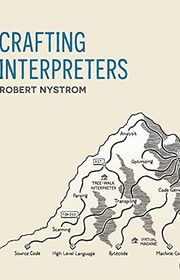
Crafting Interpreters
For programmers who learn by building and want a complete, readable path through language implementation. Two contrasting interpreters make design decisions tangible, but the focus is a small language rather than an optimizing native-code compiler.
What it's about
Robert Nystrom builds two implementations of the Lox language: a tree-walk interpreter in Java and a bytecode virtual machine in C. Along the way, readers implement parsing, functions, classes, memory management, and other runtime features.

Advanced Compiler Design and Implementation
For readers who already understand compiler construction and want deeper analysis and optimization algorithms. Muchnick offers detail beyond introductory texts, but its density and older architectural context make it demanding and incomplete as a guide to current toolchains.
What it's about
Steven Muchnick examines the design and implementation of optimizing compilers, explaining analyses and transformations used to improve generated code. Detailed algorithms connect compiler theory with engineering decisions, including the priorities and tradeoffs involved in supporting modern processor architectures.

Programming Language Pragmatics
For readers who want to understand why language features exist and what implementing them requires. Its broad perspective helps connect compilers with programming-language design, but it is less focused on building one complete compiler than dedicated construction guides.
What it's about
This textbook connects programming language design with implementation, explaining how languages express computation and how programs are executed. Topics include types, control flow, abstraction, concurrency, and alternative programming models, offering a framework for understanding unfamiliar languages.
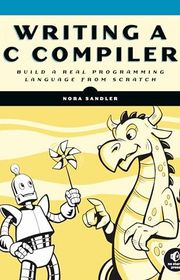
Writing a C Compiler: Build a Real Programming Language from Scratch
For programmers who want an incremental project that produces native code for a real language subset. The staged exercises make progress testable, but the substantial implementation effort and focused target leave broader compiler theory to other books.
What it's about
Nora Sandler guides readers through building a compiler for a substantial subset of C. Chapters add language features incrementally, connecting parsing, intermediate representations, assembly generation, and testing so that each stage extends a working implementation.

For Java programmers who want compiler construction presented as a substantial software project. Its attention to component organization helps connect the stages, but the older implementation style and language choices need adapting to contemporary tools.
What it's about
Ronald Mak teaches compiler and interpreter construction through a software engineering approach using Java. Readers develop working components while exploring language translation, runtime behavior, and program organization, connecting implementation decisions with the design of a maintainable translation system.
Sources
- 1
Compilers Books
goodreads.com
- 2
77 Best Compiler Books of All Time
shortform.com
- 3
Syllabus - CSE 401/M501
courses.cs.washington.edu
- 4
/r/ProgrammingLanguages Reading List
github.com
- 5
Deciding which of the following textbooks to use for compiler construction
reddit.com
- 6
CS 444/644 Compiler Construction – Resources
cs.uwaterloo.ca
- 7
The Best Books on Developing Compilers in C
reddit.com


Edited by
Software engineer whose passion for tracking book recommendations from podcasts inspired the creation of MRB.
Lead investor at 3one4 Capital whose startup expertise and love for books helped shape MRB and its growth.
Comments
Spotted a missing book, a wrong order or a mistake? Tell us and we'll fix this page.
We're a reading guide, not the author or publisher, so we can't send books or pass on messages.