
14 Best CFO Books
The best CFO books, ranked by expert source recommendation counts, with notes for new finance chiefs, strategic leaders, forecasting teams, and lean operations.
Our take
A chief financial officer needs to connect reliable numbers with decisions about the future. That means understanding controls, cash, and reporting while also building a team, communicating with executives, and judging risks that a spreadsheet cannot settle. These books cover different parts of that responsibility, from operational references to leadership and capital allocation.
The New CFO Financial Leadership Manual and The CFO Guidebook provide broad coverage of the job. Guide to CFO Success gives more attention to relationships and professional development, while The 80/20 CFO focuses on establishing priorities in a new role. Future Ready examines forecasting, and The Lean CFO connects finance with operational improvement. For a wider view of financial judgment, The Outsiders studies executive capital allocation and The Alchemy of Finance explores uncertainty in markets.
Start with the demands of your current role, then add a specialist book for the decisions you face most often; check technical references against your jurisdiction and edition.
14 books · 6 sources · Last updated
As an Amazon Associate, we earn from qualifying purchases (at no extra cost to you).
How to choose from this list
Skip to the full rankingIf you're new to the role: The Successful CFO → The CFO Guidebook
If you need an operational reference: The New CFO Financial Leadership Manual
If you want to establish priorities: The 80/20 CFO → Guide to CFO Success
If you want better forecasting: Future Ready
If you support lean operations: The Lean CFO
If you shape capital allocation: The Outsiders
The 14 books, ranked
Ranked by how many expert sources name each book. Ties go to the book more people recommend.

For CFOs who want a shared management vocabulary with the wider executive team. Its company comparisons connect leadership, people, and disciplined focus, though retrospective examples should be treated as discussion material rather than reliable formulas for success.
What it's about
Jim Collins investigates why some companies achieve sustained improvements while comparable businesses do not. A study of corporate transformations examines leadership, disciplined people and thinking, technological choices, and the gradual accumulation of momentum behind lasting results.
Also recommended by
11 people Jeff Bezos recommended this book
Jeff Bezos
Part of "Jeff's Reading List."
Jeff Bezos's recommendation of this book  Dave Ramsey recommended this book
Dave Ramsey
Recommended on Dave Ramsey's website.
Dave Ramsey's recommendation of this book  Jason Calacanis recommended this book
Jason Calacanis
"The great management book." - Jason Calacanis
Jason Calacanis's recommendation of this book  Max Levchin recommended this book
Max Levchin
One of Max Levchin's answers to "what's your favourite business book you'd advise to young entrepreneurs?"
Max Levchin's recommendation of this book  Brian Armstrong recommended this book
Brian Armstrong
"The scientific method can be applied to business. This book draws powerful lessons from data." - Brian Armstrong
Brian Armstrong's recommendation of this book  Ev Williams recommended this book
Ev Williams
On the "books read" section of Ev Williams' GoodReads profile.
Ev Williams's recommendation of this book +5
More recommendations
- Frank Blake
"As a business person, I love [this book]." - Frank Blake
- Tracy DiNunzio
"It’s too good. [...] Definitely a must read." - Tracy DiNunzio
- Daniel Ek
"A really interesting book." - Daniel Ek
- John Doerr
John Doerr recommended this book at the end of "Measure What Matters."
- Michael Hyatt
Michael Hyatt recommended this book on his website.
- Frank Blake

Reinventing the CFO
How Financial Managers Can Transform Their Roles And Add Greater Value
For CFOs trying to move from reporting past results toward shaping decisions. Its emphasis on simpler processes and strategic partnership challenges conventional finance routines, though organizational resistance and legacy systems make implementation harder than adopting the ideas.
What it's about
Jeremy Hope argues that chief financial officers should spend less time on complex budgeting and transaction systems and more on supporting decisions. Seven proposed roles connect streamlined processes, risk management, and focused performance measures with a broader contribution to organizational strategy.

For finance leaders interested in making decision rules and team expectations explicit. Its personal management system gives reflection a concrete structure, though the transparency practices reflect one distinctive organization and may not transfer comfortably to every workplace.
What it's about
Ray Dalio outlines decision-making principles developed through his life and career at Bridgewater Associates. Personal history accompanies guidance on goals, mistakes, transparency, and team management, showing how he seeks to turn experience into repeatable rules for action.
Also recommended by
25 people Arianna Huffington recommended this book
Arianna Huffington
"Beautifully written and filled with such wisdom." - Arianna Huffington
Arianna Huffington's recommendation of this book  Bill Gates recommended this book
Bill Gates
"Ray Dalio has provided me with invaluable guidance and insights that are now available to you in Principles." - Bill Gates
Bill Gates's recommendation of this book  Bryan Johnson recommended this book
Bryan Johnson
"[The author] open sourced Bridgewater’s methods in [this book] and the results were good evidence that collectives can operate at higher levels when they are open and honest about and can see past their cognitive flaws." - Bryan Johnson
Bryan Johnson's recommendation of this book  Diddy recommended this book
Diddy
"[Ray Dalio]'s a great guy and has a great book out you all need to get called Principles. It’s a major key!!" - Diddy
Diddy's recommendation of this book  Doug McMillon recommended this book
Doug McMillon
"Greg Penner, our chairman, asked me to read it." - Doug McMillon
Doug McMillon's recommendation of this book  Drew Houston recommended this book
Drew Houston
"Sketched really concise and good thoughts for [how to approach life]." - Drew Houston
Drew Houston's recommendation of this book +19
More recommendations
- Dustin Moskovitz
Dustin Moskovitz recommended this book on Twitter.
- Gary Vaynerchuk
"The book's buzz and the reaction of the people has been overwhelming." - Gary Vaynerchuk
- Howard Marks
"I think the guiding quote of the book is [one] from Mark Twain, 'History does not repeat, but it does rhyme.'" - Howard Marks
- Jack Dorsey
"Helpful in showing people how to operate by clearly articulated and shared principles that lead to faster progress." - Jack Dorsey
- Kevin Systrom
"I was blown away. It’s both a guide to life, a guide to business, and also I think an insight into [the author] and someone who’s built an amazing business." - Kevin Systrom
- Marc Benioff
"A masterpiece - It's a must-read!" - Marc Benioff
- Mark Cuban
"The book I wish I had as a young entrepreneur." - Mark Cuban
- Michael Bloomberg
"Everyone with goals and dreams can learn from [the author]'s approach." - Michael Bloomberg
- Naval Ravikant
"As with most non-fiction, the meat was in the beginning." - Naval Ravikant
- Reed Hastings
"Had a profound positive impact on my leeadership style." - Reed Hastings
- Tim Ferriss
"I highly, highly recommend this book. It has already changed how I think about making decisions in my life and in my business." - Tim Ferriss
- Tony Robbins
"[Ray Dalio] tells you how he figured it all out – and about all the principles that guided him toward success in his life, business and finances." - Tony Robbins
- Austen Allred
"So good." - Austen Allred
- Patrick O'Shaughnessy
"Bridgewater’s infamous [book]." - Patrick O'Shaughnessy
- Tom Bilyeu
"The most powerful business book I've ever read." - Tom Bilyeu
- Lex Fridman
"A book I highly recommend." - Lex Fridman
- James Clear
"[One of] the 10 books with the most page-for-page wisdom." - James Clear
- Marty Cagan
"In my view, the most important business book of 2017." - Marty Cagan
- Ben Greenfield
Most Recommended Books reached out to Ben Greenfield directly.
- Dustin Moskovitz

The Outsiders
Eight Unconventional CEOs and Their Radically Rational Blueprint for Success
For CFOs who want to think more carefully about capital allocation alongside the chief executive. Its company portraits connect financial choices with management behavior, though selected success stories offer perspective rather than a repeatable recipe for returns.
What it's about
William Thorndike profiles eight unconventional chief executives whose companies achieved exceptional shareholder returns. He examines their approaches to capital allocation, cash flow, and per-share value, drawing lessons from methods that departed from popular management fashions.
Also recommended by
7 people Charlie Munger recommended this book
Charlie Munger
"Details the extraordinary success of CEOs who took a radically different approach to corporate management." - Charlie Munger
Charlie Munger's recommendation of this book  Warren Buffett recommended this book
Warren Buffett
"An outstanding book about CEOs who excelled at capital allocation." - Warren Buffett
Warren Buffett's recommendation of this book - Brian Armstrong recommended this book
Brian Armstrong
"Stories about eight CEOs and how they mastered capital allocation." - Brian Armstrong
Brian Armstrong's recommendation of this book  Michael Mauboussin recommended this book
Michael Mauboussin
"It is, and should at the top of the reading list for CEOs and investors." - Michael Mauboussin
Michael Mauboussin's recommendation of this book  Patrick O'Shaughnessy recommended this book
Patrick O'Shaughnessy
"Contains great lessons for investors because it highlights the importance of capital allocation." - Patrick O'Shaughnessy
Patrick O'Shaughnessy's recommendation of this book  Sam Hinkie recommended this book
Sam Hinkie
"A business-y thing." - Sam Hinkie
Sam Hinkie's recommendation of this book +1
More recommendations
- Michael Dell
"A good read for any business leader but especially those willing to chart their own course."- Michael Dell
- Michael Dell

For finance teams that want forecasting to support decisions rather than repeat budget assumptions. Its attention to process and uncertainty gives forecasts a clearer purpose, though changing management expectations matters as much as improving the forecasting method.
What it's about
Steve Morlidge and Steve Player explain how businesses can organize forecasting to support decisions under uncertainty. Cases, examples, and accessible explanations connect forecasting processes with management, arguing for approaches that help organizations prepare for change rather than simply extend budgeting routines.

For newly appointed CFOs who want to establish priorities and credibility quickly. Its early action focus connects finance with organizational change, though readers need to adapt the approach to their authority, company culture, and available resources.
What it's about
Janice Berthold and Suzy Taherian offer practical guidance for chief financial officers taking responsibility for organizational change. Their approach emphasizes establishing credibility, earning trust, and setting priorities early, addressing the often loosely defined expectations surrounding a new finance leadership role.
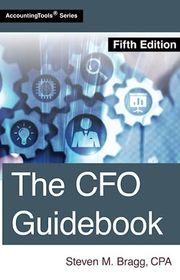
The CFO Guidebook
For CFOs who need a practical reference across treasury, planning, controls, and finance leadership. Its structured coverage supports checking responsibilities and filling gaps, though readers must verify regulatory details and choose an edition suited to their organization.
What it's about
Steven Bragg surveys the chief financial officer’s responsibilities, from budgeting and fundraising to risk management and strategic planning. The guide organizes the role into practical areas, helping finance leaders review both traditional duties and broader organizational expectations.

For finance leaders working with lean operations who want measurement to support improvement. Its integration of accounting and operating decisions distinguishes it from general CFO manuals, though the approach is most useful where lean practices have organizational support.
What it's about
Nicholas Katko explains how a chief financial officer can help develop a lean management system. The book connects finance leadership with business strategy and performance measurement, arguing for information and management practices that support lean operations and continuous improvement.

The New CFO Financial Leadership Manual
For new CFOs who need a broad reference covering the responsibilities of the role. Its operational range supports practical consultation, though accounting rules, public company requirements, and technology discussions need checking against the edition and current context.
What it's about
Steven Bragg explains the chief financial officer's responsibilities through strategies, measurement systems, analysis, and management practices. The manual covers accounting controls, financial planning, funding, public company obligations, and ways to improve finance operations.
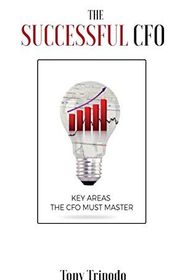
The Successful CFO
For new finance chiefs who want an experienced practitioner’s concise view of what deserves attention. Its career based lessons complement detailed technical manuals, though the selective, personal approach offers fewer procedures than a comprehensive operational reference.
What it's about
Tony Tripodo draws on his finance leadership career to discuss the areas a chief financial officer needs to master. Practical observations and examples address the finance function, executive relationships, and the judgment needed to contribute beyond accounting.

The Alchemy of Finance
For finance leaders interested in how market perceptions and economic conditions influence one another. Its reflexivity framework broadens thinking about uncertainty, though the trading focus and demanding argument provide less help with running a finance department.
What it's about
George Soros presents his theory of reflexivity, examining how investors' perceptions can influence the conditions they attempt to understand. He combines analysis of financial markets with a documented trading experiment to explore feedback, uncertainty, and investment decisions.
Also recommended by
2 people Garry Tan recommended this book
Garry Tan
"Be aware of reflexivity." - Garry Tan
Garry Tan's recommendation of this book  Paul Tudor Jones recommended this book
Paul Tudor Jones
"A timeless instructional guide of the marketplace." - Paul Tudor Jones
Paul Tudor Jones's recommendation of this book

For CFOs negotiating with colleagues, suppliers, lenders, or other stakeholders. Its attention to perceptions and everyday exchanges makes negotiation broadly usable, though readers seeking detailed guidance on complex financing terms will need a more specialized reference.
What it's about
Stuart Diamond presents a negotiation approach centered on understanding other people’s perceptions, emotions, and needs. Examples from work and everyday life show how small exchanges, clear communication, and collaborative problem solving can improve outcomes.

For aspiring or newly appointed CFOs who need guidance on leadership and career development. Its focus on relationships and building a finance team complements technical manuals, though it offers less depth on accounting mechanics and transaction analysis.
What it's about
Samuel Dergel offers career and leadership guidance for current and aspiring chief financial officers. Team building, relationships with executives, and professional development form a practical framework for managing the finance function while planning a career and balancing work with personal life.

For finance leaders seeking fresh ways to frame competition and business decisions. Its analogies extend beyond the familiar Pareto rule, though the broad comparisons with natural science require judgment rather than literal application to financial planning.
What it's about
Richard Koch applies the 80/20 principle and ninety-two other laws of nature to business decisions. Drawing on ideas such as natural selection and Newton's laws, he proposes ways to understand competition, organizational change, and commercial success.
Also recommended by
3 people Keith Rabois recommended this book
Keith Rabois
Keith Rabois recommended this book on a Medium blog post.
Keith Rabois's recommendation of this book  Dave Camarillo recommended this book
Dave Camarillo
"[Tim Ferriss] put me on [to this book]." - Dave Camarillo
Dave Camarillo's recommendation of this book  Gary Keller recommended this book
Gary Keller
"The hallmark in terms of productivity." - Gary Keller
Gary Keller's recommendation of this book
Sources
- 1
Top 10 Best Books for Chief Financial Officer - CFO - Accounting Hub
accountinghub-online.com
- 2
Top 30 CFO Books for Finance Leaders [2026] - DigitalDefynd Education
digitaldefynd.com
- 3
Any good CFO related books? : r/CFO
reddit.com
- 4
Essential Reading: The 20 Best CFO Books In 2026
thecfoclub.com
- 5
Cfo Library Books
goodreads.com
- 6
CFO Connect | CFO Books in 2026: A Reading List for Modern Finance Leaders
cfoconnect.eu


Edited by
Software engineer whose passion for tracking book recommendations from podcasts inspired the creation of MRB.
Lead investor at 3one4 Capital whose startup expertise and love for books helped shape MRB and its growth.
Comments
Spotted a missing book, a wrong order or a mistake? Tell us and we'll fix this page.
We're a reading guide, not the author or publisher, so we can't send books or pass on messages.