
22 Best Human Resources Books
The best human resources books, ranked by how many expert sources recommend each one, with guidance for HR beginners, people leaders, and specialist practice.
Our take
Human resources books address the practical work of supporting employees and the larger question of how organizations treat people. Some explain recruitment, rewards, and everyday procedures. Others concentrate on measurement, leadership, inclusion, or the relationships that make a workplace function. Choosing by responsibility is more useful than expecting one book to cover every situation.
The Essential HR Handbook provides a practical starting reference, while Armstrong's Handbook of Human Resource Management Practice offers a broader course of study. HR from the Outside In connects the profession with business strategy. For specialists, The Practical Guide to HR Analytics and The HR Scorecard approach evidence and measurement from different directions. The Fearless Organization examines speaking up and learning, while Belonging At Work focuses on inclusion in ordinary interactions. Books such as Work Rules! show what those choices look like inside a particular organization.
Start with a reference that matches your experience, then add a focused book for the problem your team is trying to understand.
22 books · 8 sources · Last updated
As an Amazon Associate, we earn from qualifying purchases (at no extra cost to you).
How to choose from this list
Skip to the full rankingIf you're new to HR: The Essential HR Handbook → Armstrong's Handbook of Human Resource Management Practice
If you want a more strategic role: HR from the Outside In → Victory Through Organization
If you want to use evidence better: The Practical Guide to HR Analytics → The HR Scorecard
If you want to improve voice and inclusion: The Fearless Organization → Belonging At Work
If you work across cultures: The Culture Map
If retention is your main question: Talent Keepers
The 22 books, ranked
Ranked by how many expert sources name each book. Ties go to the book more people recommend.

For HR practitioners who want a detailed account of people management inside a large technology company. Its examples make policy choices tangible, though Google’s resources and labor market position limit how directly the ideas transfer elsewhere.
What it's about
Laszlo Bock draws on his experience leading Google's people operations to examine hiring, motivation, management, and workplace culture. He combines company examples with research to explore how organizations can balance employee freedom with structure and measurable performance.
Also recommended by
3 people Changpeng Zhao recommended this book
Changpeng Zhao
"Talks about work-related insights derived from the author’s time at Google." - Changpeng Zhao
Changpeng Zhao's recommendation of this book  Michael Mauboussin recommended this book
Michael Mauboussin
"Many valuable ideas about building and sustaining a great work environment." - Michael Mauboussin
Michael Mauboussin's recommendation of this book  John Doerr recommended this book
John Doerr
John Doerr recommended this book at the end of "Measure What Matters."
John Doerr's recommendation of this book

For HR professionals who want to connect their role with business strategy and external stakeholders. Its competency framework gives development a clear structure, though the model and older organizational examples need adaptation to particular workplaces.
What it's about
Dave Ulrich and his coauthors present six competencies for human resources professionals, linking their work to business needs and external stakeholders. The book explores strategy, credibility, organizational capability, change, innovation, and technology, alongside ways to develop practitioners and effective HR departments.

The Essential HR Handbook
A Quick and Handy Resource for Any Manager or HR Professional
For new HR practitioners and managers who need a broad reference for recurring responsibilities. Its checklists make everyday tasks easier to organize, though legal and policy material requires current guidance for the jurisdiction and workplace involved.
What it's about
Sharon Armstrong and Barbara Mitchell provide a reference for managers and HR professionals handling everyday personnel responsibilities. Checklists, forms, and explanations cover recruitment, onboarding, training, compensation, benefits, and employment-related legal considerations.

For practitioners frustrated by standardized policies that ignore individual circumstances. Its challenge to conventional processes can prompt useful reconsideration, though the deliberately provocative framing offers less reassurance to readers needing an introductory operating manual.
What it's about
Lucy Adams challenges standardized HR processes that treat employees as interchangeable. She proposes an approach that recognizes people as adults, consumers, and human beings, with practical ways to reconsider policies and support organizational change.

For HR practitioners who want to reconnect administrative work with a sense of purpose. Its conversational stories offer encouragement and perspective, though readers seeking detailed policies, technical methods, or research analysis will need another reference.
What it's about
Steve Browne draws on personal experiences to argue for a deliberate, people-centered approach to human resources. Stories and practical reflections encourage HR professionals to reconsider their purpose and build stronger connections with the people they serve.

The Fearless Organization
Creating Psychological Safety in the Workplace for Learning, Innovation, and Growth
For leaders who want employees to raise questions and mistakes without abandoning performance standards. Its research and organizational examples clarify psychological safety, though building that climate requires consistent behavior beyond adopting a few discussion techniques.
What it's about
Amy Edmondson explains psychological safety as a workplace climate where people can raise concerns, ask questions, and acknowledge mistakes. Organizational examples illustrate how leaders can encourage candid discussion and learning while maintaining demanding performance standards.

Belonging At Work
Everyday Actions You Can Take to Cultivate an Inclusive Organization
For readers who want inclusion connected to ordinary workplace behavior rather than left as a formal aspiration. Its personal perspective makes belonging concrete, though individual actions need support from organizational systems to produce lasting change.
What it's about
Rhodes Perry combines personal experience with practical actions for creating inclusive workplaces. He examines authenticity, trust, and the experience of belonging, showing how individuals and organizations can help colleagues feel recognized and valued.

Bring Your Human to Work
For managers and HR teams looking for ways to strengthen everyday human connection. Its range of workplace examples encourages experimentation, though the broad principles provide less detail than a guide to implementing specific HR processes.
What it's about
Erica Keswin offers ten practices for building workplaces that support human connections. Company examples explore purposeful meetings, wellness, professional development, gratitude, and community involvement as ways to strengthen relationships and improve the experience of work.

For HR teams that need to explain how people practices support business strategy. Its measurement framework goes beyond tracking administrative activity, though choosing useful indicators and establishing causal links remain harder than producing an attractive scorecard.
What it's about
Brian Becker, Mark Huselid, and Dave Ulrich explain how to connect human resources with business strategy and measure its contribution. Their framework addresses alignment, performance indicators, and the costs and benefits of organizational investments in people.

The Practical Guide to HR Analytics
Using Data to Inform, Transform, and Empower HR Decisions
For HR professionals who want an approachable process for using data in decisions. Its attention to framing questions and communicating results keeps analysis connected to practice, though readers seeking advanced statistical methods will need additional technical study.
What it's about
Shonna Waters and her coauthors introduce a practical process for using data to address human resources problems. The guide covers framing questions, making a business case, establishing analytics work, and communicating findings through visualization and storytelling.

For HR readers and managers interested in how groups develop trust and shared purpose. Its narrative examples make team behavior easy to observe, though stories from selected successful groups provide less systematic implementation guidance than an HR handbook.
What it's about
Daniel Coyle investigates how successful groups build cooperation through examples from sports, design, business, and other settings. He examines practices that create trust, encourage collaboration, and establish shared purpose, translating observations into approaches for shaping team culture.
Also recommended by
3 people Graham Duncan recommended this book
Graham Duncan
"[The author looks] at a bunch of different cultures. Pixar, Navy SEALs, [etc...] And he’s looking for patterns among what makes people disproportionately effective as a culture." - Graham Duncan
Graham Duncan's recommendation of this book - Changpeng Zhao recommended this book
Changpeng Zhao
"At Binance, we constantly strive to build a great culture, and we constantly draw lessons from this book’s case studies of admirable organizations." - Changpeng Zhao
Changpeng Zhao's recommendation of this book  Tony Robbins recommended this book
Tony Robbins
Tony Robbins mentioned this book in an interview.
Tony Robbins's recommendation of this book
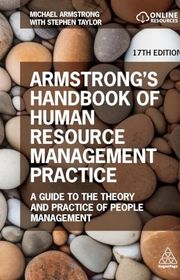
Armstrong's Handbook of Human Resource Management Practice
For students and practitioners who want a comprehensive foundation rather than a single workplace idea. Its breadth connects strategy with everyday HR responsibilities, though the size and UK professional framework make it a substantial, context specific reference.
What it's about
Michael Armstrong and Stephen Taylor present a broad reference covering HR strategy, resourcing, development, performance, rewards, and employment relationships. The seventeenth edition connects theory with practical examples and the professional capabilities used in human resources management.

For HR practitioners who want to move from managing procedures toward influencing the organization. Its emphasis on trust and personal leadership makes the role feel active, though the motivational approach supplies fewer concrete systems than technical references.
What it's about
Steve Browne encourages HR professionals to take an active leadership role rather than confining themselves to administrative ownership. He explores trust, credibility, collaboration, and the personal commitments that enable HR to become a catalyst for organizational change.

For leaders willing to question familiar assumptions about feedback, teams, and performance. Its nine challenges give a clear framework for reconsideration, though the contrarian presentation can make nuanced workplace questions sound more settled than they are.
What it's about
Marcus Buckingham and Ashley Goodall challenge nine common beliefs about organizations, feedback, planning, and leadership. Their alternative approach emphasizes distinctive individual strengths and the realities of teams, asking leaders to reconsider practices that can frustrate employees and undermine performance.

For practitioners who want to reflect on their professional style and approach to change. Its career profiles offer an accessible discussion tool, though the nine categories should not be treated as a validated personality assessment or fixed professional identity.
What it's about
Kris Dunn presents nine HR career profiles based on professional level and attitudes toward innovation. He uses this framework to help practitioners assess their strengths, recognize different approaches to change, and plan their professional development.
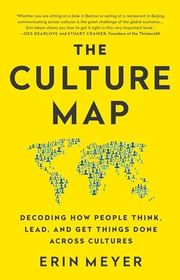
The Culture Map
For HR professionals working across countries who want to examine contrasting communication and management expectations. Its comparison framework makes common misunderstandings visible, though national patterns can become stereotypes if applied to individuals without attention to context.
What it's about
Erin Meyer examines differences in communication, feedback, trust, authority, and decision making across cultures. Examples from international workplaces introduce a comparative framework for understanding misunderstandings and adjusting the way people collaborate with colleagues whose expectations differ from their own.

The Talent Delusion
Why Data, Not Intuition, Is the Key to Unlocking Human Potential
For readers questioning instinctive judgments about talent and leadership potential. Its psychological perspective encourages more disciplined assessment, though data quality, context, and the limits of measurement remain essential when applying the argument to real people.
What it's about
Tomas Chamorro-Premuzic examines how psychological research and data can improve the way organizations identify and develop talent. He challenges intuitive hiring decisions and explores employee potential, engagement, leadership, and the conditions that help people perform.

Victory Through Organization
Why the War for Talent is Failing Your Company and What You Can Do About It
For senior HR readers who want organizational capability considered alongside individual talent. Its integrated perspective connects separate people practices with business needs, though the strategic language and competency research make it less practical for immediate personnel questions.
What it's about
Dave Ulrich and his coauthors argue that organizational capabilities matter more than isolated star performers. Drawing on HR competency research, they examine how integrated HR practices and information can strengthen organizations and create business value.

Thinking, Fast and Slow
For HR readers who want to question intuitive judgments in hiring and management. Its analysis of bias offers broader perspective than a personnel handbook, though the long treatment and later debate around some research demand critical reading.
What it's about
Kahneman explores two modes of thought: quick, intuitive responses and slower, deliberate reasoning. Drawing on psychological research, he examines how biases and impressions shape decisions, and when intuition helps or misleads in personal and professional life.
Also recommended by
19 people Bill Gates recommended this book
Bill Gates
List of books Bill Gates read in 2012.
Bill Gates's recommendation of this book  Ray Dalio recommended this book
Ray Dalio
Ray Dalio mentioned this book in his book, "Principles."
Ray Dalio's recommendation of this book  Scott Adams recommended this book
Scott Adams
One of the books on Scott Adams' "Persuasion Reading List."
Scott Adams's recommendation of this book  Naval Ravikant recommended this book
Naval Ravikant
"Fine book but it didn’t need to be an entire book. A blog post would have gotten the point across." - Naval Ravikant
Naval Ravikant's recommendation of this book  Ev Williams recommended this book
Ev Williams
"I love surprising scientific findings, as well as information about how our brains work. [This book] is a treasure trove of both." - Ev Williams
Ev Williams's recommendation of this book  Marc Andreessen recommended this book
Marc Andreessen
"Captivating dive into human decision making, marred by inclusion of several/many? psychology studies that fail to replicate. Will stand as a cautionary tale?" - Marc Andreessen
Marc Andreessen's recommendation of this book +13
More recommendations
- Stewart Brand
Stewart Brand recommended this book on his "Selected Books for the Manual for Civilization" blog post.
- Bryan Johnson
"I started reading [this book] and I became increasingly convinced of my own fickleness and inability to actually act rationally in life." - Bryan Johnson
- Derek Sivers
"If you liked 'Predictably Irrational' or 'Stumbling on Happiness' or any of those pop-psychology books, well, this is the Godfather of all of their work." - Derek Sivers
- Sam Altman
One of Sam Altman's answers to "What are some of the best books you recommend for a young startup founder?"
- Ron Conway
"Covers all three phases of [the author's] career: his early days working oncognitive bias, his work on prospect theory, and his later work on happiness." - Ron Conway
- Jason Fried
"I enjoyed [this book]. Fascinating." - Jason Fried
- Nassim Taleb
"A landmark book in social thought, in the same league as The Wealth of Nations by Adam Smith and The Interpretation of Dreams by Sigmund Freud." - Nassim Taleb
- Sahil Lavingia
Sahil Lavingia recommended this book on Notion.
- Mark Manson
Mark Manson recommended this book on his website.
- Jay Shetty
"[One] of my favourite books." - Jay Shetty
- Michiko Kakutani
"Has become essential reading in many baseball front offices and among coaching staffs." - Michiko Kakutani
- Preston Pysh
"An incredible book!" - Preston Pysh
- Ben Greenfield
Most Recommended Books reached out to Ben Greenfield directly.
- Stewart Brand

Rituals for Work
For teams seeking concrete ways to mark transitions and strengthen shared meaning. Its visual examples make workplace rituals easier to imagine, though copying a ritual without understanding the group can make the exercise feel artificial.
What it's about
Kursat Ozenc and Margaret Hagan present workplace rituals designed to strengthen relationships and give shared activities meaning. Fifty examples and visual instructions show how teams can adapt rituals for creativity, conflict, transitions, and organizational values.

For HR leaders focused on why people stay or leave rather than recruitment alone. Its attention to engagement across the employment relationship gives retention context, though the recommended practices need interpretation for different labor markets and organizations.
What it's about
Christopher Mulligan and Craig Taylor examine how leaders can improve employee engagement and retention throughout the employment relationship. Research and client examples illustrate practical approaches to understanding what keeps people committed and responding to reasons they leave.

Unleashing the Power of Diversity
For groups that want a shared language for discussing differences in perspective. Its facilitation approach makes collaboration the central concern, though the Diversity Icebreaker framework requires care to avoid reducing individuals to broad categories.
What it's about
Bjørn Ekelund explores communication across differences in perspective, culture, and ways of thinking. Drawing on the Diversity Icebreaker approach, he shows how groups can establish a shared language and use their differences to support collaboration and innovation.
Sources
- 1
28 Best HR Books You Should Read In 2026
peoplemanagingpeople.com
- 2
12 Best HR Books to Read
teambuilding.com
- 3
The 16 Best Human Resources Books to Read in 2026
vidcruiter.com
- 4
26 HR Books Every HR Professional Should Read in 2026
aihr.com
- 5
Human Resources Books
goodreads.com
- 6
100 Best Human Resources Books of All Time (Updated for 2026)
shortform.com
- 7
13 Best Human Resources Books Every HR Professional Should Read
upjourney.com
- 8
HR books recommendations [MO]
reddit.com


Edited by
Software engineer whose passion for tracking book recommendations from podcasts inspired the creation of MRB.
Lead investor at 3one4 Capital whose startup expertise and love for books helped shape MRB and its growth.
Comments
Spotted a missing book, a wrong order or a mistake? Tell us and we'll fix this page.
We're a reading guide, not the author or publisher, so we can't send books or pass on messages.