
14 Best Bash Books
The best Bash books, ranked by how many expert sources recommend each one, with notes on who each suits, from terminal beginners to experienced script writers.
Our take
Bash books cover two connected skills: using a terminal effectively and turning commands into repeatable programs. If you are still learning files, permissions and pipelines, a broad command-line introduction will make scripting easier. If you already work in a terminal, you may get more from a focused tutorial, a recipe collection or a reference you can keep beside your editor.
The Linux Command Line supplies a gradual starting point, while Linux Command Line and Shell Scripting Bible combines Linux tools with wider automation coverage. bash Cookbook and Wicked Cool Shell Scripts offer examples to adapt. For readers maintaining existing code, bash Idioms focuses on clarity, and Bash Pocket Reference helps with quick syntax checks. Classic Shell Scripting takes a broader Unix view, including portability between environments.
Start with The Linux Command Line if the terminal is unfamiliar, or choose bash Idioms when your next goal is making working scripts easier to read.
14 books · 8 sources · Last updated
As an Amazon Associate, we earn from qualifying purchases (at no extra cost to you).
How to choose from this list
Skip to the full rankingIf you're new to the terminal: The Linux Command Line
If you want Linux automation in depth: Linux Command Line and Shell Scripting Bible → Mastering Linux Shell Scripting
If you learn through examples: Wicked Cool Shell Scripts → bash Cookbook
If you want clearer scripts: bash Idioms → Classic Shell Scripting
If you need quick syntax help: Bash Pocket Reference
If you work in penetration testing: Black Hat Bash
The 14 books, ranked
Ranked by how many expert sources name each book. Ties go to the book more people recommend.

For newcomers who need to understand files, commands and pipelines before writing scripts. Its gradual Linux introduction supplies context that syntax references omit, though experienced terminal users may want to skip ahead to the programming chapters.
What it's about
William Shotts introduces the Linux terminal, progressing from basic commands to Bash programs. Exercises cover files, directories, pipelines, text editing, system administration, and shell scripts, showing how command line tools can automate everyday tasks.
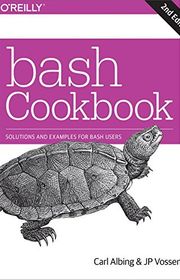
bash Cookbook
For users who have a specific shell problem to solve and want an explanation alongside working code. Its recipe structure supports quick, targeted learning, but it is less coherent as a first course read from beginning to end.
What it's about
Carl Albing and JP Vossen present shell solutions organized as practical recipes. Examples cover input and output, files, program execution and administrative work, explaining how each solution works so readers can adapt it to their own tasks.

For learners who want a large supply of commented examples and exercises beyond basic syntax. Its free online origins make it an extensive companion, but its age and uneven example style call for checking current practices.
What it's about
Mendel Cooper develops Bash scripting from basic concepts toward advanced techniques through explanations, exercises, and heavily commented examples. This first volume covers the main tutorial, including variables, control flow, commands, redirection, functions, arrays, and debugging.
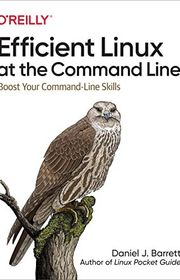
Efficient Linux at the Command Line
For regular terminal users who want to combine commands more fluently and reduce repetitive typing. Its emphasis on interactive workflows complements scripting tutorials, but it is broader command-line training rather than a dedicated Bash language reference.
What it's about
Daniel J. Barrett teaches ways to work more effectively at the Linux command line. Examples connect familiar commands into larger workflows, covering pipelines, text processing, command history and other techniques for reducing repeated manual work.

For readers who learn by taking working scripts apart and adapting them. The varied projects give shell programming a concrete purpose, but older examples involving external services may need repair before they run today.
What it's about
Dave Taylor and Brandon Perry explain customizable shell scripts for everyday computing tasks and playful projects. Each example describes its purpose, operation, and possible extensions, with tools covering backups, file handling, cloud services, weather information, and games.
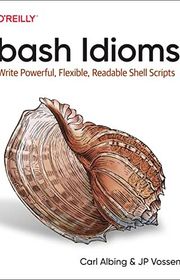
bash Idioms
For programmers whose scripts work but have become difficult to understand or maintain. It concentrates on readable shell patterns more directly than the beginner guides, though it is most useful once you already know the syntax.
What it's about
Carl Albing and JP Vossen examine patterns for reading and writing clear Bash scripts. They explain idioms to use, obscure constructions to avoid and ways to organize code so that future readers can understand and maintain it.

For users who know the basics and need a compact reminder of syntax, options and expansions. It is easier to consult during work than a full tutorial, but it assumes you already understand shell programming concepts.
What it's about
Arnold Robbins provides a compact reference to Bash syntax and behavior for users writing shell scripts. Topics include quoting, variables, functions, arithmetic, arrays, command history, completion, job control, shell options, and command execution in Unix-like environments.
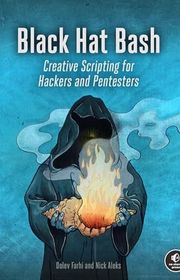
Black Hat Bash
For penetration testers who want shell scripting tied to security work in a test environment. Its focused projects give Bash a clear professional application, but readers seeking general administration should choose a broader guide first.
What it's about
Nick Aleks and Dolev Farhi demonstrate how Bash can automate penetration-testing tasks in a lab. The book develops scripts for reconnaissance, scanning and other stages of security assessment, connecting shell programming with practical testing workflows.
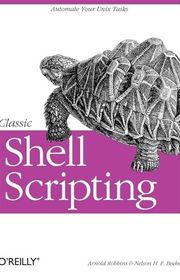
Classic Shell Scripting
For readers who want portable Unix scripting and a deeper understanding of the tools scripts combine. Its attention to standards distinguishes it from Bash-focused guides, but the older Unix detail can slow readers seeking quick automation.
What it's about
Arnold Robbins and Nelson H. F. Beebe explain how to combine Unix tools into reliable, portable shell scripts. The book covers shell language, text processing and differences among systems, emphasizing practices that help scripts work across environments.
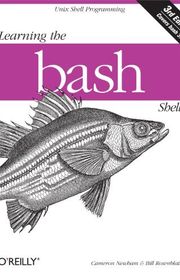
Learning the bash Shell
For readers who want a sustained explanation of the shell, from interactive use to programming. Its tutorial approach is more cohesive than a cookbook, but the third edition predates many features of newer Bash releases.
What it's about
Cameron Newham explains interactive Bash use and shell programming, including customization, control flow and process handling. Practical examples connect language features to everyday Unix work, providing a guided route from basic commands to more involved scripts.

Linux Command Line and Shell Scripting Bible
For Linux users who want command-line foundations and scripting in one substantial reference. Its broad coverage connects shell features with administrative tasks, but readers interested only in Bash syntax may find the surrounding Linux material excessive.
What it's about
Richard Blum and Christine Bresnahan explain Linux command-line tools and shell scripting, progressing from basic commands to more advanced automation. Examples and usable scripts show how to combine shell features and system utilities to carry out recurring administration tasks.

Shell Scripting
How to Automate Command Line Tasks Using Bash Scripting and Shell Programming
For readers who already type commands and want a short route into automating repeated work. Cannon keeps the focus on usable scripts, though the compact treatment offers less depth than the larger references on this list.
What it's about
Jason Cannon explains how shell scripts can automate command line work using Bash and shell programming. Drawing on his experience as a systems engineer, he connects scripting concepts with practical tasks, helping readers turn repeated manual commands into reusable programs.

Mastering Linux Shell Scripting
A Practical Guide to Linux Command-Line, Bash Scripting, and Shell Programming
For Linux administrators ready to turn familiar commands into more structured automation. Its task-oriented progression links scripting to system work, though absolute beginners will need more command-line grounding before the later material feels comfortable.
What it's about
Mokhtar Ebrahim and Andrew Mallett develop Bash scripting skills for Linux administrators seeking to automate repetitive tasks. Practical examples cover creating and debugging scripts, validating input, using conditional logic, and building more complex command-line workflows.

For administrators who want adaptable recipes rather than a single beginner course. Parker emphasizes practical shell tasks and reusable techniques, but the breadth and older system examples require selecting and adjusting material for your own environment.
What it's about
Steve Parker presents adaptable shell scripting recipes focused on Linux and Bash. Examples explain shell features, system tools, and administrative tasks, showing how scripts can automate work and be modified for different environments and practical problems.
Sources
- 1
Best Bash Scripting Books for 2026
computingforgeeks.com
- 2
Bash Books
goodreads.com
- 3
Bash guide
sadservers.com
- 4
6 Excellent Free Books to Learn Bash
itechguides.com
- 5
Best Bash Learning Resources?
reddit.com
- 6
Any recommended reading to learn bash?
reddit.com
- 7
Scripting: Tools, languages and the Shell
nsrc.org
- 8
10 Bash Books That Separate Experts from Amateurs
bookauthority.org








Edited by
Software engineer whose passion for tracking book recommendations from podcasts inspired the creation of MRB.
Lead investor at 3one4 Capital whose startup expertise and love for books helped shape MRB and its growth.
Comments
Spotted a missing book, a wrong order or a mistake? Tell us and we'll fix this page.
We're a reading guide, not the author or publisher, so we can't send books or pass on messages.