
13 Best Agriculture Books
The best agriculture books, ranked by how many expert sources recommend each one, with notes to help you choose farming guides, soil science, and food debates.
Our take
Agriculture books can explain how to run a growing operation, examine the life in soil, or ask who benefits from the way food is produced. These are different starting points. A practical handbook helps with everyday decisions, while a biography or cultural argument places farming within larger histories and debates.
The Market Gardener and The New Organic Grower concentrate on small-scale vegetable production. The Lean Farm examines workflow, and Teaming with Microbes introduces soil organisms and their relationships. Dirt to Soil describes one farm’s change in approach, while Restoration Agriculture considers perennial systems. For broader questions, The Unsettling of America connects farming with community, Bread, Wine, Chocolate explores food diversity, and Food 5.0 and Seeds of Science argue for technological possibilities. Their authors do not share one view of agriculture’s future.
Start with the book that matches your scale and purpose, and compare practical advice with the climate, soil, markets, and resources where you work.
13 books · 9 sources · Last updated
As an Amazon Associate, we earn from qualifying purchases (at no extra cost to you).
How to choose from this list
Skip to the full rankingIf you're exploring small-scale vegetable farming: The Market Gardener → The New Organic Grower
If you want to improve farm workflow: The Lean Farm
If you want to understand soil life: Teaming with Microbes → Dirt to Soil
If you're curious about perennial systems: Restoration Agriculture
If you want farming's cultural questions: The Unsettling of America → Bread, Wine, Chocolate
If you want arguments about agricultural technology: Seeds of Science → Food 5.0
The 13 books, ranked
Ranked by how many expert sources name each book. Ties go to the book more people recommend.
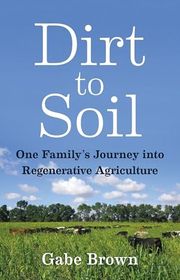
Dirt to Soil
For readers who want to follow a working farm’s transition toward soil-focused practices. Its personal account makes experimentation tangible, though results from one operation do not guarantee the same economic or ecological outcomes elsewhere.
What it's about
Gabe Brown recounts how repeated setbacks led his family to change their North Dakota farming operation. He describes experiments with soil management, crop diversity, and livestock integration, connecting practical decisions with the development of his regenerative approach.
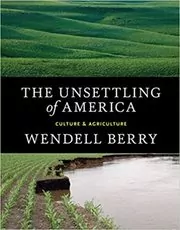
For readers who want to examine farming as a cultural and ethical practice. Its connections between land, work, and community give the debate depth, though its polemical argument offers fewer practical tools than a farm manual.
What it's about
Berry’s landmark critique of industrial agriculture and the loss of agrarian culture. He connects soil, economics, and community life, arguing that farming should respect land, people, and the long-term consequences of our choices.
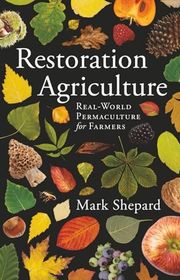
Restoration Agriculture
For farmers and landowners curious about productive perennial systems. Its farm-scale examples connect ecological design with food production, though the investment, establishment period, and suitability of particular crops require careful evaluation for each site.
What it's about
Mark Shepard presents a perennial approach to farming modeled on natural ecosystems. Drawing on his Wisconsin operation, he discusses integrating trees, shrubs, livestock, and other crops to produce food while considering water, soil, and longer-term land management.
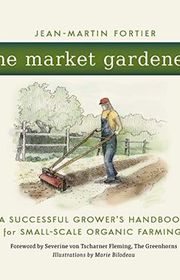
The Market Gardener
For aspiring market gardeners who want a concrete model for a small vegetable operation. Its attention to layout, tools, and production makes planning tangible, though the Quebec setting and direct-market model require local adaptation.
What it's about
Jean-Martin Fortier describes small-scale organic vegetable production based on his family’s Quebec farm. The handbook covers site planning, tools, crop production, and marketing, explaining how intensive growing methods can fit a compact operation serving local customers.
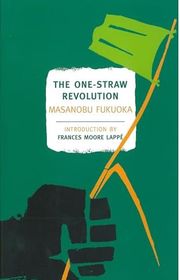
The One-Straw Revolution
For readers seeking a philosophical challenge to assumptions about agricultural intervention. Its connection between observation and practice makes it more than a technique guide, though methods developed in one Japanese setting cannot simply be copied everywhere.
What it's about
Masanobu Fukuoka describes his natural farming approach and the thinking behind it. Reflections on soil, crops, work, and human intervention connect practices developed on his Japanese farm with a broader argument about how people relate to nature.

The Man Who Fed the World
For readers interested in the people and institutions behind agricultural innovation. Its focus on Borlaug makes the Green Revolution tangible through one career, though an authorized biography offers less critical distance than a broader historical study.
What it's about
Leon Hesser presents an authorized biography of Norman Borlaug and his effort to combat world hunger. The account follows the agricultural scientist's development of improved wheat and the work that led to his Nobel Peace Prize.
Also recommended by
1 person Bill Gates recommended this book
Bill Gates
"A biography of Norman Borlaug, a brilliant agricultural scientist who [...] saved a billion people from starvation." - Bill Gates
Bill Gates's recommendation of this book

For land managers interested in a framework that links ecological, social, and financial decisions. Its systems perspective reaches beyond individual techniques, though claims about grazing outcomes are contested and depend strongly on local conditions.
What it's about
Allan Savory and Jody Butterfield present a framework for managing land and resources through an understanding of interconnected systems. They explain holistic decision-making and planned livestock grazing, arguing that these practices can support grassland restoration and sustainable livelihoods.
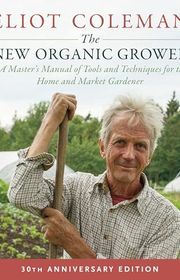
The New Organic Grower
For vegetable growers who want a detailed reference for organic production. Its attention to tools, soil, and season extension complements broader farming arguments, though the techniques reflect particular climates and need adapting to your operation.
What it's about
Eliot Coleman explains tools and techniques for small-scale organic growing. The guide connects soil fertility, cultivation, crop planning, and season extension, drawing on farm experience to support home gardeners and market growers developing practical production systems.

For readers who want to connect agricultural diversity with familiar foods and flavors. Its reporting makes a large systems problem personal and concrete, though it is an exploration of food culture rather than a guide to production.
What it's about
Simran Sethi investigates the loss of diversity in the foods people cherish. Visits to coffee growers, cacao farmers, brewers, chefs, and scientists connect agricultural change with taste, cultural history, and the future of familiar foods.

For readers curious about the case for technological innovation in agriculture. Its forward-looking examples offer a counterpoint to the agrarian critiques here, though the author’s advocacy makes it a perspective to evaluate rather than a neutral survey.
What it's about
Robert Saik traces agriculture from earlier eras into a future shaped by sensors, robotics, and machine learning. He argues that farmers need technological innovation to improve sustainability and meet the food demands of a growing population.

For readers who want an account of changing views on genetic engineering. Its personal trajectory gives the controversy a clear narrative, though the argumentative approach should be distinguished from a comprehensive technical textbook on crops or breeding.
What it's about
Former anti-GMO activist Mark Lynas recounts why he changed his position on genetic engineering. He examines the history of the controversy, agricultural applications, corporate influence, and the perspectives of farmers and opponents across different parts of the world.
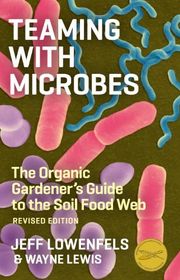
Teaming with Microbes: The Organic Gardener's Guide to the Soil Food Web
For beginners who want to see soil as a community of living organisms. Its accessible explanations connect biology with growing practices, though its gardening focus offers less operational detail for large farms or specialized production systems.
What it's about
Jeff Lowenfels and Wayne Lewis introduce bacteria, fungi, and other organisms that form soil food webs. They connect these relationships with gardening practices involving compost, mulch, and soil management, emphasizing the biological activity beneath growing plants.
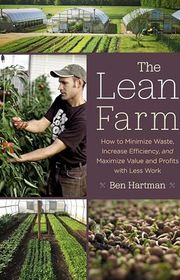
The Lean Farm
For growers whose main problem is inefficient work rather than unfamiliar crop techniques. Its focus on waste, organization, and customer value supports operational improvement, though examples from a small vegetable farm need adapting to different enterprises.
What it's about
Ben Hartman adapts lean management ideas to small-scale farming. Drawing on his vegetable operation, he examines identifying waste, organizing tools and tasks, improving workflow, and matching production with customer needs to make farm work more efficient.
Sources
- 1
Recommended Reading
understandingag.com
- 2
100 Best Agriculture Books of All Time (Updated for 2026)
shortform.com
- 3
Agriculture Books
goodreads.com
- 4
Recommended Reading
bionutrient.org
- 5
32 great farm books for your reading list
agdaily.com
- 6
What books on farming have been most impactful to you?
reddit.com
- 7
22 Books about Farming, Food and Agricultural Innovations
agronomag.com
- 8
Books
longleyorganicfarm.com.au
- 9
10 Great Books About Agriculture
sciencebookaday.com








Edited by
Software engineer whose passion for tracking book recommendations from podcasts inspired the creation of MRB.
Lead investor at 3one4 Capital whose startup expertise and love for books helped shape MRB and its growth.
Comments
Spotted a missing book, a wrong order or a mistake? Tell us and we'll fix this page.
We're a reading guide, not the author or publisher, so we can't send books or pass on messages.