
Walter Isaacson Books in Order
Explore Walter Isaacson books in order, with short summaries, reading order, biography notes, related series, and simple advice on where to start.
Last updated:
As an Amazon Associate, we earn from qualifying purchases (at no extra cost to you).
Walter Isaacson books in publication order
19 books
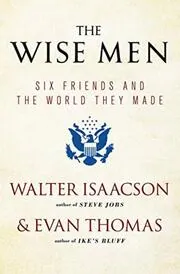
The Wise Men
by Walter Isaacson
1986
Written with Evan Thomas, this book follows six American statesmen who helped shape the postwar world. Their friendships, rivalries, and decisions drive a sweeping account of Cold War strategy and power.
Kissinger
by Walter Isaacson
1992
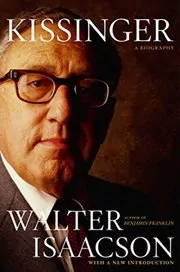
Isaacson's biography follows Henry Kissinger from Nazi Germany to the center of American foreign policy. It looks closely at the ideas, ambition, and contradictions behind one of the twentieth century's most divisive statesmen.
Recommended by
2 people George Raveling recommended this book
George Raveling
George Raveling mentioned this book on "The Tim Ferriss Show" podcast.
George Raveling's recommendation of this book  Scott Belsky recommended this book
Scott Belsky
Scott Belsky mentioned this book on "The Tim Ferriss Show" podcast.
Scott Belsky's recommendation of this book
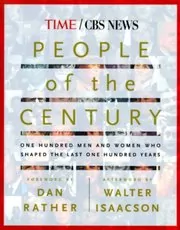
People of the Century
by Walter Isaacson
1999
This illustrated collection gathers profiles of one hundred men and women who shaped the twentieth century. It offers a brisk tour of the leaders, thinkers, artists, and activists who left the biggest marks.
Benjamin Franklin
by Walter Isaacson
2003
Isaacson traces Franklin from runaway apprentice to printer, inventor, diplomat, and founder. The book shows how wit, practicality, and social intelligence helped shape both the man and the early United States.
Recommended by
8 people Elon Musk recommended this book
Elon Musk
"A great biography. [...] Highly recommended." - Elon Musk
Elon Musk's recommendation of this book  Tim Ferriss recommended this book
Tim Ferriss
"I’ve recommended [this book] to thousands and thousands of people." - Tim Ferriss
Tim Ferriss's recommendation of this book  Ray Dalio recommended this book
Ray Dalio
"I read [this book and "Einstein"] and probed [Walter Isaacson] about them to try to glean what characteristics they had in common." - Ray Dalio
Ray Dalio's recommendation of this book - George Raveling recommended this book
George Raveling
"[I read this book and] I am blown away and a little sad because I feel like, 'God damn, I went through all this education. No one ever taught me any of this stuff.'" - George Raveling
George Raveling's recommendation of this book - Scott Belsky recommended this book
Scott Belsky
Scott Belsky mentioned this book on "The Tim Ferriss Show" podcast.
Scott Belsky's recommendation of this book  Brandon Stanton recommended this book
Brandon Stanton
"The [biography of Benjamin Franklin] I read." - Brandon Stanton
Brandon Stanton's recommendation of this book +2
More recommendations
- Ed Zschau
Ed Zschau mentioned this book on "The Tim Ferriss Show" podcast.
- Charlie Munger
"It’s hard to write a bad book on such an interesting subject." - Charlie Munger
- Ed Zschau
A Benjamin Franklin Reader
by Walter Isaacson
2005
Edited and annotated by Isaacson, this collection lets Franklin speak for himself through letters, essays, and other writings. It is a useful companion to the larger biography and a lively showcase for Franklin's wit.
Einstein
by Walter Isaacson
2007
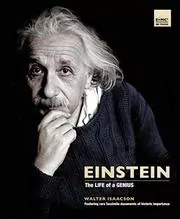
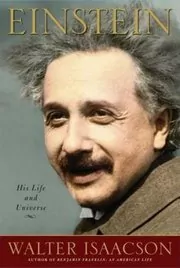
Isaacson traces Einstein from rebellious student and patent clerk to world-changing physicist and public moral voice. The science stays readable, while the book keeps his family life, politics, and stubborn independence in view.
Recommended by
8 people Mark Zuckerberg recommended this book
Mark Zuckerberg
On the "books read" section of Mark Zuckerberg's Facebook profile.
Mark Zuckerberg's recommendation of this book  Charlie Munger recommended this book
Charlie Munger
"I’ve read all the Einstein biographies, and this is by far the best." - Charlie Munger
Charlie Munger's recommendation of this book  Bill Gates recommended this book
Bill Gates
List of books Bill Gates read in 2011.
Bill Gates's recommendation of this book - Ray Dalio recommended this book
Ray Dalio
"I read [this book and "Benjamin Franklin"] and probed [Walter Isaacson] about them to try to glean what characteristics they had in common." - Ray Dalio
Ray Dalio's recommendation of this book - George Raveling recommended this book
George Raveling
"Anybody who can write a book on Einstein and that an idiot like me can understand the physics [was] a miracle." - George Raveling
George Raveling's recommendation of this book  Sam Altman recommended this book
Sam Altman
This book was on Sam Altman's bookshelf.
Sam Altman's recommendation of this book +2
More recommendations
- Ed Zschau
Ed Zschau mentioned this book on "The Tim Ferriss Show" podcast.
- Scott Belsky
Scott Belsky mentioned this book on "The Tim Ferriss Show" podcast.
- Ed Zschau
American Sketches
by Walter Isaacson
2009
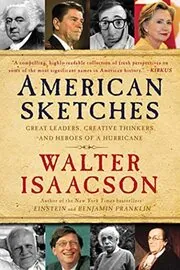
In these essays, Isaacson writes about leaders, inventors, journalists, and the people who taught him how to think and write. The collection also returns often to New Orleans, journalism, and the habits behind creative lives.
Einstein
by Walter Isaacson
2009
This shorter Einstein portrait follows his rise from curious outsider to scientific icon. Isaacson sketches the big breakthroughs, the personal strains, and the convictions behind the famous image.
Profiles in Leadership
by Walter Isaacson
2010
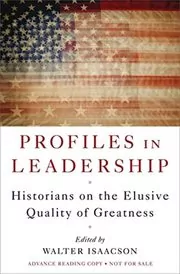
Edited by Isaacson, this collection asks what leadership looks like when real pressure arrives. Historians compare figures across American public life, showing how principle, pragmatism, ambition, and judgment can pull in different directions.
Steve Jobs
by Walter Isaacson
2011
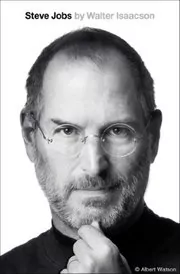
Built from years of interviews with Jobs and the people around him, this is a close look at a brilliant and difficult builder. It follows the intensity, control, and imagination that reshaped several industries.
Recommended by
9 people- Elon Musk recommended this book
Elon Musk
"Quite interesting." - Elon Musk
Elon Musk's recommendation of this book  Scott Adams recommended this book
Scott Adams
"I’m fascinated by the discussion of how Jobs developed what became known as the Reality Distortion Field. Apparently Jobs had a lifelong battle with reality and won." - Scott Adams
Scott Adams's recommendation of this book - Ray Dalio recommended this book
Ray Dalio
"I noticed a number of similarities between [Steve Jobs and I], especially when [the author] quoted Jobs’s own words. [...] but to be clear, I didn’t think that Bridgewater or I held a candle to Apple and Jobs." - Ray Dalio
Ray Dalio's recommendation of this book - Bill Gates recommended this book
Bill Gates
List of books Bill Gates read in 2012.
Bill Gates's recommendation of this book  Gary Vaynerchuk recommended this book
Gary Vaynerchuk
"I've read 3 business books in my life. If you call [this book] a business book." - Gary Vaynerchuk
Gary Vaynerchuk's recommendation of this book - George Raveling recommended this book
George Raveling
"[When I read this book] I was so blown away. I had underlined about three-quarters of the book." - George Raveling
George Raveling's recommendation of this book +3
More recommendations
- Chris Fussell
"Really did a good job of capturing the way that an innovation leader’s mind works." - Chris Fussell
- Scott Belsky
Scott Belsky mentioned this book on "The Tim Ferriss Show" podcast.
- Ed Zschau
Ed Zschau mentioned this book on "The Tim Ferriss Show" podcast.
- Chris Fussell
The Innovators
by Walter Isaacson
2014
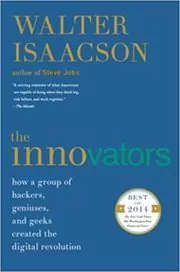
Isaacson tells the story of the people who created the computer and the internet, from Ada Lovelace onward. The through line is collaboration, showing how teams, not just lone geniuses, built the digital age.
Recommended by
2 people Chris Fussell recommended this book
Chris Fussell
"The history of how great ideas evolve." - Chris Fussell
Chris Fussell's recommendation of this book  Sheryl Sandberg recommended this book
Sheryl Sandberg
"A fascinating history of the digital revolution, including the critical but often forgotten role women played from the beginning." - Sheryl Sandberg
Sheryl Sandberg's recommendation of this book
Leonardo da Vinci
by Walter Isaacson
2017
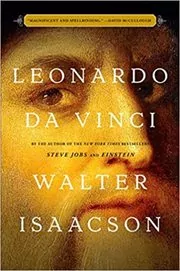
Drawing on Leonardo's notebooks, Isaacson follows the artist, engineer, and obsessive observer through his art, experiments, and inventions. It is as much a portrait of curiosity as it is a life story.
Recommended by
3 people Mukesh Ambani recommended this book
Mukesh Ambani
"I am reading this great book [...]. He is my favorite author." - Mukesh Ambani
Mukesh Ambani's recommendation of this book - Bill Gates recommended this book
Bill Gates
"Sheds light on every facet of [Leonardo da Vinci]’s life." - Bill Gates
Bill Gates's recommendation of this book  Austen Allred recommended this book
Austen Allred
"What genius is really made up of, and how to recreate some semblance of it." - Austen Allred
Austen Allred's recommendation of this book
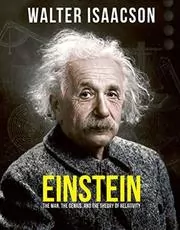
Einstein
by Walter Isaacson
2018
This compact introduction to Einstein covers the breakthrough ideas, the messy personal life, and the public role that made him a global symbol. It is a fast, accessible way into Isaacson's larger Einstein work.
Invent and Wander
by Walter Isaacson
2020
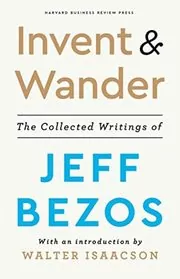
This volume gathers Jeff Bezos's shareholder letters, speeches, and interviews, framed by an introduction from Isaacson. It shows how long-term thinking, risk, and customer obsession shaped Amazon and Blue Origin.
Albert Einstein
by Walter Isaacson
2021
This concise introduction to Einstein follows the young outsider who changed modern physics. Isaacson keeps the focus on the person as well as the theories, including the private struggles and public causes that shaped him.
The Code Breaker
by Walter Isaacson
2021
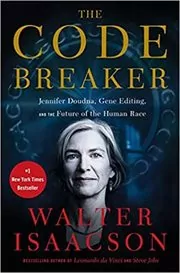
This biography of Jennifer Doudna follows the race to develop CRISPR gene editing and the science behind it. Isaacson pairs lab drama with the huge ethical questions that come with rewriting the code of life.
The Code Breaker
by Walter Isaacson
2022
Adapted for young readers, this biography follows Jennifer Doudna's path from a childhood fascination with DNA to developing CRISPR. It explains the scientific collaborations behind gene editing and the ethical questions raised by altering human inheritance.
Elon Musk
by Walter Isaacson
2023
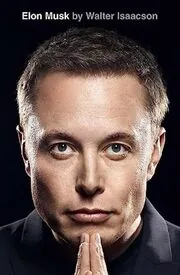
After shadowing Musk for two years, Isaacson builds a detailed portrait of the entrepreneur behind Tesla, SpaceX, and X. The book asks how his drive, volatility, and appetite for risk feed both innovation and chaos.
The Greatest Sentence Ever Written
by Walter Isaacson
2025
Isaacson takes a close look at the Declaration of Independence's most famous line and how it was shaped. The book asks what those words meant in 1776, and what they still ask of the country now.
Where to start with Walter Isaacson
If you want the best-known biographies: Steve Jobs → Leonardo da Vinci → The Code Breaker
If you like American history and power: Benjamin Franklin → Kissinger → The Wise Men
If you want science and big ideas: Einstein → The Code Breaker → The Innovators
If you're curious about modern tech leaders: Steve Jobs → The Innovators → Elon Musk
Walter Isaacson sub-series and character series
Walter Isaacson collections, short stories, and related book types
Non-Fiction
by Walter Isaacson
1999One Hundred Men and Women Who Shaped the Last One Hundred Years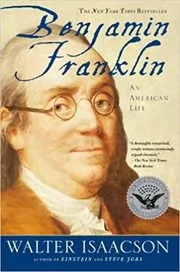

by Walter Isaacson
2021Jennifer Doudna, Gene Editing, and the Future of the Human Race

Standalone Walter Isaacson books
by Walter Isaacson
2014How a Group of Hackers, Geniuses, and Geeks Created the Digital Revolution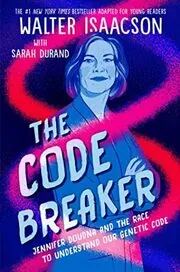
Author bio
Walter Isaacson was born in New Orleans in 1952 and grew up there, in a city he still writes about with real affection. That mix of local pride, curiosity about big public questions, and love of lively characters shows up all through his work.
He came to writing through reporting.
After Harvard and Oxford, where he studied as a Rhodes Scholar, he started in journalism at The Sunday Times in London, then at the New Orleans Times-Picayune. He joined Time in 1978 and worked his way up through reporting and editing jobs until he became the magazine's 14th editor in 1996.
From there, his career kept widening. He became chairman and CEO of CNN in 2001, then led the Aspen Institute from 2003 to 2018. Those jobs kept him close to politics, technology, media, and public life, which helps explain why his books are usually about people whose ideas changed institutions, not just headlines.
His first books leaned toward power and statecraft. The Wise Men, written with Evan Thomas, looks at the six officials who shaped American foreign policy after World War II, and Kissinger studies Henry Kissinger as both strategist and personality. Even early on, Isaacson was less interested in dry chronology than in how ambition, intellect, and character work together.
Then biographies became his home turf.
A lot of readers start with Benjamin Franklin, which turns a marble monument of a Founder back into a witty, practical human being. Einstein and Leonardo da Vinci do something similar in different ways, showing how scientific or artistic genius can grow out of stubborn curiosity and a willingness to question old assumptions. Steve Jobs became one of his biggest books because it captures both the drive and the damage that can come with relentless perfectionism. In The Code Breaker, he shifts to Jennifer Doudna and CRISPR, which lets him combine life story, science history, and a very current moral debate.
What ties these books together is pretty clear. Isaacson likes people who stand where science, art, business, and politics bump into one another. He writes often about inventors, outsiders, builders, and difficult personalities. He also keeps returning to a simple question: where do new ideas come from, and what kind of freedom, collaboration, or obsession helps them take shape?
That mix of big ideas and clear storytelling is a large part of why readers keep coming back. His books explain hard subjects without talking down to people, and they tend to make famous figures feel less like statues and more like restless, flawed workers. In 2023 he received the National Humanities Medal, a plain sign of how much influence his writing has had beyond the usual biography shelf.
These days he teaches history at Tulane, hosts conversations for Amanpour & Company, and keeps circling back to the subjects that have long interested him: innovation, leadership, creativity, and the American experiment. Recent books such as Elon Musk and The Greatest Sentence Ever Written show that he is still drawn to people and ideas that sit right in the middle of public argument.



Edited by
Software engineer whose passion for tracking book recommendations from podcasts inspired the creation of MRB.
Lead investor at 3one4 Capital whose startup expertise and love for books helped shape MRB and its growth.
Comments
Did we miss something? Have feedback?
Help us improve this page by sharing your thoughts