
Walter R Borneman Books in Order
Browse Walter R. Borneman's books in order, with quick summaries, key history titles, Colorado books, and a simple guide to where to start reading his nonfiction.
Last updated:
As an Amazon Associate, we earn from qualifying purchases (at no extra cost to you).
Walter R Borneman books in publication order
15 books

A Climbing Guide to Colorado's Fourteeners
by Walter R Borneman
1978
This classic guide maps practical routes up Colorado's highest peaks and adds history, elevation profiles, and safety-minded advice. It's built for hikers and climbers who want a clear, responsible way to tackle the fourteeners.
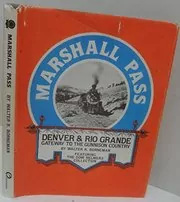
Marshall Pass
by Walter R Borneman
1980
Borneman traces the Denver and Rio Grande line over Marshall Pass and into Gunnison Country. Using photographs, maps, and local history, he captures the engineering gamble and railroad ambition behind a key Colorado route.

Colorado's Other Mountains
by Walter R Borneman
1984
A companion to his fourteener guide, this book explores notable Colorado summits below 14,000 feet. Borneman offers routes, maps, and mountain background for climbers looking beyond the state's most famous checklist.

Walter V. Berry
by Walter R Borneman
2002
This biography follows inventor and entrepreneur Walter V. Berry from failed ventures to the steelmaking breakthrough that made his fortune. It also looks at the philanthropy he and Idun Berry built in support of children's health research.

Alaska
by Walter R Borneman
2003
Borneman tells Alaska as a long struggle over land, wealth, and who gets to shape the frontier. The story moves from Russian fur traders and gold seekers to war, oil, and modern battles over development.
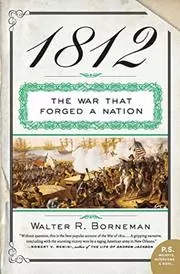
1812
by Walter R Borneman
2004
A brisk history of the War of 1812, from early blunders to naval victories and New Orleans. Borneman argues that the conflict helped forge American identity and elevated a new generation of leaders.

14,000 Feet
by Walter R Borneman
2005
This large-format tribute pairs Borneman's writing with Todd Caudle's photographs of Colorado's highest mountains. Alongside the scenery, readers get short histories and telling details that explain why the fourteeners inspire so much devotion.

The French and Indian War
by Walter R Borneman
2006
Starting with young George Washington in the Ohio Valley, Borneman follows the war that reshaped North America. He ties frontier fighting, Native alliances, and imperial rivalry into one clear, fast-moving narrative.
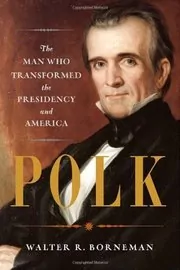
Polk
by Walter R Borneman
2008
James K. Polk served only one term, but Borneman shows how much he changed. The book follows Polk's rise, his expansionist agenda, and the fierce political fights behind Texas, Oregon, and the war with Mexico.
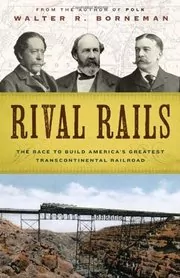
Rival Rails
by Walter R Borneman
2010
After the first transcontinental line, rival companies raced to control the best routes across the Southwest. Borneman turns boardroom deals, mountain passes, and brutal construction work into a vivid history of railroad expansion.

The Admirals
by Walter R Borneman
2011
Borneman compares Nimitz, Halsey, Leahy, and King, the only four Americans to reach the rank of fleet admiral. Their clashing styles and shared pressures become a sharp portrait of how the U.S. Navy won the war at sea.
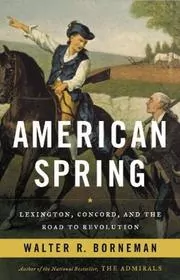
American Spring
by Walter R Borneman
2014
This book narrows in on the tense months from late 1774 to July 1775, when protest became open rebellion. Borneman follows the road from Lexington and Concord to Bunker Hill and Washington's arrival.
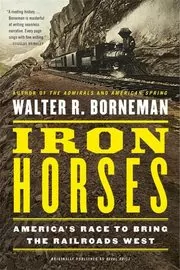
Iron Horses
by Walter R Borneman
2014
Originally published as Rival Rails, this edition follows the fierce contest to build a faster rail link through the Southwest. Borneman keeps one eye on powerful railroad barons and the other on workers facing dangerous ground.
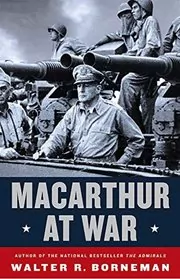
MacArthur at War
by Walter R Borneman
2016
Rather than cover an entire life, Borneman focuses on MacArthur's four decisive war years in the Pacific. The result is a close look at strategy, ego, alliances, and the hard path from the Philippines to Japan's surrender.
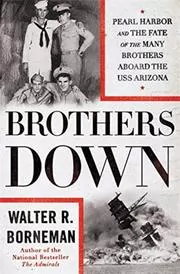
Brothers Down
by Walter R Borneman
2019
Borneman retells Pearl Harbor through the brothers serving together aboard the USS Arizona. By following the men and the families waiting at home, he gives a familiar tragedy a more intimate and heartbreaking shape.
Where to start with Walter R Borneman
If you want military history first: 1812 → The Admirals → MacArthur at War → Brothers Down
If you like presidents and politics: Polk → American Spring
If you want big, place-driven history: Alaska → The French and Indian War
If you want Colorado books first: A Climbing Guide to Colorado's Fourteeners → 14,000 Feet → Colorado's Other Mountains
If railroads are your thing: Marshall Pass → Rival Rails
Walter R Borneman collections, short stories, and related book types
Non-Fiction
Author bio
Walter R. Borneman is a historian and lawyer whose books move from Colorado peaks to presidents, railroads, Alaska, and the Pacific war. Born in 1952, he has built a career out of making large American stories feel grounded and readable.
He studied history first. Borneman earned both his B.A. in 1974 and his M.A. in 1975 from Western State College of Colorado, where his master's thesis focused on Irwin, a silver camp in the Ruby Mountains. He later added a law degree from the University of Denver, finishing in 1981, and practiced law before his national reputation as an author took shape.
His writing began close to home. Early books like A Climbing Guide to Colorado's Fourteeners, Marshall Pass, and Colorado's Other Mountains show how closely he paid attention to terrain, local history, and the practical details of getting from one place to another.
That eye for landscape never really left him.
You can see it again in his railroad books. In Rival Rails, later reissued as Iron Horses, he followed the fight to build a stronger rail link through the Southwest, mixing boardroom rivalry with dangerous labor on bridges, cuts, tunnels, and mountain grades. Even Walter V. Berry kept one foot in western enterprise, tracing invention, risk, and philanthropy through a single life.
It also helped when he moved into wider American history. In Alaska, he wrote about a place constantly argued over and remade by traders, prospectors, soldiers, and developers. In 1812 and The French and Indian War, he took conflicts that can look fixed and distant in a textbook and turned them into stories about ambition, geography, supply lines, and ordinary people caught in larger plans.
Borneman also writes well about power. Polk follows a one-term president who changed the size of the United States and expanded the reach of the office, and the book went on to win the Tennessee History Book Award and the Colorado Book Award for Biography. American Spring narrows the lens to the tense months when protest became rebellion, tracing the road from Lexington and Concord to George Washington taking command.
He is just as interested in command under pressure.
The Admirals compares Nimitz, Halsey, Leahy, and King, the only four Americans to hold the rank of fleet admiral, and it won the Samuel Eliot Morison Award for Naval Literature. MacArthur at War stays with Douglas MacArthur during the decisive Pacific years of World War II. Then Brothers Down took a more intimate angle, telling Pearl Harbor through the many brothers serving aboard the USS Arizona and the families waiting for news at home.
Across all of these books, readers tend to get the same thing: clear chronology, a strong sense of place, and a feel for how public events land on real people. Away from the page, Borneman has written commentary for the Wall Street Journal, the New York Times, and the Washington Post. He has also served as the first chairman of the Colorado Fourteeners Initiative, as president of the Colorado Mountain Club Foundation, and as president of the Walter V. and Idun Y. Berry Foundation, which supports postdoctoral fellowships in children's health at Stanford. He lives in Colorado, and that connection to the West still runs through much of his work.

















Edited by
Software engineer whose passion for tracking book recommendations from podcasts inspired the creation of MRB.
Lead investor at 3one4 Capital whose startup expertise and love for books helped shape MRB and its growth.
Comments
Did we miss something? Have feedback?
Help us improve this page by sharing your thoughts