
Great Thinkers Books in Order
Part ofWalter Isaacson Books in OrderBrowse the Great Thinkers books by Walter Isaacson, with reading order, short summaries, series background, and a quick guide to where to begin.
Last updated:
As an Amazon Associate, we earn from qualifying purchases (at no extra cost to you).
Great Thinkers books in publication order
1 book
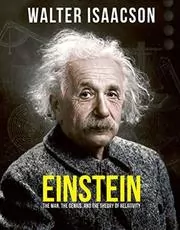
Einstein
by Walter Isaacson
2018
This compact introduction to Einstein covers the breakthrough ideas, the messy personal life, and the public role that made him a global symbol. It is a fast, accessible way into Isaacson's larger Einstein work.
Great Thinkers books in chronological order
Series background & context
Great Thinkers is not a conventional series with one plot running from book to book. It is closer to a shelf of short introductions to major figures and the ideas that changed the world.
In Walter Isaacson's corner of the series, the focus is Albert Einstein. That makes the experience feel more like a compact biography than a broad survey. Readers get the essentials of Einstein's life, work, and public role without having to jump straight into a very long biography.
That shorter format changes the rhythm. Chapters move quickly, the explanations are cleaner and more selective, and the book is meant to give readers a strong feel for the person rather than an exhaustive account of every debate.
Big ideas stay tied to a real human life.
The series works best when it shows how a famous mind develops over time. With Einstein, that means moving from his youth in Germany to the Swiss patent office, then into the scientific world of Europe and later the United States. The setting matters because the tension is not only about equations. It is also about rejection, fame, exile, war, and the burden of seeing modern science reshape the world.
That gives the book its main through line. Einstein wants to understand the hidden rules of nature, and Isaacson keeps bringing the reader back to that restless curiosity. The physics is there, of course, but the series does not ask you to be a specialist. Instead, it explains the breakthroughs in plain language and keeps them connected to Einstein's habits of mind, his thought experiments, and his refusal to accept easy answers.
It reads more like story than lecture.
The tone is clear, brisk, and welcoming. You can expect a mix of life story, science history, and character study, with attention to family strain, public debate, and the moral questions that followed twentieth-century science. Rather than treating genius as magic, the series shows it as a messy combination of imagination, discipline, timing, and nerve.
That is what makes Great Thinkers a useful place to start. If you are new to Isaacson, this series entry gives you the subjects he returns to again and again: curiosity, creativity, and the way ideas move from one person's mind into the wider world. If you already know his longer biographies, this shorter format still offers the same pleasures, a strong narrative line, a lively sense of context, and a reminder that even the biggest minds lived inside ordinary days, difficult relationships, and public storms.











Edited by
Software engineer whose passion for tracking book recommendations from podcasts inspired the creation of MRB.
Lead investor at 3one4 Capital whose startup expertise and love for books helped shape MRB and its growth.
Comments
Did we miss something? Have feedback?
Help us improve this page by sharing your thoughts