
Thomas Wolfe Books in Order
See Thomas Wolfe books in order, from the major novels to letters and shorter works, with quick summaries, reading order, and a simple guide to where to start.
Last updated:
As an Amazon Associate, we earn from qualifying purchases (at no extra cost to you).
Thomas Wolfe books in publication order
30 books
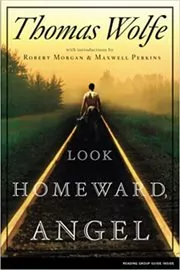
Look Homeward, Angel
by Thomas Wolfe
1929
Eugene Gant grows up in Altamont, North Carolina, inside a large, troubled family and a town he longs to escape. Wolfe turns childhood, family conflict, and the hunger for a larger life into a sprawling coming-of-age novel.
Recommended by
1 person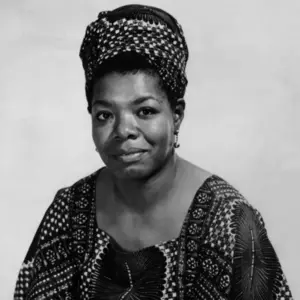 Maya Angelou recommended this book
Maya Angelou
"Probably the most important to me." - Maya Angelou
Maya Angelou's recommendation of this book

From Death to Morning
by Thomas Wolfe
1935
This 1935 collection brings together fourteen stories ranging from Southern family pieces to New York scenes like Only the Dead Know Brooklyn. It is a strong entry point if you want Wolfe's intensity in shorter form.
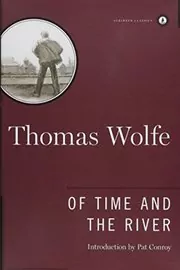
Of Time and the River
by Thomas Wolfe
1935
In this sequel to Look Homeward, Angel, Eugene Gant leaves North Carolina for Harvard, New York, and Europe. Wolfe follows his growth as a young writer, while widening the book into a meditation on time, memory, and the making of art.
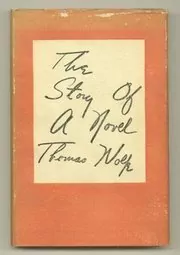
The Story of a Novel
by Thomas Wolfe
1936
Based on a lecture after Of Time and the River, this short work shows Wolfe thinking aloud about writing his first books. It is part craft talk, part self-portrait, and part argument for the sheer labor of fiction.

The Lost Boy
by Thomas Wolfe
1937
Told through several points of view, this novella revisits the death of Grover Gant and the long shadow it leaves over the family. It is one of Wolfe's most moving shorter works about grief, childhood, and memory.
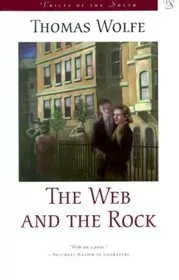
The Web and the Rock
by Thomas Wolfe
1938
George Webber leaves small-town North Carolina for New York, tries to make himself as a writer, and enters a difficult affair with Esther Jack. It is Wolfe's large, posthumous novel about ambition, family ties, city life, and self-invention.
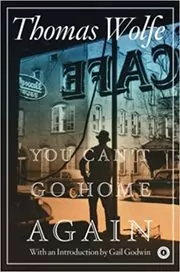
You Can't Go Home Again
by Thomas Wolfe
1940
George Webber's first novel makes him famous and turns his hometown against him. As he moves through New York, London, and Berlin, Wolfe follows a writer trying to understand fame, America, and the hard truth that the past cannot be recovered.
Recommended by
1 person- Maya Angelou recommended this book
Maya Angelou
"My brother and I memorized whole chapters of [this book]." - Maya Angelou
Maya Angelou's recommendation of this book

The Hills Beyond
by Thomas Wolfe
1941
Drawn from Wolfe's final unfinished manuscript, this posthumous book mixes stories, sketches, and novellas. It reaches from pre-Civil War North Carolina to Eugene Gant's return to Altamont, and includes one of Wolfe's finest shorter pieces, The Lost Boy.

A Stone, a Leaf, a Door
by Thomas Wolfe
1945
This unusual volume reshapes passages from Wolfe's prose as poems, letting the rhythm and imagery come to the front. It is best read as a sampler of his lyrical voice rather than a conventional poetry collection.

Short Novels of Thomas Wolfe
by Thomas Wolfe
1961
This collection gathers five longer pieces, including The Web of Earth, No Door, and The Party at Jack's. It shows Wolfe working in a tighter form while keeping his usual force, memory, and emotional sweep.
A Western Journal a Daily Log the Great Parks Trip
by Thomas Wolfe
1968
This brief travel diary records Wolfe's 1938 journey through the American West and the national parks. It has the quick, alert feeling of a notebook, with landscape, motion, and restlessness all pressing onto the page.

Mountains
by Thomas Wolfe
1970
One of Wolfe's early plays, this work turns to North Carolina mountain life, family loyalty, and old conflict. You can already hear the themes of place, inheritance, and restless desire that would later fill his fiction.
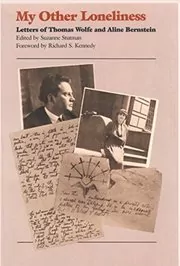
My Other Loneliness
by Thomas Wolfe
1983
Written across eleven years, these letters between Wolfe and Aline Bernstein chart a love affair that was tender, stormy, and deeply formative. The book shows how closely his personal life and creative life were intertwined.
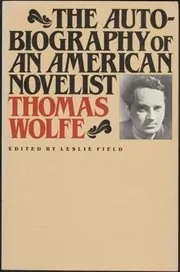
The Autobiography of an American Novelist
by Thomas Wolfe
1983
This volume pairs The Story of a Novel with Writing and Living, two autobiographical essays about Wolfe's craft and career. It is the clearest place to hear him explain how his books were made and what writing cost him.

Welcome to Our City
by Thomas Wolfe
1983
This early play is set in Altamont, where civic boosterism, greed, and social tension drive the action. Wolfe uses the stage to satirize modern Southern ambition while showing how money and power distort a town.
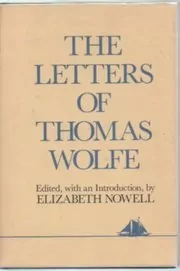
The Letters of Thomas Wolfe
by Thomas Wolfe
1984
Collected and edited after Wolfe's death, these letters offer a wide-angle portrait of the man behind the novels. You see his friendships, travels, anxieties, and fierce drive to keep writing, often in a voice as urgent as his fiction.

Mannerhouse
by Thomas Wolfe
1985
Set around the Civil War and its aftermath, this early play centers on a once-grand Southern house facing ruin and change. It shows Wolfe working through questions of history, illusion, loss, and the moral cost of material ambition.

The Complete Short Stories Of Thomas Wolfe
by Thomas Wolfe
1987
Containing fifty-eight stories from across Wolfe's career, this is the fullest single collection of his short fiction. It lets you see his range, from early impressionistic pieces to later stories with a harder social edge.
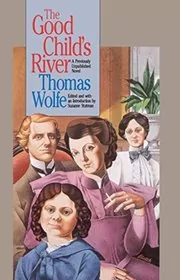
Good Child's River
by Thomas Wolfe
1991
Built from Wolfe's long-unpublished manuscript, this novel follows Esther Jack through turn-of-the-century New York and draws on Aline Bernstein's early life. It offers a rare Wolfe book centered less on his usual stand-in heroes and more on memory, love, and the city.

The Good Child's River
by Thomas Wolfe
1991
Built from Wolfe's long-unpublished manuscript, this novel follows Esther Jack through turn-of-the-century New York and draws on Aline Bernstein's early life. It offers a rare Wolfe book centered less on his usual stand-in heroes and more on memory, love, and the city.

The Starwick Episodes
by Thomas Wolfe
1994
These restored episodes from Of Time and the River deepen Eugene Gant's uneasy friendship with Francis Starwick, his Harvard foil. The book gives more of Wolfe's original material on art, pose, influence, and young literary ambition.

The Party At Jack's
by Thomas Wolfe
1995
Set around an elegant Park Avenue gathering, this reconstructed novella follows Esther and Frederick Jack through a day that ends in fire. Wolfe contrasts luxury upstairs with the harder lives below, turning a party into a sharp social portrait.

O Lost
by Thomas Wolfe
2000
Wolfe's original, restored version of Look Homeward, Angel gives a fuller, rougher view of Eugene Gant and the Gant family. If you want the uncut first vision behind Wolfe's breakthrough novel, this is the book to read.
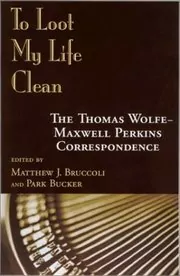
To Loot My Life Clean
by Thomas Wolfe
2000
These letters between Thomas Wolfe and editor Maxwell Perkins trace one of American publishing's most famous writer-editor relationships. They show Wolfe's ambition, anxiety, quarrels, and working habits as his major books took shape.

Thomas Wolfe's Civil War
by Thomas Wolfe
2004
This anthology collects stories, novel excerpts, and a play that show how deeply the Civil War shaped Wolfe's imagination. It is useful for readers who want to trace the war's shadow across his fiction and dramatic writing.

Windows of the Heart
by Thomas Wolfe
2007
These letters between Wolfe and teacher Margaret Roberts reveal the bond with the mentor he called the mother of my spirit. The correspondence adds a quieter, more personal side to the public story of his literary rise.

The Four Lost Men
by Thomas Wolfe
2008
This expanded version of Wolfe's story links a son's memories of his father with a vanishing older America. Family feeling and national myth meet here, as the past is rebuilt through talk, grief, and recollection.

The Magical Campus
by Thomas Wolfe
2008
Gathering Wolfe's UNC writings from 1917 to 1920, this volume collects poems, stories, journalism, speeches, and early plays. It shows him discovering his voice on campus, before the major novels took over.
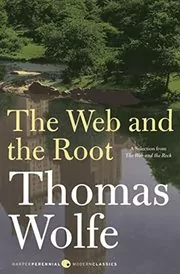
The Web and the Root
by Thomas Wolfe
2009
This standalone volume presents the opening sections of The Web and the Rock as a prequel to You Can't Go Home Again. It follows George Webber from small-town North Carolina toward the promise and violence of the modern city.
The Face of a Nation 1939
by Thomas Wolfe
2021
This posthumous anthology gathers lyrical passages from across Wolfe's work and lets his cadences stand on their own. It reads less like a novel than a curated tour through his recurring images, moods, and obsessions.
Where to start with Thomas Wolfe
If you want the classic starting point: Look Homeward, Angel → Of Time and the River
If you want the later, broader novels: The Web and the Rock → You Can't Go Home Again
If you prefer shorter fiction first: From Death to Morning → The Lost Boy → The Complete Short Stories Of Thomas Wolfe
If you want Wolfe on writing and himself: The Story of a Novel → The Letters of Thomas Wolfe → The Autobiography of an American Novelist
Thomas Wolfe collections, short stories, and related book types
Short Stories/Novellas
Collections
Non-Fiction
Standalone Thomas Wolfe books
Author bio
Thomas Wolfe was born in Asheville, North Carolina, in 1900, the youngest of eight children. His father, William Oliver Wolfe, was a stonecutter. His mother, Julia, ran a boardinghouse in Asheville, and Wolfe grew up in that busy, talk-filled world, watching guests arrive, leave, argue, boast, and remember. The mountain town, the family noise, and the feeling of being both rooted and trapped there would become the raw material for much of his fiction.
Home never really let go of him.
He was a precocious student, and one teacher mattered especially. At the North State Fitting School, Margaret Roberts noticed how seriously he took reading and pushed him toward poetry and classic literature. Wolfe later called her the mother of my spirit. At fifteen he entered the University of North Carolina at Chapel Hill, where he wrote for student publications, acted in campus productions, edited the student newspaper, and began to imagine a public life as a writer.
At first, he thought that life would happen in the theater. After graduating from UNC, he went to Harvard to study playwriting with George Pierce Baker, and early works such as The Mountains and Welcome to Our City were staged there. When Broadway did not open for him, he moved to New York, taught English at New York University for several years, and kept searching for a form big enough to hold what he wanted to say.
A trip to Europe, and especially the voyage home in 1924, changed everything. On the ship he met Aline Bernstein, a theater designer and writer nearly twenty years older than he was. Their relationship was long, intense, and often difficult, but it mattered hugely to Wolfe's career. Bernstein urged him away from playwriting and toward prose, backed his travels, and helped create the conditions in which he could work on the huge manuscript first called O Lost.
With editor Maxwell Perkins at Scribner cutting and shaping that manuscript, it became Look Homeward, Angel in 1929. The novel made Wolfe famous almost at once. It also caused a rift with many people in Asheville, who recognized themselves in Altamont and in the Gant family, despite Wolfe's insistence that he was making art rather than copying lives straight onto the page.
Readers still come to Wolfe for the same mix of scale and intimacy. In Look Homeward, Angel and Of Time and the River, Eugene Gant grows from a boy in North Carolina into a young man trying to find learning, freedom, and a way to turn life into art. In The Web and the Rock and You Can't Go Home Again, George Webber carries that restlessness into New York and Europe, where literary success does not solve the problem of who he is. Even when Wolfe works shorter, as in From Death to Morning or The Lost Boy, he circles the same questions: what family gives you, what it takes away, how cities enlarge and harden people, and why memory can feel more real than the present.
He wrote big because small answers did not interest him.
The 1930s were productive and turbulent. Wolfe divided his time between New York and Europe, published Of Time and the River and From Death to Morning in 1935, and kept pushing toward an even larger plan to write the life of America across several books. He eventually broke with Scribner and moved to Harper. In 1937 he returned to Asheville for the first time in years, and in 1938, worn down and needing a break, he traveled west and visited national parks.
He fell ill in Seattle that year and was sent to Johns Hopkins Hospital in Baltimore, where doctors discovered tubercular meningitis of the brain. He died in September 1938, at just thirty-seven. After his death, more of his work appeared, including The Web and the Rock, You Can't Go Home Again, and The Hills Beyond. Wolfe's books can be unruly, overfull, and utterly sincere. That is part of why people keep returning to them.





Edited by
Software engineer whose passion for tracking book recommendations from podcasts inspired the creation of MRB.
Lead investor at 3one4 Capital whose startup expertise and love for books helped shape MRB and its growth.
Comments
Did we miss something? Have feedback?
Help us improve this page by sharing your thoughts