
Tetsuo Otani Books in Order
Part ofJames Melville Books in OrderFind the Tetsuo Otani books by James Melville in order, with short summaries, series background, and tips on where to start this Japanese mystery series.
Last updated:
As an Amazon Associate, we earn from qualifying purchases (at no extra cost to you).
Tetsuo Otani books in publication order
13 books

The Wages of Zen
by James Melville
1979
Otani's first case begins with the murder of an Irish Catholic priest at a Zen study center. Among monks, foreign students, and clashing assumptions, he has to uncover the truth without losing sight of the people involved.

The Chrysanthemum Chain
by James Melville
1980
The murder of a British man in Japan lands Otani in a case tangled with sexual secrets, bad family ties, and political nerves before an election. It is an early Otani mystery, full of police work and cross-cultural friction.

A Sort of Samurai
by James Melville
1981
After an earthquake near Kobe, Otani finds a German businessman dead in a warehouse, with no clear sign of murder. A loyal dog, a possible judo hold, and questions of honor make the case as tricky as it is unusual.

The Ninth Netsuke
by James Melville
1982
A hostess is found murdered in a hotel love suite, and Otani notices an ivory netsuke hidden at the scene. The tiny carving belongs to a set of nine, and its history opens the door to scandal, suspicion, and kidnapping.

Sayonara, Sweet Amaryllis
by James Melville
1983
A murder case collides with Inspector Noguchi's private life when the son he had with a Korean woman surfaces in a drug-smuggling ring. Otani must investigate, even as the case cuts painfully close to his own team.

Death of a Daimyo
by James Melville
1984
While visiting family in England, Otani is pulled into the murder of a powerful Japanese businessman. Away from Kobe and on unfamiliar ground, he must navigate British habits, expatriate lives, and a case with roots back home.

Go Gently, Gaijin
by James Melville
1986
The suicide of one foreign student and the hit-and-run death of another seem connected, and both men belonged to the same student society. Otani's team follows the trail through politics, personal loyalties, and rising tension among outsiders in Japan.

Kimono for a Corpse
by James Melville
1987
A falling chandelier kills a businessman, then a foreigner is strangled at a fashion show. Otani has to connect two elegant deaths and follow the trail through Kobe's glossy world of style, ambition, and hidden dealings.

The Reluctant Ronin
by James Melville
1988
When a Dutch woman dies in a fire, the case points toward a yakuza feud and Otani's missing son-in-law, Akira. Forced to step back officially, Otani guides the inquiry from the shadows while his daughter's marriage wobbles.

A Haiku for Hanae
by James Melville
1989
During a holiday on Awaji Island, Otani remembers an earlier case involving a murdered American missionary at a Shinto shrine. Fox spirits, an exorcism, and long-buried desire make this one of his strangest investigations.

The Bogus Buddha
by James Melville
1990
A murdered professor at the temple of Araku-in draws Otani into a case that links academic intrigue to organized crime. Kyoto, Kobe, and their quieter corners all start to look dangerous as the investigation widens.
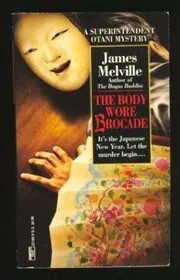
The Body Wore Brocade
by James Melville
1992
Otani tells this final case in his own voice, older, touchier, and looking hard at his life. After trouble at home and a sniper's bullet, the retired superintendent is drawn into a mystery that feels unusually personal.

The Death Ceremony
by James Melville
1993
At an elite tea ceremony in Kyoto, Otani watches the Grand Master collapse with a bullet in his forehead. The investigation leads from ritual calm into political blackmail, old secrets, and questions about who the real target was.
Tetsuo Otani books in chronological order
Series background & context
Tetsuo Otani is not a swaggering detective or a genius outsider. He is a senior policeman in Kobe, the superintendent of the Hyogo Prefectural Police, and that matters. These books are about investigation as a team job, with files, phone calls, interviews, local politics, and small observations that slowly add up. If you start with The Wages of Zen, you meet a man who is calm, patient, and rarely in a hurry to show off.
He also has a life outside the office. Otani's wife, Hanae, is one of the pleasures of the series, steady, funny, and shrewd in her own quiet way. Around him are recurring police colleagues like Jiro Kimura and Ninja Noguchi, plus family members whose troubles do not stay neatly separate from the job. The books are at their best when murder inquiries and ordinary domestic life keep brushing against each other.
Kobe matters.
Kobe and the wider Kansai region do a lot of the heavy lifting. Temples, hotels, student societies, fashion houses, police stations, harbor neighborhoods, English drawing rooms, and country shrines all come into view as the series moves along. Many of the cases involve foreigners living in Japan or Japanese people moving through international worlds, so the books constantly play with misunderstanding, embarrassment, curiosity, and the question of what people think they know about one another.
That gives the series its special flavor. These are police procedurals, but they are also books about cross-cultural friction, social hierarchy, and the odd places where tradition meets modern life. One case may begin in a Zen center, another at a tea ceremony, another with a Dutch student, a Filipino hostess, a fashion show, or a murdered businessman abroad. Gangsters, politicians, professors, priests, and diplomats all have their turn, but the tone is usually measured rather than sensational.
These are not action-heavy thrillers.
The books work best when read in order because Melville lets people change. Noguchi's hidden family life matters in Sayonara, Sweet Amaryllis. Otani's son-in-law becomes central in The Reluctant Ronin. A Haiku for Hanae reaches back into Otani's earlier career, and The Body Wore Brocade closes the run in Otani's own first-person voice, with an older, more reflective hero looking at his work and marriage a little differently.
If you like mysteries that care as much about people and place as they do about the solution, this series has a lot to offer. The puzzles can get knotty, but the real draw is the world around them: Kobe streets, police routines, dinner tables, and the patient way Otani keeps listening until the shape of a case finally appears.















Edited by
Software engineer whose passion for tracking book recommendations from podcasts inspired the creation of MRB.
Lead investor at 3one4 Capital whose startup expertise and love for books helped shape MRB and its growth.
Comments
Did we miss something? Have feedback?
Help us improve this page by sharing your thoughts