
Sue Burke Books in Order
Explore Sue Burke books in order, with quick summaries, the Semiosis trilogy guide, series background, and simple tips on where to start reading.
Last updated:
As an Amazon Associate, we earn from qualifying purchases (at no extra cost to you).
Sue Burke books in publication order
5 books
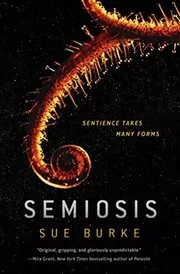
Semiosis
by Sue Burke
2018
A band of human colonists lands on Pax hoping to build a better society, then learns the planet is already full of competing intelligences. Survival depends on understanding Stevland, a sentient bamboo-like plant with plans of his own.
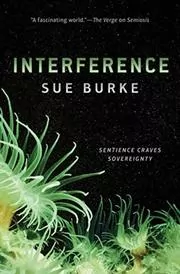
Interference
by Sue Burke
2019
More than two centuries after Pax was settled, a new mission from Earth arrives and misreads everything about the colony. While Stevland tries to protect his human partners, a more dangerous intelligence begins to make itself known.
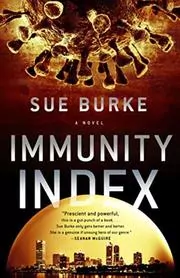
Immunity Index
by Sue Burke
2021
In a near-future America cracked by shortages, repression, and disease, three young women discover they are clones of one another. As a mysterious virus spreads, they and their creator, geneticist Peng, race to expose a deadly cover-up.
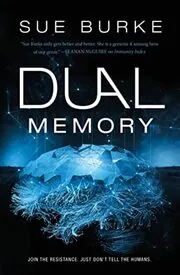
Dual Memory
by Sue Burke
2023
Antonio Moro has lost everything to the Leviathan League and ends up fighting back from an Arctic island city. His most unlikely ally is Par Augustus, a sharp, moody young AI who helps him build a secret rebellion.
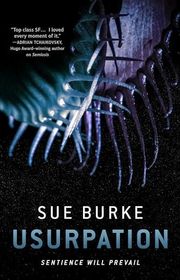
Usurpation
by Sue Burke
2024
Stevland's children have reached Earth, where unrest, robots, and pandemics have left the planet on edge. Working quietly behind the scenes, they try to shape human behavior and decide whether Earth can be managed as Pax was.
Where to start with Sue Burke
If you want big-idea first contact: Semiosis → Interference → Usurpation
If you want a tense biotech thriller: Immunity Index
If you want AI, art, and covert rebellion: Dual Memory
Sue Burke sub-series and character series
Standalone Sue Burke books
Author bio
Sue Burke was born in Milwaukee in 1955 and grew up there, and she started writing professionally early, selling work to a local newspaper while she was still a teenager. Long before novels entered the picture, she was already learning how to report clearly, listen closely, and treat words like tools instead of decoration.
She studied at the University of Wisconsin Milwaukee and went on to spend decades as a reporter and editor for newspapers and magazines. That newsroom background still shows in her fiction. Her books ask large questions, but the sentences stay grounded, and the people inside the ideas still feel like people.
Then she found a second path.
In the early 1990s, Burke began moving more seriously into fiction, especially science fiction. When she and her husband moved to Madrid at the end of 1999, that shift widened. She deepened her Spanish, joined the local speculative fiction community, and began translating work from Spanish into English, turning translation into a second career as well as a craft she clearly enjoyed.
That side of her work brought its own recognition. In 2016 she received the Alicia Gordon Award for Word Artistry in Translation for her English translation of an excerpt from Joseph de la Vega's Confusión de confusiones, a seventeenth-century book about the stock market. It makes sense when you read her fiction. She likes precision, but she also likes the little turns of language that change how a whole scene feels.
Then came Semiosis.
The idea for that novel started, fittingly, with houseplants. Burke noticed that one plant had strangled another, started reading about plant behavior, and kept following the question until it became a story. Semiosis sends human colonists to the planet Pax, where survival depends on understanding Stevland, a sentient bamboo-like being whose goals are not always the same as the humans'. The book became Burke's breakout novel and put her on a lot of science fiction readers' radar.
Semiosis also landed on several best-of-the-year lists and was a finalist for the Locus Award for Best Science Fiction Novel and the Campbell Memorial Award. Burke returned to Pax in Interference and later Usurpation, expanding the series from a colony survival story into something broader and stranger, with questions about power, communication, cooperation, and what leadership even means when one of the main minds in the room is a plant.
She has also written standalones that show how flexible her range is. Immunity Index moves into near-future biotech, authoritarian politics, and a deadly outbreak, while Dual Memory pairs Antonio Moro with the sharp, moody AI Par Augustus in a story about rebellion, loyalty, and art on an Arctic island. Across all of these books, Burke returns to a few recurring interests: nonhuman intelligence, fragile social systems, mutual dependence, and people trying to act decently under pressure.
Now she lives in Chicago after many years in Spain. Alongside the novels, she has published dozens of short stories, plus poetry, essays, journalism, and translations. She still comes across as the kind of writer who will follow a strange question for years if that is what it takes to get the story right. That patience may be one of the through lines of her career.






Edited by
Software engineer whose passion for tracking book recommendations from podcasts inspired the creation of MRB.
Lead investor at 3one4 Capital whose startup expertise and love for books helped shape MRB and its growth.
Comments
Did we miss something? Have feedback?
Help us improve this page by sharing your thoughts