
Semiosis Trilogy Books in Order
Part ofSue Burke Books in OrderSee the Semiosis Trilogy by Sue Burke in order, with short summaries, series background, book-by-book notes, and an easy place for new readers to start.
Last updated:
As an Amazon Associate, we earn from qualifying purchases (at no extra cost to you).
Semiosis Trilogy books in publication order
3 books
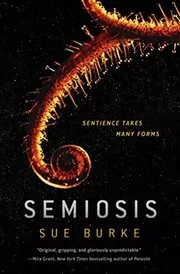
Semiosis
by Sue Burke
2018
A band of human colonists lands on Pax hoping to build a better society, then learns the planet is already full of competing intelligences. Survival depends on understanding Stevland, a sentient bamboo-like plant with plans of his own.
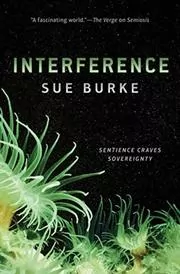
Interference
by Sue Burke
2019
More than two centuries after Pax was settled, a new mission from Earth arrives and misreads everything about the colony. While Stevland tries to protect his human partners, a more dangerous intelligence begins to make itself known.
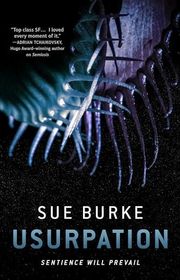
Usurpation
by Sue Burke
2024
Stevland's children have reached Earth, where unrest, robots, and pandemics have left the planet on edge. Working quietly behind the scenes, they try to shape human behavior and decide whether Earth can be managed as Pax was.
Semiosis Trilogy books in chronological order
Series background & context
The Semiosis Trilogy starts with a group of idealistic human colonists trying to build a better society on Pax, an Earthlike planet that proves far stranger than it first looks. Food, weather, and disease are all problems, but the biggest challenge is learning that the local plants and animals are not passive scenery. On Pax, intelligence can grow from roots and leaves.
The key nonhuman presence is Stevland, a sentient rainbow bamboo that slowly becomes one of the series' central minds. Stevland is not human, and Burke never smooths those differences away. The choices this plant makes are shaped by survival, territory, reproduction, and mutual use. That keeps the books feeling like first contact stories even after the humans have already landed. Everyone is still trying to figure out what the other side means, wants, and fears.
Communication is the whole game.
In Semiosis, the story moves across generations of colonists, which gives the series an unusually long view. Children grow up on Pax, customs change, and the settlement learns by trial, error, and loss. The colonists also meet the Glassmakers, an intelligent arthropod species whose place in the ecosystem matters as much as any human plan. The tension is not just survival against nature. It is survival inside a crowded web of species, each using the others in ways that can be helpful, dangerous, or both at once.
Interference picks up centuries later, when a team from Earth arrives and assumes it understands what Pax is. It does not. That book keeps the ecological puzzles of the first novel, but adds political friction, culture clash, and the problem of outsiders who cannot see the real balance of power. By then the series has settled into a tone that is thoughtful, suspenseful, and sometimes darkly funny. Burke likes action, but she is just as interested in the slow consequences of misunderstanding.
By Usurpation, the reach of Pax extends beyond the colony itself. The series starts asking what happens when Stevland's influence travels back to Earth, a planet already full of unrest, competing interests, and fragile systems. The stakes get bigger, but the books still care about ordinary people caught inside larger plans. That is part of what makes the trilogy work. It can handle botany, politics, rebellion, and alien strategy without losing the human scale.
If you're wondering what kind of reading experience this is, think idea-driven science fiction with a strong story spine. These books are about coexistence, control, and the hard work of building trust with minds that do not think like ours. Expect strange biology, shifting alliances, and a lot of time spent asking a basic question: when another species says it wants peace, what does that actually mean?














Edited by
Software engineer whose passion for tracking book recommendations from podcasts inspired the creation of MRB.
Lead investor at 3one4 Capital whose startup expertise and love for books helped shape MRB and its growth.
Comments
Did we miss something? Have feedback?
Help us improve this page by sharing your thoughts