
Steve Zousmer Books in Order
Explore Steve Zousmer's books in order, with concise summaries, where-to-start guidance, and background on his fiction, memoir, and speechwriting guides.
Last updated:
As an Amazon Associate, we earn from qualifying purchases (at no extra cost to you).
Steve Zousmer books in publication order
4 books

Famous
by Steve Zousmer
1979
Co-written with Richard Liebmann-Smith, this early novel turns its attention to fame and the strange pressures surrounding it. It offers a glimpse of Zousmer's fiction before his later writing guides and crime novel.
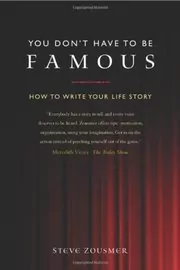
You Don't Have to Be Famous
by Steve Zousmer
2007
A step-by-step guide for people who want to record their own life stories. Zousmer helps new writers choose meaningful material, shape it into a narrative, find an honest voice, and revise toward a finished manuscript.
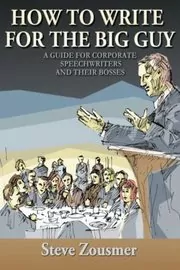
How To Write For The Big Guy
by Steve Zousmer
2011
A practical guide for corporate speechwriters and the executives who rely on them. Drawing on Zousmer's own career, it explores how to build speeches, manage collaboration, and create messages that sound convincing when delivered aloud.
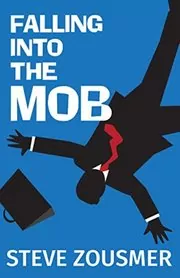
Falling Into the Mob
by Steve Zousmer
2017
Phillip Vail, a divorced 59-year-old speechwriter, meets Sylvia Sforza on a commuter train and is drawn into her New York crime family. When he is offered the top job, Phil must decide how far he will go.
Where to start with Steve Zousmer
To write your life story: You Don't Have to Be Famous
For corporate speechwriting: How To Write For The Big Guy
For a comic crime story: Falling Into the Mob
Steve Zousmer collections, short stories, and related book types
Non-Fiction Books
Standalone Steve Zousmer books
Author bio
Steve Zousmer built his career around helping other people find the right words. His work has moved through newspapers, television news, documentaries, corporate speechwriting, and books, giving him a practical view of how writing changes with the audience and the assignment.
His route into writing began in journalism. Zousmer graduated from Stanford University and the Columbia University Graduate School of Journalism, and he also served as a United States Navy officer in Vietnam.
He worked as a reporter for the Providence Journal-Bulletin and the San Francisco Chronicle. Those jobs put him close to the daily business of reporting, where a writer has to sort facts, meet a deadline, and make a story clear enough for readers who are just arriving.
Television brought another kind of pressure. Zousmer spent years at ABC News, writing for World News Tonight and 20/20, serving as chief writer for Good Morning America, and later working as a senior producer for Nightline. He wrote for major network anchors, where timing, tone, and a sharp opening line all mattered.
Then came documentary work.
Between journalism and corporate speechwriting, he wrote documentaries for organizations including National Geographic, Discovery, Audubon, and the Smithsonian. The range makes sense for a writer who has spent a career translating big subjects into stories that people can follow.
Zousmer later worked as a freelance corporate speechwriter for executives at major companies, as well as public figures including a university president, a mayor, a police commissioner, and Navy admirals. He also taught writing in corporate settings and at the New School and Columbia's journalism program. His experience was not just about polished speeches. It was about helping busy people say what they meant.
That practical streak runs through You Don't Have to Be Famous, his guide for people who want to write their life stories. The book encourages ordinary writers to treat their memories as worth preserving, whether the finished work is meant for family, friends, or a wider audience. It focuses on getting started, shaping material, finding a voice, revising, and keeping expectations realistic.
In How To Write For The Big Guy, Zousmer turns to the work he knew firsthand: writing speeches for corporate leaders. The book looks at the relationship between a speechwriter and an executive, and at the challenge of building a message that sounds natural when someone else delivers it.
His fiction takes a lighter but still work-aware path. Famous, written with Richard Liebmann-Smith, was an early novel. Much later, Falling Into the Mob follows a weary speechwriter, Phillip Vail, whose chance encounter with a woman from a New York crime family pulls him into a dangerous and absurd new life. It mixes mob trouble, politics, romance, and the question of what a person does when the safe old routine stops working.
Zousmer has lived with his wife in a New York suburb, and they have twins. Across his books, the common thread is simple: words have consequences, and good writing starts by paying attention to the person on the other side of the page or podium.



%20-%20Alex%20McKnight%2C%20Book%2013.jpg)




Edited by
Software engineer whose passion for tracking book recommendations from podcasts inspired the creation of MRB.
Lead investor at 3one4 Capital whose startup expertise and love for books helped shape MRB and its growth.
Comments
Did we miss something? Have feedback?
Help us improve this page by sharing your thoughts