
Stephen Baxter Books in Order
See Stephen Baxter books in order, including key series and collaborations with Arthur C Clarke, plus short summaries and where-to-start suggestions.
Last updated: 1 new book added
Coming soonNext book: Galaxy Engines (2027) · Pre-order on Amazon
As an Amazon Associate, we earn from qualifying purchases (at no extra cost to you).
Stephen Baxter books in publication order
85 books
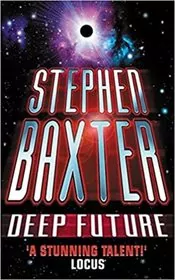
Deep Future
by Stephen Baxter
1985
A nonfiction tour through humanity's possible future, from near-term technology and spaceflight to remote descendants and cosmic endings. Baxter treats speculation seriously, but keeps the ideas clear and readable.
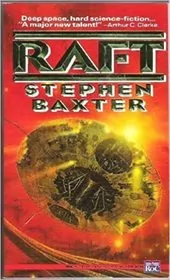
Raft
by Stephen Baxter
1991
Refugees from a war with the Xeelee are stranded in a universe where gravity is crushingly strong and stars are tiny and short-lived. Survival depends on understanding impossible physics before their harsh new home kills them.
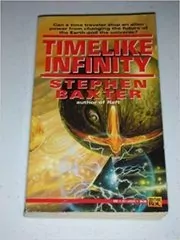
Timelike Infinity
by Stephen Baxter
1992
Humanity faces alien domination in the far future, and a wormhole offers a desperate chance to change history. Michael Poole and his allies gamble on time travel, singularities, and a future that may already be closing.
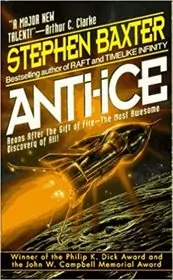
Anti-Ice
by Stephen Baxter
1993
In an alternate Victorian age, Britain discovers a vast new power source called anti-ice and turns it into weapons and spacecraft. The result is imperial adventure, lunar travel, and a much stranger nineteenth century.
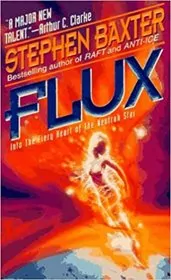
Flux
by Stephen Baxter
1993
Dura lives in a human society engineered to survive inside a neutron star, where people are tiny and the physics is brutal. When her world starts to fail, she is pulled into a much larger conflict.
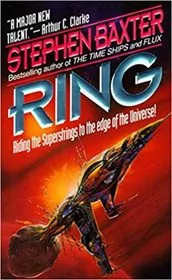
Ring
by Stephen Baxter
1994
Human explorers ride a starship into the far future and toward the Xeelee Ring, a structure on a scale that dwarfs civilizations. The journey opens onto the universe's deepest war and humanity's small place inside it.
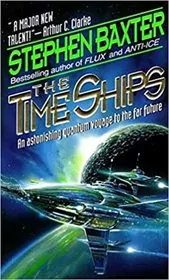
The Time Ships
by Stephen Baxter
1995
Wells's Time Traveller sets out again and finds branching histories, strange descendants, and futures far worse than he imagined. Baxter turns a classic sequel into a big, brainy time-travel adventure.

Voyage
by Stephen Baxter
1996
In this alternate history, NASA skips the shuttle era and keeps pushing toward Mars. The dream is exhilarating, but the politics, engineering, and personal costs are just as formidable as the distance.

Gulliverzone
by Stephen Baxter
1997
Fourteen-year-old Metaphor enters a virtual-reality world built from Gulliver's Travels and discovers the danger is not just a game. It is a brisk YA story about imagination, tech, and getting trapped in someone else's design.
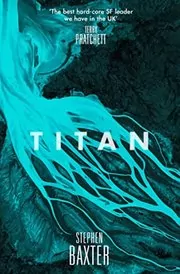
Titan
by Stephen Baxter
1997
With global tensions rising, NASA launches a last-chance mission to Saturn's moon Titan. The voyage is both a technical gamble and a hard test of the people sent farthest from home.
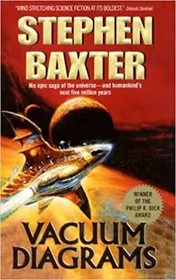
Vacuum Diagrams
by Stephen Baxter
1997
These linked Xeelee stories sweep across millions of years, from humanity's early struggles to far-future transformations. Together they sketch the sheer scale of Baxter's most ambitious future history.

Moonseed
by Stephen Baxter
1998
Sealed Apollo rocks release a strange contaminant that starts rewriting matter itself. What begins as a scientific puzzle becomes a planet-wide catastrophe with nowhere safe to hide.
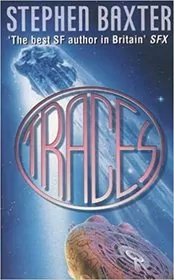
Traces
by Stephen Baxter
1998
This collection moves between altered pasts, distant futures, and strange presents. It is a strong sampler of Baxter's range, from alternate history to hard-science speculation.

Webcrash
by Stephen Baxter
1998
Metaphor is caught between clashing virtual worlds, one styled like space opera and the other like Viking saga. The book turns cyberspace into a fast YA survival story with real stakes.
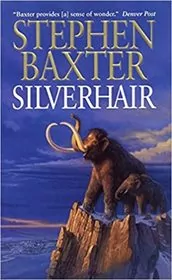
Silverhair
by Stephen Baxter
1999
On an Arctic island, one mammoth clan has survived into the age of humans. Silverhair must keep her family alive as the old world closes and a new predator takes over.
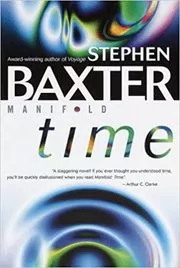
Time
by Stephen Baxter
1999
Reid Malenfant faces a lonely universe and the possibility that intelligence may be vanishing faster than humanity can spread. It mixes big cosmology with one man's refusal to accept limits.

Long Tusk
by Stephen Baxter
2000
At the close of the Ice Age, Long Tusk must guide his herd through a world growing warmer and more crowded with humans. Survival becomes a test of instinct, memory, and change.
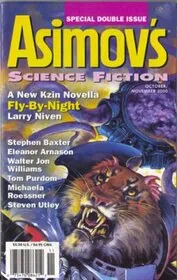
On the Orion Line
by Stephen Baxter
2000
Set during humanity's long Xeelee wars, this story follows soldiers on a brutal defensive frontier. It is a concentrated dose of Baxter's large-scale military science fiction.
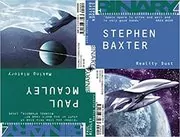
Reality Dust
by Stephen Baxter
2000
A Xeelee novella that reaches far into humanity's future and the fabric of space-time itself. Baxter uses a compact story to hint at huge physics and even huger consequences.
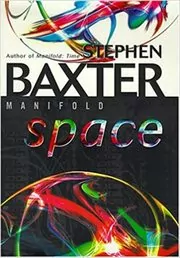
Space
by Stephen Baxter
2000
In another version of reality, Malenfant encounters a crowded universe and alien messages that change the scale of the problem. The novel asks what first contact looks like when humanity is late to the party.

The Gravity Mine
by Stephen Baxter
2000
In the far future, a consciousness awakens in the ruins of an ancient gravity mine built around a black hole. The story looks at identity, memory, and the cold end of human history.
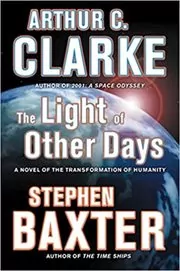
The Light of Other Days
by Stephen Baxter
2000
A breakthrough in wormhole physics creates the “WormCam,” a device that can look anywhere in space and back along the stream of time. As a media empire races to control it, the end of privacy forces people and governments to confront buried secrets and history itself.
Recommended by
1 person David Friedberg recommended this book
David Friedberg
"One of my favorite sci-fi books." - David Friedberg
David Friedberg's recommendation of this book

Hardyware: The Art of David A. Hardy
by Stephen Baxter
2001
A visual survey of David A. Hardy's space art, with Baxter contributing a foreword. It is as much about the long dream of spaceflight as it is about one artist's career.

Omegatropic
by Stephen Baxter
2001
Part essay collection, part critical notebook, this volume gathers Baxter's reflections on science fiction and the science behind it. It is best for readers curious about how his ideas connect to the wider field.
Origin
by Stephen Baxter
2001
A new Moon appears, the cosmos grows stranger, and Malenfant goes searching for the beings behind the Manifold. The story widens the trilogy into a darker, more overtly cosmic mystery.

The Ghost Pit
by Stephen Baxter
2001
During a hunt for elusive alien beings, Raida and her partner crash on a moon and must cross dangerous territory on foot. The journey becomes a test of trust as much as survival.

Evolution
by Stephen Baxter
2002
Starting with small primates after the dinosaurs and pushing far into humanity's future, this novel treats evolution as one long family story. The scale is huge, but the focus stays on survival, adaptation, and loss.
Icebones
by Stephen Baxter
2002
The mammoth story takes a startling turn to Mars, where descendants of the old herd face a new environment and new pressures. It is the strangest book in the trilogy, but it still cares about family and endurance.

Phase Space
by Stephen Baxter
2002
This collection returns to Reid Malenfant and the Manifold, then ranges farther into other speculative corners. It works as both companion piece and idea lab.
Riding the Rock
by Stephen Baxter
2002
A Xeelee novella about life lived on the edge of cosmic war and enormous engineering. Short though it is, it carries the series' usual sense of scale, danger, and stubborn human ambition.
Coalescent
by Stephen Baxter
2003
Looking for his missing sister, George Poole uncovers a secret human community hidden deep in history. The novel ties intimate family mystery to the vast Xeelee backdrop.
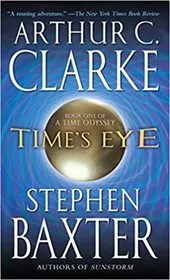
Time's Eye
by Stephen Baxter
2003
Earth is shattered into zones from different eras, reassembled into a patchwork world called Mir. Soldiers from modern peacekeeping forces, Mongol hordes, and troops under Alexander the Great must share a single planet even as they search for the alien intelligence that rearranged time.
Ages in Chaos
by Stephen Baxter
2004
This is Baxter's account of James Hutton and the birth of deep-time geology for American readers. It follows the science, the arguments, and the long shift in how humans imagined Earth's age.

Exultant
by Stephen Baxter
2004
Humanity and the Xeelee collide in a brutal struggle near the center of the Galaxy. Baxter turns war into something immense, strategic, and terrifyingly impersonal.
Mayflower II
by Stephen Baxter
2004
This Xeelee novella follows a generation ship and the human drive to keep moving, even when the future looks impossible. It is compact, grim, and full of long-range consequence.
Revolutions In The Earth
by Stephen Baxter
2004
Baxter tells the story of James Hutton and the discovery of deep geological time. It is nonfiction, but it shares his fiction's fascination with scale and slow transformation.

The Hunters of Pangaea
by Stephen Baxter
2004
This collection gathers tales of exploration, wonder, and speculative adventure. It is a lighter doorway into Baxter's shorter fiction, but the big ideas are still there.
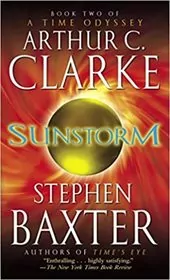
Sunstorm
by Stephen Baxter
2005
Bisesa Dutt returns from Mir with warnings about the Firstborn, just as scientists discover an artificial disturbance in the Sun that will bathe Earth in lethal radiation. The novel follows the race to build a colossal shield and the political turmoil that such a project inevitably sparks.
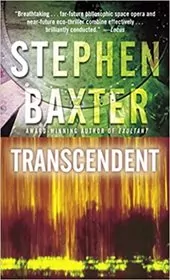
Transcendent
by Stephen Baxter
2005
As climate collapse batters Earth, Michael Poole's life is watched and nudged by forces from a remote future. The book joins near-future crisis to the vast, unsettling logic of the Xeelee universe.
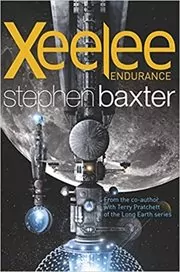
Xeelee Endurance
by Stephen Baxter
2005
The first Xeelee collection in years, this volume adds fresh stories to Baxter's long-running future history. It is especially good for readers who want more corners of that immense setting.
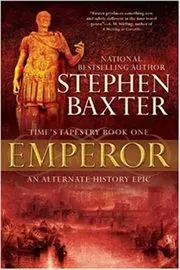
Emperor
by Stephen Baxter
2006
A prophecy shadows one family through Roman Britain, turning ordinary lives into part of a bigger design. The result is historical fiction with a quiet but persistent science-fiction pressure.

Resplendent
by Stephen Baxter
2006
These linked stories trace humanity's rise, fall, and transformation over immense stretches of time, often through the eyes of Luru Parz. It is one of Baxter's best books for the grand sweep of the Xeelee universe.

Cilia-of-Gold
by Stephen Baxter
2007
On a distant world, explorers confront life that may be linked to long-lost humans transformed almost beyond recognition. It is a haunting Xeelee story about adaptation and estrangement.
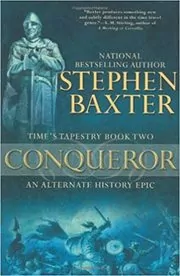
Conqueror
by Stephen Baxter
2007
The Time's Tapestry saga moves to 1066, where the fate of England becomes a target for intervention. Baxter blends battle, dynastic struggle, and time-bending manipulation.
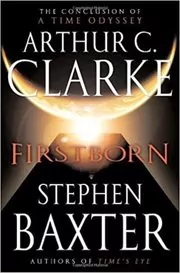
Firstborn
by Stephen Baxter
2007
In the concluding Time Odyssey novel, the Firstborn send a "quantum bomb" toward Earth, threatening to erase the planet from normal space‑time. Bisesa Dutt and her allies on Earth, Mars, and Mir must decide how far they are willing to go to survive—and what kind of future they want.

Last Contact
by Stephen Baxter
2007
Scientists discover the universe is ending far sooner than anyone believed. Baxter narrows the apocalypse to a mother and daughter deciding how to spend the last hours.
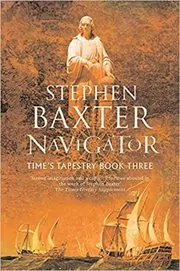
Navigator
by Stephen Baxter
2007
In 1492, the fall of Granada and Columbus's voyage become part of the Weaver's long campaign to reshape history. The novel keeps one foot in real history and the other in unsettling alternate possibilities.

The H-Bomb Girl
by Stephen Baxter
2007
In 1962 Liverpool, fourteen-year-old Laura worries about school, family, and the Cuban Missile Crisis all at once. It is a lively YA coming-of-age story with Cold War dread humming underneath.

Flood
by Stephen Baxter
2008
The seas keep rising, past every forecast and every plan. Baxter follows a scattered cast through a global collapse that feels frighteningly practical as the world drowns.
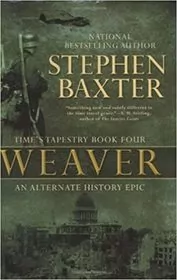
Weaver
by Stephen Baxter
2008
In a Nazi-dominated 1940s Britain, the long time-war finally comes to a head. The book is the darkest of the sequence, with history itself feeling unstable and occupied.
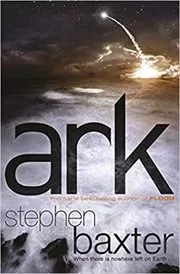
Ark
by Stephen Baxter
2009
As Earth becomes unlivable, a privileged few board a desperate mission to carry humanity onward. The novel asks who gets saved, what survival costs, and what kind of civilization is worth rebuilding.
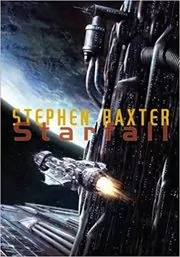
Starfall
by Stephen Baxter
2009
This Xeelee novella pushes humanity farther into deep time and deep-space struggle. It is short, but it opens another sharp window onto Baxter's vast future war.
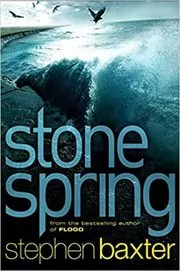
Stone Spring
by Stephen Baxter
2010
In an alternate Stone Age Europe, rising seas threaten the land between Britain and the continent. One woman's determination to hold back the water becomes the seed of a different civilization.
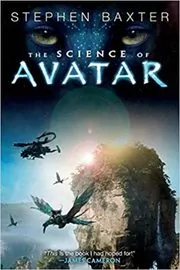
The Science of Avatar
by Stephen Baxter
2010
Baxter unpacks the biology, physics, and spaceflight ideas behind the film Avatar. It is a quick, accessible guide for readers who like their movie spectacle explained.
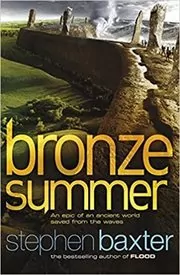
Bronze Summer
by Stephen Baxter
2011
Northland survives the sea, only to face organized Bronze Age powers from beyond its borders. The novel shifts from survival story to clash of cultures and empires.
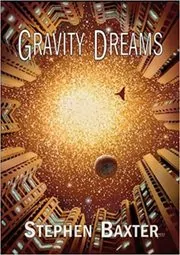
Gravity Dreams
by Stephen Baxter
2011
This Xeelee novella returns to humanity's far-future descendants, where memory, identity, and survival have become cosmic questions. It is brief, strange, and written on Baxter's favorite scale.
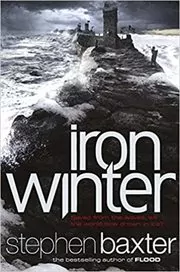
Iron Winter
by Stephen Baxter
2012
After centuries of survival behind the Wall, Northland faces climate shift, pressure from outsiders, and the limits of old protections. The trilogy closes with weather, politics, and history all turning at once.
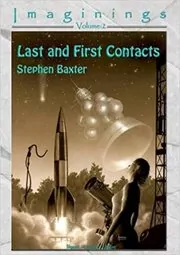
Last and First Contacts
by Stephen Baxter
2012
This short-story collection gathers recent pieces, including first-contact ideas and far-future speculations. It is a compact showcase for Baxter in shorter form.

The Long Earth
by Stephen Baxter
2012
A cheap stepper device opens an endless chain of parallel Earths, suddenly changing migration, politics, and the meaning of frontier. Joshua Valienté and the artificial intelligence Lobsang head off to see what humanity will make of it.

The Wheel of Ice
by Stephen Baxter
2012
The Second Doctor arrives at a mining colony in Saturn's rings and walks into sabotage, secrets, and old fears. Baxter gives classic Doctor Who a hard-SF setting without losing the fun.
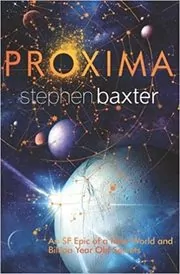
Proxima
by Stephen Baxter
2013
Exiles and colonists are sent to a harsh world in the Proxima Centauri system, where survival is hard and the wider plan is murkier than advertised. Baxter turns colonization into a chilly frontier test.

The Long War
by Stephen Baxter
2013
A generation after Step Day, the new communities of the Long Earth are no longer content to stay quiet. Expansion brings conflict, new species, and the first sense that humanity can damage even infinite frontiers.

Universes
by Stephen Baxter
2013
These stories revisit several Baxter settings, including the drowned world of Flood and Ark and the skewed empire of Anti-Ice. It is a good book for readers who enjoy side doors into larger worlds.

The Long Mars
by Stephen Baxter
2014
With the Long Earth in flux, Joshua and Sally discover another route outward, this time toward Mars across the parallel worlds. Exploration stays exciting, but the human complications keep multiplying.
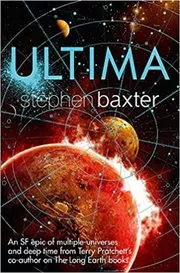
Ultima
by Stephen Baxter
2014
The sequel to Proxima widens into manipulated histories, alien designs, and a threat that reaches far beyond one colony world. It is stranger and more cosmic than the first book.
Landfall
by Stephen Baxter
2015
These linked tales revisit the Flood and Ark future after humanity scatters beyond a drowned Earth. The focus shifts from the initial disaster to the hard, messy work of carrying on.

Newton's Aliens
by Stephen Baxter
2015
This collection returns to the alternate-history universe of Anti-Ice through linked stories and side paths. It is best read as a broader tour of that steam-powered, scientifically skewed world.

The Long Utopia
by Stephen Baxter
2015
Far down the chain of worlds, Joshua and his companions find a green refuge that still holds danger. The book keeps asking whether endless new land really solves old human problems.

The Paradox Conspiracy
by Stephen Baxter
2015
This collection gathers Baxter's Jones and Bennet stories, mixing Cold War anxieties, unexplained phenomena, and sly alternate history. The mood is part conspiracy thriller, part period science fiction.
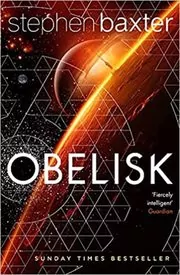
Obelisk
by Stephen Baxter
2016
This collection includes stories set in the Proxima universe and related pieces. It works like an expansion pack, adding texture and side angles to Baxter's newer settings.
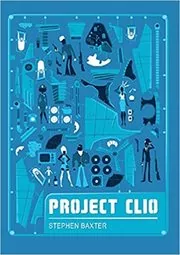
Project Clio
by Stephen Baxter
2016
Baxter and Eric Brown build an alternate-history adventure around a project that can peer into the past. It is part thought experiment, part warning about how history gets used.

The Long Cosmos
by Stephen Baxter
2016
In the last Long Earth book, Joshua and Lobsang make their boldest journey yet. The series ends by turning its frontier story back toward the largest questions in the sky.
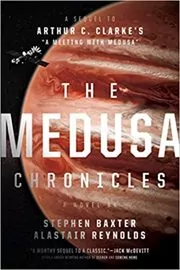
The Medusa Chronicles
by Stephen Baxter
2016
Building on Arthur C Clarke's classic novella, this novel follows cyborg pilot Howard Falcon from his first descent into Jupiter's atmosphere through decades of shifting alliances between humans, robots, and Jovian life. As spacefaring powers rise and fall, Falcon must decide where his loyalties truly lie.

The Martian in the Wood
by Stephen Baxter
2017
Long after the first invasion, an isolated Martian presence draws human curiosity into an English wood. Baxter uses Wellsian material for a quieter, eerie aftermath story.
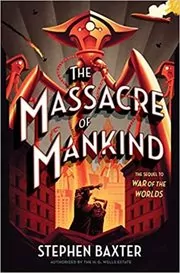
The Massacre of Mankind
by Stephen Baxter
2017
Baxter picks up The War of the Worlds years later, with Mars preparing a second, harsher assault. He keeps Wells's spirit in mind while expanding the conflict to imperial and global scale.
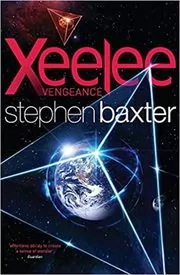
Vengeance
by Stephen Baxter
2017
The Xeelee alter humanity's past, and Michael Poole turns that wound into a personal vendetta. The result is a fierce, time-bending return to one of Baxter's core universes.
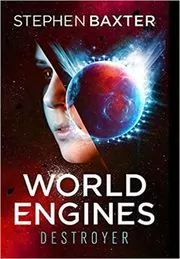
Destroyer
by Stephen Baxter
2019
Earth has survived one crisis, only to learn that a much older threat is on its way through time. Reid Malenfant is pulled into a story of world-making machines and deep cosmic engineering.

Redemption
by Stephen Baxter
2019
Michael Poole's war with the Xeelee reaches its bitter climax, and the cost keeps growing. Baxter uses the sequel to push revenge, time, and cosmic scale right up against each other.

Creator
by Stephen Baxter
2020
Lost among alternate Solar Systems, Reid Malenfant and Greggson Deirdra hunt for the truth about life, Earth, and the engines that shaped worlds. It is the wider, stranger half of the duology.
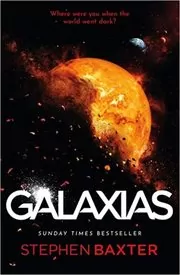
Galaxias
by Stephen Baxter
2021
Near-future Earth is hit by a devastating cosmic intervention, beginning with the Sun seemingly going dark. Baxter turns the premise into a large-scale crisis story about survival, cooperation, and who might be watching us.

The Thousand Earths
by Stephen Baxter
2022
In the far future, the last human refuges are failing, and Mela can only save people piecemeal while time runs out. The book is intimate in voice but vast in scope.

Creation Node
by Stephen Baxter
2024
In 2255, Salma encounters an impossible object on the edge of the Solar System and the being hidden inside it. At the same time, news from the galactic center turns first contact into a survival crisis.

Fortress Sol
by Stephen Baxter
2024
In the far future, humanity has rebuilt the Solar System as a colossal defensive machine against a feared alien enemy. Then a returning starship brings a second branch of humankind, and old certainties start to crack.

Hearthspace
by Stephen Baxter
2025
Humans have spread across the worlds of a gigantic dark-matter star and built a civilization on impossible scale. Their greatest threat turns out not to be the setting, but something older and more familiar in human history.

Galaxy Engines
by Stephen Baxter
2027
Ancient artificial intelligences reconstruct Greggson Deirdra after her failed attempt to save Earth from a planetary collision. Awakened without memories of her death, she must confront a new catastrophe that threatens the entire galaxy.
Where to start with Stephen Baxter
If you want giant, idea-driven space opera: Raft → Timelike Infinity → Ring
If you like alternate history and classic SF riffs: The Time Ships → Voyage → Anti-Ice
If you want big-concept disaster fiction: Flood → Ark → Landfall
If you want evolution and deep time: Evolution → Silverhair → Long Tusk → Icebones
If you want parallel worlds and collaborative Baxter: The Long Earth → The Long War → The Long Mars
Stephen Baxter sub-series and character series
- A Time Odyssey (Stephen Baxter) books in order
- Adventures of the Second Doctor books in order
- Anti-Ice books in order
- Destiny's Children books in order
- Flood books in order
- Jones & Bennet books in order
- Long Earth (Stephen Baxter) books in order
- Mammoth books in order
- Manifold books in order
- NASA Trilogy books in order
- Northland books in order
- Proxima (Stephen Baxter) books in order
- The Medusa Chronicles (Stephen Baxter) books in order
- Time's Tapestry books in order
- World Engines books in order
- Xeelee Sequence books in order
A Time Odyssey (Stephen Baxter) books in order
Explore this seriesA Time Odyssey (Stephen Baxter) books in chronological order
Adventures of the Second Doctor books in order
Explore this seriesAdventures of the Second Doctor books in chronological order
Flood books in order
Explore this seriesLong Earth (Stephen Baxter) books in order
Explore this seriesLong Earth (Stephen Baxter) books in chronological order
NASA Trilogy books in order
Explore this seriesProxima (Stephen Baxter) books in order
Explore this seriesThe Medusa Chronicles (Stephen Baxter) books in order
Explore this seriesThe Medusa Chronicles (Stephen Baxter) books in chronological order
Time's Tapestry books in order
Explore this seriesWorld Engines books in order
Explore this seriesStephen Baxter collections, short stories, and related book types
Collections
Short Stories/Novellas
Non-Fiction
Standalone Stephen Baxter books
Author bio
Stephen Baxter was born in Liverpool in 1957, and he came to science fiction by way of mathematics, engineering, and years in the classroom.
Before writing full time, he studied mathematics at Cambridge, earned a doctorate in engineering at Southampton, later added an MBA, and taught maths, physics, and information technology. That background shows up all through his fiction. Even when the ideas get huge, the books usually feel built from practical questions: How would this machine work? What would this discovery do to ordinary lives?
He started publishing short fiction in the late 1980s, and his first novel, Raft, arrived in 1991. It announced a lot of what readers still come to him for now: hard science, a taste for extreme settings, and a willingness to think on scales that run from a single family to the fate of galaxies.
Then came The Time Ships, his authorized sequel to The Time Machine. It gave him a wider audience and showed another side of his work. Baxter can do giant concepts, yes, but he also likes taking an old science fiction idea and worrying it from every angle until it turns into something new.
That mix runs through much of his best-known fiction. Voyage imagines a Mars program that never lost momentum after Apollo. Evolution turns the story of humanity into a long, strange family saga. Flood and Ark bring the scale down to a near-future Earth in trouble, while the Xeelee books push outward into deep time, alien war, and some of the biggest structures in modern science fiction.
He also writes well with others.
His collaborations with Arthur C. Clarke, Terry Pratchett, and Alastair Reynolds do not read like side projects. Books such as The Light of Other Days, the A Time Odyssey trilogy, The Long Earth, and The Medusa Chronicles show how flexible he is. He can stay grounded in engineering detail, then pivot to wonder, satire, or cosmic dread without losing his balance.
Across all of this, certain patterns keep returning. Readers tend to find big questions about time, evolution, first contact, extinction, and survival. They also find practical people, engineers, scientists, explorers, teachers, children, colonists, trying to think clearly while the universe gets larger and stranger around them.
Baxter has been a chartered engineer, a fellow of the British Interplanetary Society, a former President of the British Science Fiction Association, and a Vice-President of the H. G. Wells Society. He lives in Northumberland with his wife. That feels fitting. His books are full of distant futures and impossible machines, but they are written by somebody who has clearly spent a lot of time thinking about how the real world works first.


Edited by
Software engineer whose passion for tracking book recommendations from podcasts inspired the creation of MRB.
Lead investor at 3one4 Capital whose startup expertise and love for books helped shape MRB and its growth.
Comments
Did we miss something? Have feedback?
Help us improve this page by sharing your thoughts