
Scarlet Letter Trilogy Books in Order
Part ofJohn Updike Books in OrderThis page lists the Scarlet Letter Trilogy by John Updike in order, with summaries, background, and help choosing the best place to begin.
Last updated:
As an Amazon Associate, we earn from qualifying purchases (at no extra cost to you).
Scarlet Letter Trilogy books in publication order
3 books
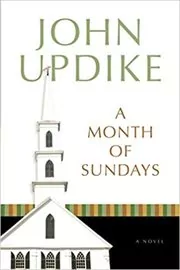
A Month of Sundays
by John Updike
1974
Disgraced minister Tom Marshfield is sent to a desert retreat, where he spends a month writing through lust, faith, guilt, and self-justification. The novel is comic, slippery, and much less pious than its clerical setting suggests.
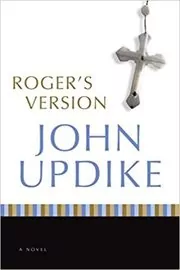
Roger's Version
by John Updike
1986
Theology professor Roger Lambert finds his settled unbelief challenged by a graduate student who thinks computers can prove God. Around that debate, Updike builds a tense story of marriage, lust, and intellectual vanity.

S.
by John Updike
1988
Sarah Worth leaves her polished Massachusetts life for an Arizona ashram and tells the story through letters and taped messages. The novel is funny, revealing, and alert to the gap between liberation and self-deception.
Scarlet Letter Trilogy books in chronological order
Series background & context
The Scarlet Letter Trilogy is less a straight series than a set of novels in conversation with one another. A Month of Sundays, Roger's Version, and S. are all modern reworkings of ideas and character patterns from Hawthorne's The Scarlet Letter. They are not sequels in the usual sense. You can read each one on its own. But read together, they show Updike returning again and again to the knot where sex, guilt, belief, and self-invention all meet.
They are connected by argument more than plot.
In A Month of Sundays, the center is a disgraced minister, Tom Marshfield, writing through his exile at a clergy retreat in the Southwest. The book is funny, slippery, and full of religious language used by a man who is not nearly as honest as he thinks he is. Roger's Version shifts to academia, where theology professor Roger Lambert finds his calm, skeptical world rattled by a young computer-minded believer who wants to prove God mathematically. Around that intellectual clash, Updike builds a very human mess of jealousy, marriage, and temptation.
Then S. changes the angle again. Its heroine, Sarah Worth, leaves her comfortable Massachusetts life for an Arizona ashram, telling her story through letters, tapes, and fragments of correspondence. The form is part of the fun. You watch a woman narrate her escape in real time, and the distance between spiritual longing and spiritual theater becomes part of the tension.
What makes these books feel like a true cluster is not just the Hawthorne connection. It is Updike's recurring interest in people who try to turn desire into an idea, or an idea into an excuse. Ministers, professors, seekers, gurus, spouses, lovers, students, they are all talking about truth while also protecting themselves from it. That gives the trilogy a sharper, more comic edge than the label might suggest.
The settings do a lot of work too. A desert motel for troubled clergy, a study filled with theology and computer talk, a sunblasted ashram in Arizona, these are very modern American places, but each one has the old Puritan shadow faintly behind it. Updike is clearly interested in how Hawthorne's moral world survives in the late twentieth century, not as costume drama but as private shame, erotic rivalry, and endless self-explanation.
If you are deciding what to expect, think of these books as novels of ideas that never stop being bodily and personal. They talk about God, but they are also about beds, marriages, vanity, language, and the stories people tell to justify themselves. That combination makes the trilogy brainy, comic, uneasy, and often surprisingly readable, even when the characters are making a thorough mess of their lives.










Edited by
Software engineer whose passion for tracking book recommendations from podcasts inspired the creation of MRB.
Lead investor at 3one4 Capital whose startup expertise and love for books helped shape MRB and its growth.
Comments
Did we miss something? Have feedback?
Help us improve this page by sharing your thoughts