
Rabbit Angstrom Books in Order
Part ofJohn Updike Books in OrderFind the Rabbit Angstrom books by John Updike in order, with quick summaries, series background, and tips on where to start with Harry Angstrom.
Last updated:
As an Amazon Associate, we earn from qualifying purchases (at no extra cost to you).
Rabbit Angstrom books in publication order
5 books
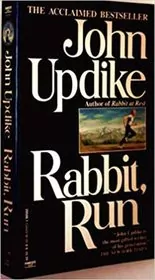
Rabbit, Run
by John Updike
1960
Harry Angstrom, a onetime high school basketball star, impulsively abandons his wife and child and keeps trying to outrun responsibility. What follows is a restless, intimate portrait of desire, guilt, and a man who cannot stay put.
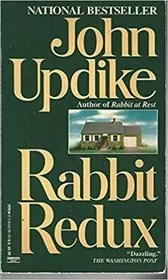
Rabbit Redux
by John Updike
1971
Ten years after *Rabbit, Run*, Harry Angstrom is older, heavier, and living through the upheaval of the late 1960s. When his home fills with unexpected guests, his shaky idea of order starts to come apart.
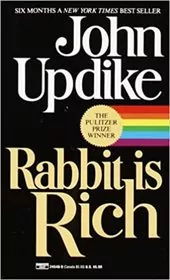
Rabbit Is Rich
by John Updike
1981
Rabbit has money now, running a Toyota dealership and living comfortably in Brewer, but prosperity brings no lasting peace. Family tension, especially around his son Nelson, keeps cracking the good life open.
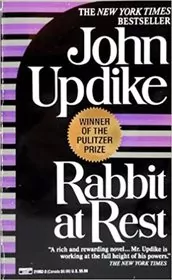
Rabbit at Rest
by John Updike
1990
Older now and troubled by his heart, Rabbit tries to coast on comfort, food, money, and habit. Instead he is pulled into family strain, old desires, and a final reckoning with time.

Licks of Love
by John Updike
2000
These later stories are preoccupied with memory, loss, desire, and middle-aged aftermath. The book ends with *Rabbit Remembered*, a moving coda to the Rabbit saga focused on the family he left behind.
Rabbit Angstrom books in chronological order
Series background & context
Harry Angstrom, called Rabbit, is one of Updike's central characters, a former high school basketball star from Brewer, Pennsylvania, who reaches adulthood already feeling trapped. When the series opens in Rabbit, Run, he is twenty-six, married, and a father, but he bolts from domestic life on impulse. That first act of flight sets the tone for everything that follows. These books are interested less in mystery-plot suspense than in the way one man's appetites, fears, and half-formed beliefs keep reshaping his family and everyone around him.
The setting matters a lot. Brewer, Mount Judge, car lots, diners, churches, suburban streets, and later a Florida condo are not just background scenery. They show the changing mood of postwar America, from the restless late 1950s to the social upheaval of the 1960s, the consumer confidence of the 1970s and 1980s, and the health anxieties and family unraveling of Rabbit's final years. If you want a long fictional portrait of ordinary American life moving through decades, this is where Updike did some of his most sustained work.
He doesn't stop running just because he settles down.
Rabbit Redux brings him back ten years later, heavier, angrier, and living through a country that feels louder and less stable than the one he once knew. Rabbit Is Rich finds him prosperous at last, running a Toyota dealership and trying to enjoy money, status, and domestic comfort while his son Nelson keeps testing the limits of the family. Rabbit at Rest turns toward age, illness, old temptations, and the fact that time does not bargain.
What links the books is Rabbit himself: impulsive, selfish, charismatic, confused, often exasperating, sometimes oddly touching. Updike never tries to sand him smooth. Rabbit can be weak, lustful, evasive, and careless with other people, yet he also has flashes of genuine longing, for grace, for freedom, for some proof that life adds up to more than routine and regret. That mix is what makes the series feel alive.
The tone shifts from book to book. Parts of the saga are funny, parts are raw, and parts are quietly sad. There is a lot here about marriage, adultery, money, class, race, politics, religion, and the body wearing down. But the books stay readable because the stakes are always personal first. A bad decision at breakfast can echo for years.
If you are wondering what to expect, think of the Rabbit books as one long life story told in four stops, with America aging around the man at the center. They are not comfort reads, exactly, but they are absorbing, intimate, and unusually good at showing how private choices become family history.







Edited by
Software engineer whose passion for tracking book recommendations from podcasts inspired the creation of MRB.
Lead investor at 3one4 Capital whose startup expertise and love for books helped shape MRB and its growth.
Comments
Did we miss something? Have feedback?
Help us improve this page by sharing your thoughts