
Robert Van Gulik Books in Order
Explore Robert Van Gulik's books in order, with Judge Dee reading order, quick summaries, series background, and clear ideas for where to start.
Last updated:
As an Amazon Associate, we earn from qualifying purchases (at no extra cost to you).
Robert Van Gulik books in publication order
28 books
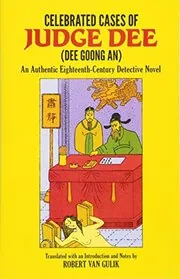
Celebrated Cases of Judge Dee / Dee Goong An
by Robert Van Gulik
1949
Van Gulik's translation of an older Chinese detective novel introduces Judge Dee through three intertwined cases. It is less a modern whodunit than a window into how crime, law, and justice were imagined in imperial China.
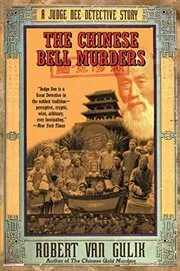
The Chinese Bell Murders
by Robert Van Gulik
1958
Newly posted to Poo-yang, Judge Dee reopens the killing of a butcher's daughter while probing a sinister temple and a baffling skeleton case. The three investigations show how calmly he can work through noise, fear, and social pressure.

The Chinese Gold Murders
by Robert Van Gulik
1959
In his first chronological case, Judge Dee arrives at rough Peng-lai and inherits his predecessor's murder. A missing bride, ghost stories, a prowling tiger, and hints of smuggling make the district feel cursed.

The Chinese Lake Murders
by Robert Van Gulik
1960
During a festival season in lakeside Han-yuan, Judge Dee faces three murders tied to pleasure boats, politics, and old grudges. The case mixes a lush setting with a darker look at greed and desire.
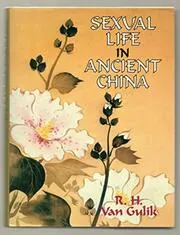
Sexual Life in Ancient China
by Robert Van Gulik
1961
A wide-ranging study of sex, marriage, custom, and social attitudes in China from antiquity to 1644. Van Gulik writes as a historian, using texts and art to challenge older Western stereotypes.
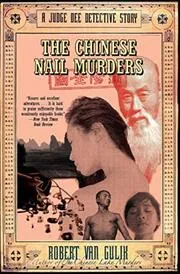
The Chinese Nail Murders
by Robert Van Gulik
1961
Judge Dee juggles three grim cases, including a headless corpse and the killing of a respected merchant. As pressure from higher officials builds, the novel turns into one of the series' sharpest studies of law and forensic detail.
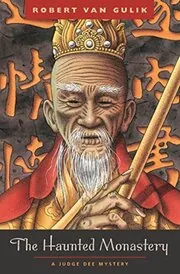
The Haunted Monastery
by Robert Van Gulik
1961
A storm strands Judge Dee and his wives in an isolated Taoist monastery with a bad reputation. One long night brings murder, hidden corruption, and the sort of locked-in tension Van Gulik handles very well.
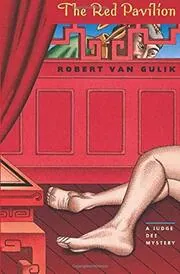
The Red Pavilion
by Robert Van Gulik
1961
Judge Dee's chance meeting with the courtesan Autumn Moon draws him into a chain of deaths on Paradise Island. Beneath the elegant setting lies a sad, tangled story of love, status, and exploitation.
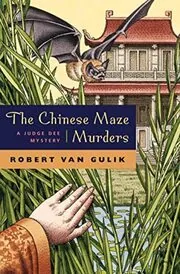
The Chinese Maze Murders
by Robert Van Gulik
1962
On taking charge in Lan-fang, Judge Dee finds a town bent by corruption and three tangled mysteries. Poisoned fruit, hidden letters, murder, and a dangerous maze lead him into his first full-length case.
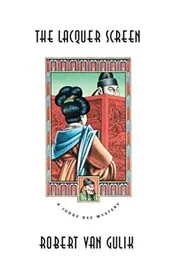
The Lacquer Screen
by Robert Van Gulik
1962
A senior magistrate seems to see a murder appear on a lacquer screen, then a rich banker's death looks like suicide. Dee goes undercover among robbers to learn how the two puzzles connect.

The Emperor's Pearl
by Robert Van Gulik
1963
During the Dragon Boat races, Judge Dee watches a festive day turn deadly. A murdered student, a collector's household, and a seemingly cursed imperial pearl lead him toward a sinister riverside villa.

The Monkey and The Tiger
by Robert Van Gulik
1965
This volume pairs two shorter Judge Dee adventures. In one, a gibbon's stolen ring points to murder, and in the other Dee must face armed bandits while untangling a killing in an isolated country house.

The Phantom of the Temple
by Robert Van Gulik
1965
A Buddhist temple, missing gold, a vanished young woman, and a headless corpse give Dee plenty to sort through. The story leans into eerie rumors but stays focused on theft, deception, and murder.
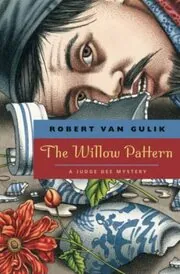
The Willow Pattern
by Robert Van Gulik
1965
Now chief judge in Chang-an, Dee investigates three murders linked to one of the capital's oldest families. The case is tighter, more political, and more urban than many of the earlier district mysteries.

Murder in Canton
by Robert Van Gulik
1966
Dee travels incognito to Canton, a trading port crowded with foreign merchants and official secrets, to find a missing censor. The result is a dense, late-career mystery with politics, disguise, and real danger.
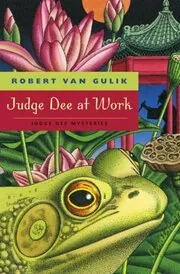
Judge Dee at Work
by Robert Van Gulik
1967
These eight short stories follow Judge Dee across different stages of his career. They are quick, clever cases that show how Van Gulik could build atmosphere and fair-play puzzles in very little space.
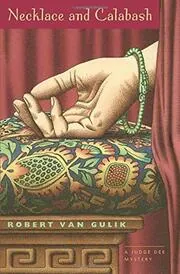
Necklace and Calabash
by Robert Van Gulik
1967
What begins as a quiet fishing break near the Water Palace turns into a delicate investigation with a body in the river and an imperial princess asking for help. Dee has to solve the mystery without starting a political disaster.

Poets and Murder / The Fox-Magic Murders
by Robert Van Gulik
1968
At the Mid-Autumn festival, Judge Dee hears that a young maid has been killed and a famous poet is accused. A second death pulls him deeper into a case full of literary gossip, jealousy, and danger.
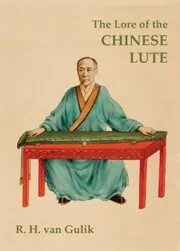
The Lore of the Chinese Lute
by Robert Van Gulik
1969
This study looks at the guqin as instrument, symbol, and way of life. Van Gulik traces its history and shows why it mattered so much to Chinese scholars, poets, and amateurs.

Crime and Punishment in Ancient China
by Robert Van Gulik
1979
Van Gulik translates a classic Chinese casebook and surrounds it with notes on law, evidence, interrogation, and punishment. It is both a source text and a guide to how justice worked in imperial China.
Chinese Pictorial Art
by Robert Van Gulik
1981
A detailed study of how Chinese paintings and scrolls were mounted, judged, collected, and faked. Van Gulik is interested in the material life of art, not just the image on the surface.
The Given Day
by Robert Van Gulik
1986
Van Gulik's one modern mystery moves through Amsterdam over the course of a leap-day night. Johan Hendriks, haunted by his past in the Dutch East Indies, gets pulled into an apparent street crime that grows far stranger.
Erotic Colour Prints of the Ming Period
by Robert Van Gulik
1989
A rare scholarly edition of Ming erotic prints, accompanied by an essay on sexual life and visual culture in imperial China. The tone is historical and analytical rather than sensational.

John Searle and his Critics
by Robert Van Gulik
1991
A collection of essays on John Searle's philosophy of language and mind, with arguments about intentionality, reference, action, and consciousness. The book works best as a sustained debate rather than a single-author study.
The Oxford Book of Detective Stories
by Patricia Craig, Émile Gaboriau, John Charles Dent, Arthur Conan Doyle, R Austin Freeman, Maurice Leblanc, Palle Rosenkrantz, William Briggs MacHarg, Jacques Futrelle, Harvey J. O'Higgins, Raymond Chandler, Erle Stanley Gardner, Agatha Christie, Dashiell Hammett, James Thurber, Jorge Luis Borges, Georges Simenon, Ellery Queen, 松本清張, Robert Van Gulik, Paolo Levi, Gwendoline Butler, Josef Škvorecký, Amanda Cross, Janwillem van de Wetering, Ted Wood, James Melville, Stuart M Kaminsky, Shizuko Natsuki, Sarah L. Caudwell, Sue Grafton, Vincent Banville, Ruth Dudley Edwards, Sara Paretsky, Pentti Kirstilä, Garry Disher, Peter Robinson & Ian Rankin
2000
Patricia Craig’s international detective-story anthology spans classic and modern crime fiction from Britain, the United States, Europe, Japan, and beyond. The selection includes police procedurals, amateur sleuths, women detectives, and locked-room puzzles, with a story by Garry Disher.
Siddham
by Robert Van Gulik
2001
Van Gulik traces the history of Siddham script and Sanskrit learning as they moved through China and Japan. It is a slim but ambitious study of religion, language, and cultural transmission.
Scrapbook for Chinese Collectors
by Robert Van Gulik
2006
This short translation presents an older Chinese treatise on scrolls, collectors, and forgers. It makes a handy companion to Van Gulik's larger work on Chinese pictorial art.

Murder in Ancient China
by Robert Van Gulik
2013
These two compact Judge Dee mysteries offer a quick taste of the series. One centers on a murder in a garden pavilion, the other on a tense New Year's Eve case where Dee makes two rare mistakes.
Where to start with Robert Van Gulik
If you want the original Judge Dee text: Celebrated Cases of Judge Dee / Dee Goong An → The Chinese Maze Murders
If you want Judge Dee from the start of his career: The Chinese Gold Murders → The Lacquer Screen → The Chinese Bell Murders
If you want the first original novel Van Gulik wrote: The Chinese Maze Murders → The Chinese Bell Murders → The Chinese Lake Murders
If you prefer shorter cases: The Monkey and The Tiger → Judge Dee at Work → Murder in Ancient China
If you want his nonfiction side: The Lore of the Chinese Lute → Crime and Punishment in Ancient China → Sexual Life in Ancient China
Robert Van Gulik sub-series and character series
Judge Dee Mysteries books in order
Explore this seriesJudge Dee Mysteries books in chronological order
Robert Van Gulik collections, short stories, and related book types
Non-Fiction
Short Stories/Novellas
Standalone Robert Van Gulik books

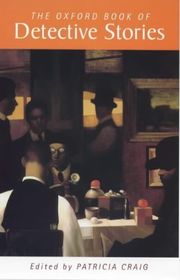
The Oxford Book of Detective Stories
by Patricia Craig, Émile Gaboriau, John Charles Dent, Arthur Conan Doyle, R Austin Freeman, Maurice Leblanc, Palle Rosenkrantz, William Briggs MacHarg, Jacques Futrelle, Harvey J. O'Higgins, Raymond Chandler, Erle Stanley Gardner, Agatha Christie, Dashiell Hammett, James Thurber, Jorge Luis Borges, Georges Simenon, Ellery Queen, 松本清張, Robert Van Gulik, Paolo Levi, Gwendoline Butler, Josef Škvorecký, Amanda Cross, Janwillem van de Wetering, Ted Wood, James Melville, Stuart M Kaminsky, Shizuko Natsuki, Sarah L. Caudwell, Sue Grafton, Vincent Banville, Ruth Dudley Edwards, Sara Paretsky, Pentti Kirstilä, Garry Disher, Peter Robinson & Ian Rankin
2000
Author bio
Robert Van Gulik was born in Zutphen on August 9, 1910, but the place that shaped him early was Batavia, now Jakarta. His father was an army doctor, and the family moved to the Dutch East Indies when Robert was very young. From age three to twelve he lived there, picked up languages early, and began the curiosity about Asian culture that would guide the rest of his life.
Back in the Netherlands, he studied at Leiden and later completed a doctorate at Utrecht on the horse cult in East Asia. That may sound like a narrow topic, but it tells you a lot about him. Van Gulik liked old texts, overlooked corners of culture, and the kind of detail most people would walk past.
In 1935 he joined the Dutch foreign service. The job took him across Asia and beyond, and he kept studying wherever he went. He served in Tokyo before and during the early years of World War II, was evacuated in 1942, and spent much of the rest of the war in Chongqing with the Dutch mission to Chiang Kai-shek's government.
There he married Shui Shifang, and they would have four children.
During those years he worked on an English translation of an older Chinese detective novel he had first found in Tokyo, later published as Celebrated Cases of Judge Dee / Dee Goong An. That book gave him the character who would make him famous. Judge Dee, based on the historical Di Renjie, let Van Gulik bring together law, mystery, history, and ordinary life in one story world.
He did not stop with translation. He began writing his own Judge Dee novels, starting with The Chinese Maze Murders. Books like The Chinese Bell Murders, The Chinese Gold Murders, The Chinese Lake Murders, and Murder in Canton are detective stories, but they are also full of court procedure, street gossip, canal traffic, scholars, monks, merchants, soldiers, and family trouble. Readers who enjoy them usually like that double effect: clear puzzles, and a strong sense of a whole society moving around the case.
Van Gulik also did not stay in one lane. He played the guqin, the old Chinese zither, and wrote The Lore of the Chinese Lute. He studied scrolls, connoisseurship, and forgery in Chinese Pictorial Art, translated old legal materials in Crime and Punishment in Ancient China, and wrote the wide-ranging survey Sexual Life in Ancient China. He also illustrated many of his own books, which feels fitting for someone so interested in how things looked as well as how they read.
He liked making the whole world of a book visible.
That helps explain why the Judge Dee novels feel so solid on the page. Van Gulik was not writing from a distance. He knew languages, handled old books and artworks, practiced calligraphy and seal carving, and tried in his own life to keep close to the scholar-official tradition he admired. Even his one modern mystery, The Given Day, has that same close attention to setting, mood, and the hidden weight of the past.
After the war he served in Washington, returned to Tokyo, and later held posts in places including New Delhi, Kuala Lumpur, and Beirut. In 1965 he became Dutch ambassador to Japan. He died of cancer in The Hague on September 24, 1967, aged fifty-seven. What remains is a body of work that still feels unusual, curious, and very alive.














Edited by
Software engineer whose passion for tracking book recommendations from podcasts inspired the creation of MRB.
Lead investor at 3one4 Capital whose startup expertise and love for books helped shape MRB and its growth.
Comments
Did we miss something? Have feedback?
Help us improve this page by sharing your thoughts