
AE van Vogt Books in Order
Browse all A. E. van Vogt books in order, with quick summaries, series guides, and clear tips on where to start with Slan, Null-A, Isher, and more.
Last updated: 8 new books added
As an Amazon Associate, we earn from qualifying purchases (at no extra cost to you).
AE van Vogt books in publication order
51 books
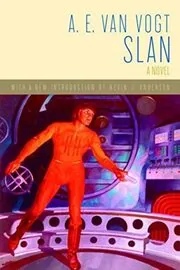
Slan
by AE van Vogt
1940
Jommy Cross, a telepathic child from a hunted mutant race, escapes the regime trying to wipe his people out. The novel is part persecution story, part super-science chase, and still one of van Vogt's defining books.
The Beast
by AE van Vogt
1943
This fix-up novel circles around a powerful nonhuman presence and the human fear it provokes. Van Vogt mixes future society, unstable alliances, and lurking menace into one of his stranger later adventures.
The Book of Ptath / Two Hundred Million A.D.
by AE van Vogt
1943
A god from Earth's far future returns in his immortal body with the mind of a dead 20th-century tank commander. To reclaim his power, Ptath must outfight a rival goddess and a broken empire.
The Changeling
by AE van Vogt
1944
A strange machine and a society pushed off balance drive this surreal shorter novel. Through the recurring figure Pendrake, van Vogt turns social upheaval and hidden transformation into a disorienting puzzle.
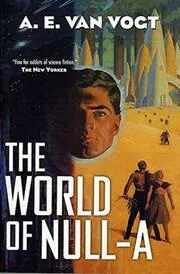
The World of Null-A
by AE van Vogt
1945
Gilbert Gosseyn lives in an apparent utopia and expects the great Machine to confirm his worth, but instead learns his memories are false. From there, the novel spirals into hidden bodies, mental discipline, and interplanetary intrigue.
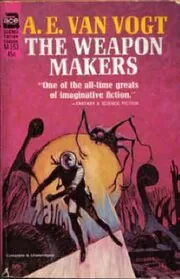
The Weapon Makers
by AE van Vogt
1946
Robert Hedrock, the immortal force behind Isher's uneasy balance, faces conspiracies from both throne and Weapon Shop. The sequel deepens the series' mix of political chess, strange technology, and arguments about freedom.
Out of The Unknown
by AE van Vogt
1948
This joint collection brings together six uncanny stories by van Vogt and E. Mayne Hull. Sea creatures, witches, ghosts, and dangerous wishes give its tales a darker supernatural edge, offering a compact selection of the pair's early short fiction.
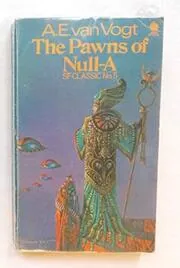
The Pawns of Null-A / The Players of Null-A
by AE van Vogt
1948
Gilbert Gosseyn's search continues as the mystery of his identity opens into galactic politics and invasion. The sequel keeps the first book's mix of mental discipline, sudden death, and widening cosmic stakes.
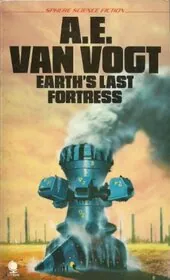
Earth's Last Fortress
by AE van Vogt
1950
An ordinary man is caught up in recruitment for a far-future struggle in which Earth stands as humanity's last stronghold. Short and brisk, the novella packs time dislocation and large-scale war into a compact adventure.
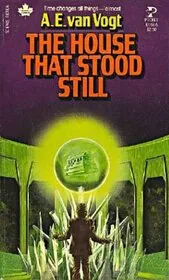
The House That Stood Still
by AE van Vogt
1950
A man is drawn into the mystery of a seemingly ordinary house that hides a much larger secret about power, identity, and Earth's place in the universe. Van Vogt plays it like a detective story that slowly opens into science fiction.
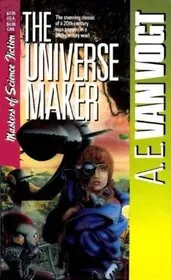
The Universe Maker
by AE van Vogt
1950
After a deadly mistake, soldier Morton Cargill is contacted by people from the far future who say his crime damaged generations to come. He is pulled into a time-spanning effort to repair history and himself.
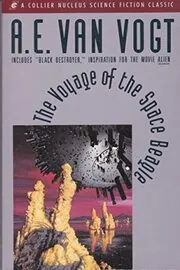
The Voyage of the Space Beagle
by AE van Vogt
1950
Dr. Elliott Grosvenor, the only Nexialist aboard an exploration ship, must outthink both hostile aliens and the ship's own rigid specialists. It is van Vogt's classic string of dangerous first contacts, all wired together by one restless mind.
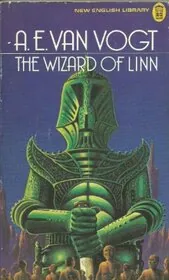
The Wizard of Linn
by AE van Vogt
1950
Clane Linn's story widens from palace intrigue to alien war when the old enemies called the Riss return to the Solar System. Armed with captured technology and his strange spheres, Clane fights on a much larger stage.
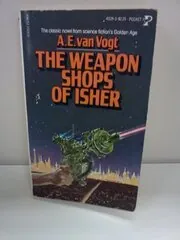
The Weapon Shops of Isher
by AE van Vogt
1951
In the Empire of Isher, mysterious Weapon Shops give ordinary people protection and a rival system of justice. Robert Hedrock moves through the conflict between crown and shop, trying to keep either side from total control.
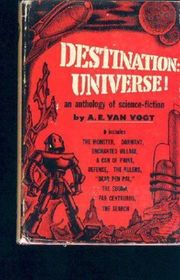
Destination: Universe
by AE van Vogt
1952
Ten stories gather van Vogt's early science fiction, including Far Centaurus, The Enchanted Village, and A Can of Paint. The collection offers a varied introduction to his shorter work, alongside tales such as The Monster and Dear Pen Pal.
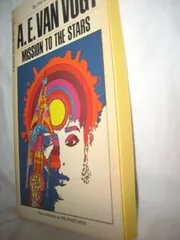
Mission To The Stars
by AE van Vogt
1952
In a far-future empire, humanity confronts the hidden civilization of the Fifty Suns and the unsettling people shaped by old teleportation experiments. It is first-contact adventure wrapped in political suspicion and big-scale space opera.
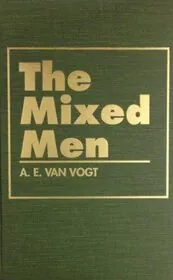
Mixed Men
by AE van Vogt
1952
In a far-future empire, the discovery of the Fifty Suns brings ordinary humans face to face with altered descendants and the so-called mixed men. Van Vogt turns the encounter into a knotty tale of empire, secrecy, and divided identity.
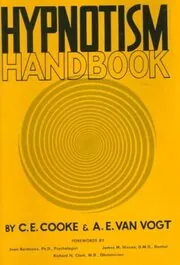
Hypnotism Handbook
by AE van Vogt
1956
Written with psychologist Charles Edward Cooke, this is van Vogt's practical guide to hypnotism. It explains techniques, uses, and the ideas behind hypnosis rather than telling a fictional story.
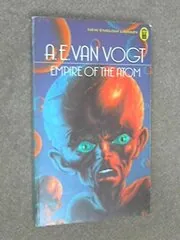
Empire of the Atom
by AE van Vogt
1957
Clane, a mutant child born into a far-future ruling family, survives court intrigue because a priest decides to educate him instead of kill him. His intelligence and access to lost technology make him dangerous to everyone around him.
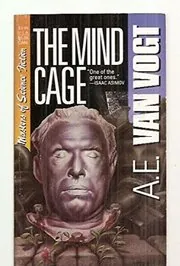
The Mind Cage
by AE van Vogt
1957
David Marin tries to defend a scientist accused of sedition, only to have their minds switched. Trapped in an enemy body, he must survive a hostile state while proving who he really is.
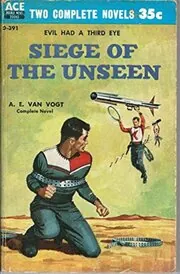
Siege of the Unseen
by AE van Vogt
1959
After an accident reveals a hidden third eye on his forehead, a man is pulled into a long secret struggle with forces most people cannot perceive. This short novel leans hard into paranoia, altered perception, and hidden history.
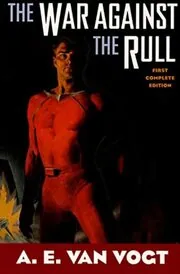
The War Against the Rull
by AE van Vogt
1959
Humanity is locked in a long, losing struggle against the shape-changing Rull. Van Vogt uses the war to stage a series of hard turns, covert missions, and uneasy encounters with an enemy that is hard to read and harder to trust.
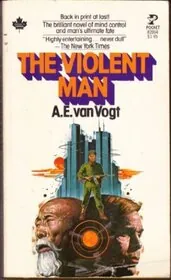
The Violent Man
by AE van Vogt
1962
Set against Communist China's prison and propaganda machinery, this lone non-science-fiction novel follows an attempt to break and remake a Western man. It is part political thriller, part study of domination and resistance.
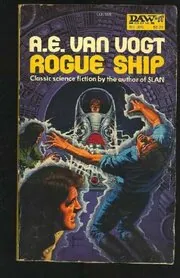
Rogue Ship
by AE van Vogt
1963
A generation ship bound for Centaurus carries human hopes, fraying nerves, and the constant risk of mutiny. By the time it reaches new worlds, political struggle onboard is as dangerous as any alien enemy outside.
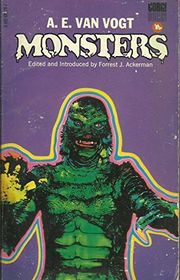
Monsters
by AE van Vogt
1965
Eight stories explore van Vogt's monstrous creations, from alien encounters to threats hidden within seemingly familiar worlds. With tales including Not Only Dead Men, War of Nerves, and Vault of the Beast, the collection emphasizes his unsettling short fiction.
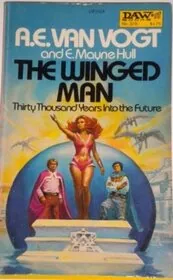
The Winged Man
by AE van Vogt
1966
A wartime submarine's encounter with a mysterious winged stranger sends its crew hurtling into the far future. What begins as a military mystery becomes a struggle over survival, power, and humanity's changed world.
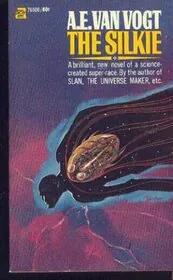
The Silkie
by AE van Vogt
1969
A Silkie, an amphibious shape-shifter with extraordinary mental and physical abilities, moves through human society while rival forces close in. The novel mixes secret-identity thriller beats with very strange alien biology.

Children of Tomorrow
by AE van Vogt
1970
Commander John Lane returns from space to find Earth's teenagers organized into disciplined outfits with their own rules. Then he learns one of their newest members is tied to an alien threat following him home.
Quest For The Future
by AE van Vogt
1970
When Peter Caxton receives recordings from the future, he becomes obsessed with tracing the events behind them. Van Vogt turns that premise into a time-bent quest full of probability traps, paranoia, and hidden connections.
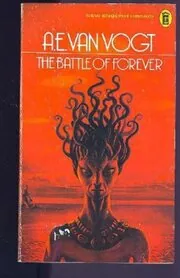
The Battle Of Forever
by AE van Vogt
1971
Modyun grows beyond the shrunken, sheltered humanity behind the barrier and ventures into a harsher outer world ruled by animal-men. His journey turns into a search for the future of the human race itself.

The Book of Van Vogt
by AE van Vogt
1972
Seven stories collect a range of van Vogt's shorter fiction, including The Confession, The Barbarian, and The Sound of Wild Laughter. Lost: Fifty Suns also revisits the material behind his larger interstellar narrative in its shorter form.
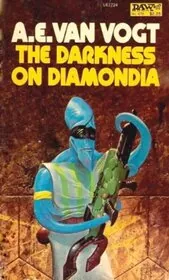
The Darkness on Diamondia
by AE van Vogt
1972
On the strange world of Diamondia, an Earthman is drawn into a struggle over an ancient force tied to the planet itself. The book blends colonial adventure, unseen power, and one of van Vogt's eerier settings.
The Money Personality
by AE van Vogt
1972
This nonfiction book lays out van Vogt's ideas about the habits and mindset that help people create and handle wealth. It reads as a personal theory of money, ambition, and practical self-discipline.
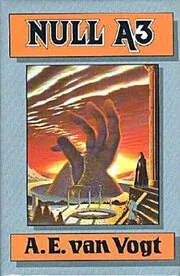
Null-A Three
by AE van Vogt
1973
Gilbert Gosseyn returns for a late sequel that pushes the Null-A saga into larger cosmic war. Ancient fleets, mutant enemies, and Gosseyn's unusual abilities all collide in a story about sanity, power, and survival.
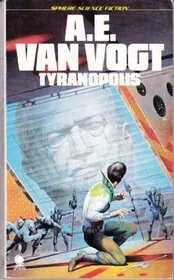
Tyranopolis / Future Glitter
by AE van Vogt
1973
In a future dictatorship, a man marked for death tries to turn a scientific secret into a revolution. The novel is part chase, part dystopian puzzle, with van Vogt focused on control, identity, and sudden reversals.
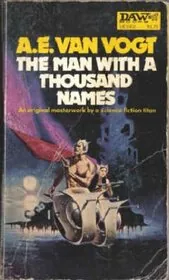
The Man with a Thousand Names
by AE van Vogt
1974
Bored rich heir Steven Masters joins the first expedition to a nearby inhabited planet and winds up back on Earth in someone else's body. The result is a slippery identity puzzle with alien influence humming underneath it.
The Secret Galactics / Earth Factor X
by AE van Vogt
1974
Earth is already the battlefield in a hidden war between humans and human-looking aliens planted in positions of power. A few unlikely allies, including a brain in a machine body, hold the key to fighting back.

The Worlds of A.E. van Vogt
by AE van Vogt
1974
Fifteen stories trace van Vogt's science fiction across several decades, bringing together pieces such as The First Martian, The Earth Killers, and The Expendables. The collection offers a broad sample of his changing concerns and imaginative approaches.
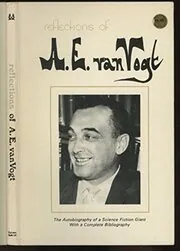
Reflections of A. E. van Vogt
by AE van Vogt
1975
Van Vogt's autobiography looks back on his childhood, writing life, ideas, and career in science fiction. It is the book to pick up if you want the author speaking in his own voice.
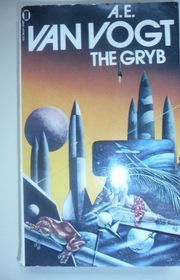
The Gryb
by AE van Vogt
1976
A dangerous journey across Europa opens this collection as a traveler begins to mistrust the guide leading him through alien terrain. Five further stories widen the selection, combining van Vogt's speculative adventures with work credited to E. Mayne Hull.
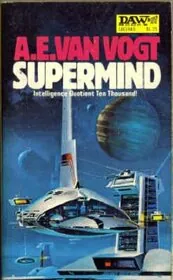
Supermind
by AE van Vogt
1977
A linked novel of mental powers, secret research, and minds pushing past normal human limits. Separate threads gradually merge into a story about intelligence, manipulation, and what a supermind might become.
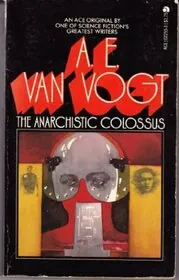
The Anarchistic Colossus
by AE van Vogt
1977
On a future Earth where an odd form of anarchy is managed by mysterious computers, alien invaders turn conquest into a game. Van Vogt mixes political speculation with a strange, fast-moving invasion story.
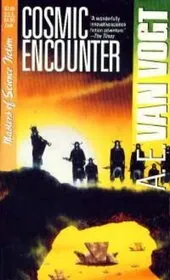
Cosmic Encounter
by AE van Vogt
1979
A spaceship from Earth's distant future crashes into the 18th-century Caribbean and tangles with pirates, time paradoxes, and an enemy vessel. It is a strange but lively mix of swashbuckling adventure and far-future science fiction.
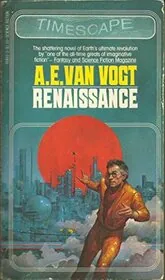
Renaissance
by AE van Vogt
1979
This late novel leans into van Vogt's taste for hidden control, mental influence, and shifting reality. It plays more like a political and psychological puzzle than a straight space adventure.
The Enchanted Village
by AE van Vogt
1979
Stranded on Mars, a lone human stumbles on an abandoned alien village that tries to care for him without understanding what a human actually needs. It is quiet, eerie, and one of van Vogt's most memorable short pieces.
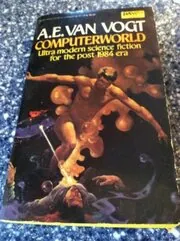
Computerworld
by AE van Vogt
1983
In a society increasingly ruled by giant computers and programmer logic, a small resistance tries to reclaim human choice. Van Vogt turns a tech premise into a fight over free will, control, and ordinary life.
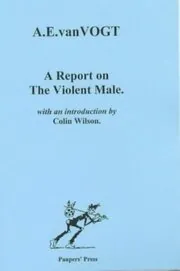
A Report on the Violent Male
by AE van Vogt
1993
A brief nonfiction essay in which van Vogt tries to define an authoritarian, self-justifying male type. It also works as a companion piece to the ideas behind The Violent Man.
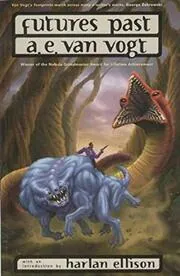
Futures Past
by AE van Vogt
1999
This best-of collection gathers van Vogt's short fiction at its sharpest, from alien menace and psychic evolution to tricky time loops. It is a strong place to sample the stories that helped shape his novels and reputation.
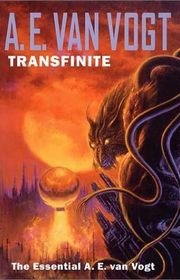
Transfinite
by AE van Vogt
2003
Stories ranging from distant space and deep time to the deceptively simple problem of a can of paint survey van Vogt's speculative fiction. The selection brings together alien encounters, strange powers, and dangerous misunderstandings across his career.
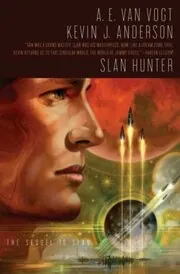
Slan Hunter
by AE van Vogt
2007
This posthumous sequel returns to Jommy Cross after Slan, with secret police, uneasy alliances, and the human-slann conflict still unresolved. It widens the politics and warfare of van Vogt's most famous future world.

The Best of A.E. Van Vogt
by AE van Vogt
This selection combines van Vogt's speculative stories with essays on science, deduction, and human behavior. Familiar pieces such as War of Nerves and The Proxy Intelligence sit beside nonfiction, showing how his imagined futures connect with his wider interests.
Where to start with AE van Vogt
If you want the classic mutant-survival story: Slan → Slan Hunter
If you want the mind-bending philosophical books: The World of Null-A → The Pawns of Null-A / The Players of Null-A → Null-A Three
If you want alien-threat space adventure: The Voyage of the Space Beagle → The War Against the Rull → Rogue Ship
If you want far-future empire and political intrigue: The Weapon Shops of Isher → The Weapon Makers → Empire of the Atom → The Wizard of Linn
AE van Vogt sub-series and character series
The Empire of Isher books in order
Explore this seriesThe Empire of Isher books in chronological order
Standalone AE van Vogt books
Author bio
A. E. van Vogt was born Alfred Elton van Vogt on April 26, 1912, on his grandparents' farm at Edenburg, near Gretna, Manitoba. He grew up in a Mennonite family and, as a small child, spoke Plautdietsch at home before English took over. His family moved around the Canadian Prairies through his childhood, including stops in Manitoba and Saskatchewan, and that unsettled, on-the-move feeling stayed with him for life.
The Great Depression shaped him early. College was out of reach, so he worked a run of ordinary jobs and taught himself to write the hard way. He took a correspondence course, sold confession-style magazine pieces, wrote radio material, and learned how to keep going long before anyone knew his name.
The shift into science fiction came in 1938, when he picked up an issue of Astounding Science Fiction and decided this was the field he wanted. His first submission was rejected, but editor John W. Campbell encouraged him to try again. The next story, Black Destroyer, was accepted in 1939, and van Vogt quickly became one of the striking new voices of the magazine era.
He was off and running.
A few years later came Slan, the book that made generations of readers care deeply about hunted outsiders, telepathy, and the dream of being smarter than the world that fears you. Then came The World of Null-A, with Gilbert Gosseyn trying to untangle false memories, extra lives, and a whole philosophy of disciplined thinking. Readers who love van Vogt usually point to those books first, because they show both sides of him: the fast pulp storyteller and the writer obsessed with mind, identity, and hidden systems.
He also wrote some of the period's big-idea adventures. The Voyage of the Space Beagle sends an exploration ship into a chain of dangerous alien encounters. The Weapon Shops of Isher and The Weapon Makers turn politics, technology, and personal freedom into far-future action. The Book of Ptath goes stranger still, mixing reincarnation, godhood, and empire in a way that feels halfway between science fiction and fantasy.
His stories often feel like dreams that suddenly learned how to use ray guns.
That dreamlike quality was not an accident. Van Vogt later revealed that during part of his early career he would wake himself at regular intervals in the night to write down dream material. It helps explain why his fiction can jump so abruptly and still keep its grip. The scene changes are quick, the logic can turn sideways, but the emotional pressure keeps building.
Recurring van Vogt territory is easy to spot once you know it: superhuman or altered people, hidden identities, mental training, telepathy, dangerous political systems, and heroes who survive by outthinking traps. Even when the settings are enormous, the stories often hinge on one isolated person trying to understand what game is really being played. That mix had a big effect on later writers, especially readers who liked science fiction that felt slightly off-center and full of possibility.
Van Vogt quit a Canadian government job in 1941 to write full time, moved to Hollywood with his wife Edna Mayne Hull in 1944, and became an American citizen in 1945. During the 1950s he spent years involved in Dianetics, which changed the rhythm of his career and cut into his science fiction output. But he kept returning to the field, later publishing books such as The Silkie, Children of Tomorrow, and The Battle of Forever.
In 1995 the Science Fiction Writers of America named him a Grand Master, a late but fitting recognition for a writer who had helped shape the field from the inside. He died in Los Angeles on January 26, 2000. His books can be abrupt, odd, and wonderfully hard to predict, which is exactly why they still have such a pull.






Edited by
Software engineer whose passion for tracking book recommendations from podcasts inspired the creation of MRB.
Lead investor at 3one4 Capital whose startup expertise and love for books helped shape MRB and its growth.
Comments
Did we miss something? Have feedback?
Help us improve this page by sharing your thoughts