
Richard Flanagan Books in Order
Explore Richard Flanagan books in order, with short summaries, where to start advice, and background on his major novels, memoir, and nonfiction.
Last updated:
As an Amazon Associate, we earn from qualifying purchases (at no extra cost to you).
Richard Flanagan books in publication order
11 books
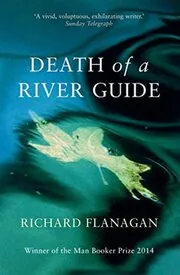
Death of a River Guide
by Richard Flanagan
1994
Trapped underwater on a Tasmanian river, guide Aljaz Cosini relives his own life and the lives that came before him. Flanagan's debut mixes memory, ancestry, and landscape into a vivid meditation on place and belonging.
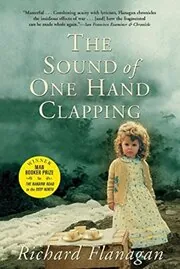
The Sound of One Hand Clapping
by Richard Flanagan
1997
When her mother disappears into a blizzard, Sonja Buloh grows up in the shadow of silence, exile, and her father's wartime trauma. Set in Tasmania, this is a powerful novel about migration, grief, and the hard work of tenderness.
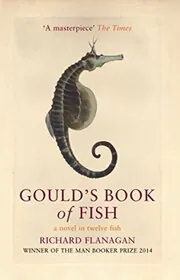
Gould's Book of Fish in Twelve Fish
by Richard Flanagan
2001
Convict painter William Buelow Gould is ordered to paint fish at a brutal penal colony in Van Diemen's Land. The result is a wild historical novel about art, power, love, and the lies history likes to tell.
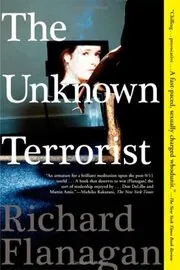
The Unknown Terrorist
by Richard Flanagan
2006
After a one-night stand and a failed bombing attempt, Sydney pole dancer Gina Davies is suddenly cast as the country's most wanted terrorist. Flanagan turns media frenzy, official fear, and public panic into a fast, bitter thriller.
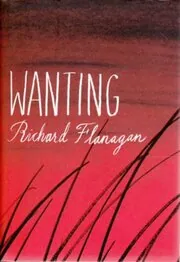
Wanting
by Richard Flanagan
2008
Flanagan links the story of Mathinna, an Aboriginal girl taken in by Sir John and Lady Jane Franklin, with Charles Dickens's later life. It is a historical novel about desire, power, colonial violence, and the damage done by 'civilising' schemes.
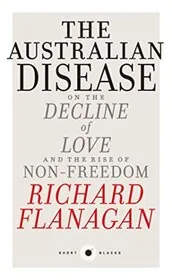
The Australian Disease
by Richard Flanagan
2011
In this short, combative essay, Flanagan argues that modern freedom can hide new forms of conformity and submission. He ranges across politics and public life to ask how a society loses its moral nerve.
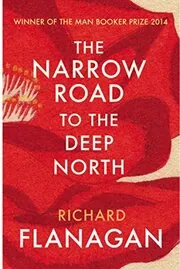
The Narrow Road to the Deep North
by Richard Flanagan
2013
Australian surgeon Dorrigo Evans is haunted by an affair from his past while trying to keep his men alive in a Japanese POW camp on the Burma Railway. Love, memory, and survival collide in a brutal, deeply human war novel.
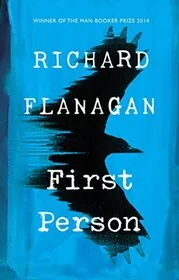
First Person
by Richard Flanagan
2017
Young, broke writer Kif Kehlmann takes a lucrative job ghostwriting the memoir of a notorious fraudster awaiting trial. As lies pile up and the deadline closes in, he starts to wonder whether he is writing the con man, or being remade by him.
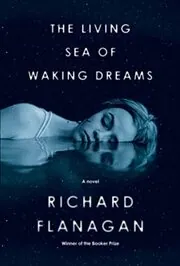
The Living Sea of Waking Dreams
by Richard Flanagan
2020
As Anna watches her dying mother endure one more round of treatment, parts of her own body begin to disappear. Family guilt, climate dread, and grief blur into a strange, unsettling novel about denial, love, and what vanishes when nobody wants to look.
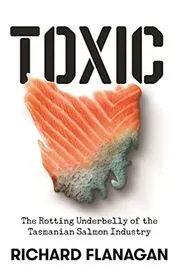
Toxic
by Richard Flanagan
2021
Flanagan investigates the Tasmanian salmon industry and the clean, green story built around it. This angry, readable work follows the environmental damage, political connections, and human costs hiding beneath the marketing.

Question 7
by Richard Flanagan
2023
Part memoir, part history, part meditation on storytelling, this book follows threads from H. G. Wells and the atom bomb to Flanagan's parents and his own near-death experience. It asks how lives are shaped by memory, chance, and inherited catastrophe.
Where to start with Richard Flanagan
If you want the Booker winner: The Narrow Road to the Deep North
If you want Tasmanian family drama: The Sound of One Hand Clapping → The Living Sea of Waking Dreams
If you want bold historical fiction: Wanting → Gould's Book of Fish in Twelve Fish
If you want his most personal nonfiction: Question 7 → Toxic → The Australian Disease
If you want to begin at the start: Death of a River Guide → The Sound of One Hand Clapping
Richard Flanagan collections, short stories, and related book types
Non-Fiction
Standalone Richard Flanagan books
Author bio
Richard Flanagan was born in Longford, Tasmania, in 1961 and grew up in Rosebery, a mining town on the island's wet, rugged west coast. Tasmania is everywhere in his work, not just as scenery, but as weather, memory, history, and moral pressure.
He grew up in a large working-class family, and the past was never far away. His father had survived the Burma Railway in the Second World War, and Flanagan is also descended from Irish convicts sent to Van Diemen's Land during the Great Famine. Those older stories, of exile, damage, survival, and uneasy belonging, run through much of what he writes.
He left school at sixteen and worked before finding his way back to study. At the University of Tasmania he earned first-class honours, and a Rhodes Scholarship took him to Worcester College, Oxford, where he completed a Master of Letters in history. That mix of hard lived experience and formal history helps explain why his books often feel both intimate and big in scope.
Writing did not arrive as a neat career plan.
Before the novels, Flanagan wrote several nonfiction books, which he has described as an apprenticeship. One of those jobs was ghostwriting the memoir of the fraudster John Friedrich in a rush for much-needed money while he was trying to finish his own first novel. That strange episode stayed with him for years and later became First Person, a darkly funny, unsettling novel about lies, power, and how easily someone can slip into another person's story.
His fiction began with Death of a River Guide, in which a drowning man relives not only his own life but the lives that came before him. Then came The Sound of One Hand Clapping, a novel about Slovenian migrants in Tasmania, family silence, and the long reach of wartime trauma. Readers often come to Flanagan for the landscape and the atmosphere, but they tend to stay because he makes history feel close, intimate, and painfully human.
He rarely writes the same book twice.
Gould's Book of Fish is wild, comic, and strange, turning convict Tasmania into a story about art, brutality, and the slipperiness of history. Wanting moves between Tasmania and Charles Dickens's England, linking the life of Mathinna, an Aboriginal girl taken in by Sir John and Lady Jane Franklin, with questions of desire, domination, and self-deception. Across these books, Flanagan returns again and again to Tasmania, exile, memory, damaged families, and the uneasy meeting point between beauty and violence.
For many readers, The Narrow Road to the Deep North is the book that opened the door. It won the Booker Prize in 2014 and follows Australian surgeon Dorrigo Evans through love, captivity, and memory on the Burma Railway, drawing on the shadow of Flanagan's father's wartime experience without turning it into simple family testimony. Much later, Question 7 would revisit that family history in a more direct, personal way.
His later work keeps widening the field. The Living Sea of Waking Dreams turns family grief and climate dread into something eerie and immediate, Toxic takes on Tasmania's salmon industry, and Question 7 blends memoir, history, Hiroshima, and a near-fatal river accident into a book about chance, inheritance, and storytelling, a book that went on to win the 2024 Baillie Gifford Prize. He still lives in Tasmania, and the island remains the place his imagination argues with most intensely.






Edited by
Software engineer whose passion for tracking book recommendations from podcasts inspired the creation of MRB.
Lead investor at 3one4 Capital whose startup expertise and love for books helped shape MRB and its growth.
Comments
Did we miss something? Have feedback?
Help us improve this page by sharing your thoughts