
Paddy Hirsch Books in Order
Browse Paddy Hirsch books in order, with quick summaries, series background, and easy where-to-start advice for his historical fiction and nonfiction.
Last updated:
As an Amazon Associate, we earn from qualifying purchases (at no extra cost to you).
Paddy Hirsch books in publication order
3 books
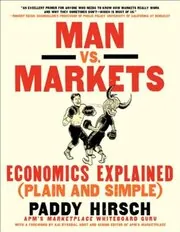
Man vs. Markets
by Paddy Hirsch
2012
Hirsch explains markets in plain English, breaking down stocks, bonds, derivatives, and the people behind them. It's a witty, practical guide for readers who want Wall Street decoded without the usual finance jargon.
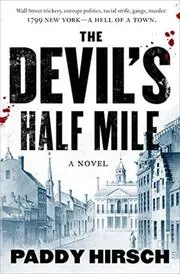
The Devil's Half Mile
by Paddy Hirsch
2018
In 1799 New York, young lawyer Justy Flanagan returns home to prove his father was murdered. His search uncovers a lethal Wall Street fraud in a city of gangs, racial tension, and backroom power.
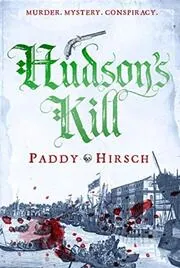
Hudson's Kill
by Paddy Hirsch
2019
In 1803 New York, Marshal Justy Flanagan and schoolteacher Kerry O'Toole investigate the killing of a young Black girl. The case pulls them into gang conflict, land deals, and a political conspiracy at the edge of a booming city.
Where to start with Paddy Hirsch
If you want the historical crime series in order: The Devil's Half Mile → Hudson's Kill
If you want early Wall Street, gangs, and political corruption: The Devil's Half Mile → Hudson's Kill
If you want his plain-English nonfiction first: Man vs. Markets
If you want the fullest sense of his range: Man vs. Markets → The Devil's Half Mile → Hudson's Kill
Paddy Hirsch sub-series and character series
Paddy Hirsch collections, short stories, and related book types
Non-Fiction
Author bio
Paddy Hirsch was born in Weymouth, England, and grew up between Northern Ireland and Dublin. That mix of places, Irish history, and sharp social boundaries still seems to echo through his work. His books are often about people trying to find solid ground inside systems that are messy, unfair, or built to serve somebody else.
Before he became a journalist or novelist, he spent nearly ten years as an officer in the Royal Marines. He was educated in Dublin and Belfast and later studied at the University of Warwick. The military gave him discipline, but his career would eventually turn toward explaining how power works in public life.
Then he changed course.
Hirsch got his start in journalism with an internship at the BBC in Glasgow. From there he worked in Hong Kong, Bosnia, Vietnam, and later in financial newsrooms in Europe and the United States. Over time he became a specialist in business and economics coverage, the kind of reporter who can take something dry, technical, or full of jargon and make it readable. That skill carried him to Bloomberg, Marketplace, and NPR, including work connected to The Indicator from Planet Money. Many people first knew him through the Marketplace Whiteboard, a brisk video explainer series that broke down financial terms for general audiences. That work brought a Webby honor in 2009, a Knight Fellowship at Stanford in 2010, and an Edward R. Murrow award in 2014.
His first book, Man vs. Markets, grew directly out of that explainer instinct. It is a plain-English guide to the financial system for readers who want to know what stocks, bonds, derivatives, and all the rest actually mean. What people tend to like about it is simple: Hirsch knows the subject, and he knows how to make it understandable without sounding like a textbook.
Fiction arrived from the side door. Hirsch has said that The Devil's Half Mile began as a nonfiction history of the New York Stock Exchange. While researching, he found himself more interested in the people crowded around that story, the traders, laborers, gang figures, and strivers who made early New York feel alive. A murder plot slipped in, then a young lawyer named Justy Flanagan, and eventually the novel took over. That shift makes sense in hindsight. Hirsch had always been writing about systems, and fiction gave him a way to show how those systems felt from ground level.
In The Devil's Half Mile and Hudson's Kill, he turns to New York at the end of the eighteenth century and the start of the nineteenth, when Wall Street was already full of schemes and the city was growing faster than its rules. Readers who enjoy these books usually mention the atmosphere first. The docks are filthy, the politics are crooked, the money is always moving, and danger never feels far away. But the appeal is not just texture. Hirsch keeps coming back to race, immigration, corruption, and the thin line between respectable power and the underworld. Even the historical detail tends to serve the same bigger question: who benefits when a city grows, and who pays for it.
He likes big systems, but he writes at street level.
Hirsch lives in Los Angeles. He has said he likes to bake, surf, and climb things, which feels like a pretty good match for a writer whose career has moved through the military, international journalism, financial reporting, nonfiction, and historical crime. Across all of it, the thread is easy to spot. He is interested in how institutions behave, and in the people caught underneath them.








Edited by
Software engineer whose passion for tracking book recommendations from podcasts inspired the creation of MRB.
Lead investor at 3one4 Capital whose startup expertise and love for books helped shape MRB and its growth.
Comments
Did we miss something? Have feedback?
Help us improve this page by sharing your thoughts