
Inspector Hemingway Books in Order
Part ofGeorgette Heyer Books in OrderBrowse the Inspector Hemingway books by Georgette Heyer in order, with short summaries, series background, and where to start with these witty mysteries.
Last updated:
As an Amazon Associate, we earn from qualifying purchases (at no extra cost to you).
Inspector Hemingway books in publication order
3 books
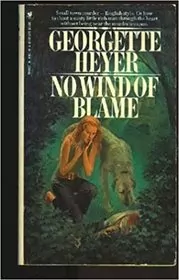
No Wind of Blame
by Georgette Heyer
1939
Wally Carter is shot on a narrow bridge in what looks like an impossible crime. Inspector Hemingway takes on a case of blackmail, family tension, and one of Heyer's trickiest murder setups.
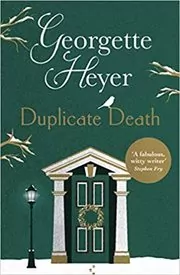
Duplicate Death
by Georgette Heyer
1951
A quiet card party ends with two murders that seem linked, then perhaps not. Inspector Hemingway has to decide whether one killer struck twice or used the first death as cover.

Detection Unlimited
by Georgette Heyer
1953
Sampson Warrenby is found shot under an oak tree, and nearly everyone around him has a motive. Chief Inspector Hemingway must sort through a village full of grudges, lies, and plausible suspects.
Inspector Hemingway books in chronological order
Series background & context
The Inspector Hemingway books are Georgette Heyer's later police mysteries, and they have a slightly different feel from the Hannasyde novels. The puzzles are still classic English murders, but the center of gravity shifts toward a more hands-on detective, one who grumbles, prods, interrupts, and keeps going until the room gives way.
Hemingway is nobody's drawing-room ornament.
Where Hannasyde is cool and reserved, Hemingway is bluff, practical, and a bit more openly sardonic. He can seem rough around the edges, but that roughness is useful. People talk too much around him because they take him for plain. They are usually wrong. He notices servants, timings, habits, and inconsistencies, and he has very little patience for polished nonsense.
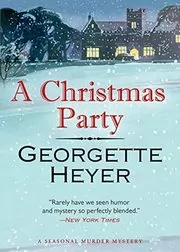
The core books here are No Wind of Blame, Envious Casca, Duplicate Death, and Detection Unlimited. They offer a fine spread of classic setups: an impossible shooting on a narrow bridge, a Christmas murder in a locked room, a double killing after a card game, and a village case in which almost everyone has reason to hate the dead man. Envious Casca was later also published as A Christmas Party, so readers will sometimes meet that title too.
What links the books is not an ongoing personal storyline so much as a tone and a method. Hemingway works by listening to people who are evasive, pompous, frightened, or busy saving face. He is good with domestic details and very good at cutting through self-dramatizing suspects. These mysteries are crowded with relations, family friends, old grievances, and the quiet warfare of respectable households.
They are also very funny in the dry Heyer way. The humor does not come from jokes pasted on top of the crime. It comes from character, from timing, and from the gap between how people think they appear and how they actually sound under pressure. Hemingway is particularly good at exposing that gap. He looks bluff, but he misses very little.
The result is a set of mysteries that feel a touch more procedural than the Hannasyde books, while still staying firmly in the Golden Age world of country houses, holiday parties, card tables, and impossible-seeming deaths. The crimes are neat, but the people are messy.
If you want clever puzzles, brisk questioning, and a detective who wins by persistence as much as brilliance, this is the series to try. The books can be read one by one without trouble, but together they give a strong sense of Heyer enjoying herself in crime fiction, building cases that are both satisfying as mysteries and sharply alive as social comedy.





Edited by
Software engineer whose passion for tracking book recommendations from podcasts inspired the creation of MRB.
Lead investor at 3one4 Capital whose startup expertise and love for books helped shape MRB and its growth.
Comments
Did we miss something? Have feedback?
Help us improve this page by sharing your thoughts