
Orsinia Books in Order
Part ofUrsula K Le Guin Books in OrderExplore the Orsinia books by Ursula K Le Guin in order, with summaries, series background, reading notes, and help deciding where to begin.
Last updated:
As an Amazon Associate, we earn from qualifying purchases (at no extra cost to you).
Orsinia books in publication order
2 books
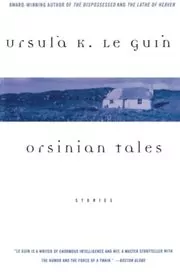
Orsinian Tales
by Ursula K Le Guin
1976
Stories set across the imagined country of Orsinia, where love, youth, music, and dissent keep colliding with history and power.
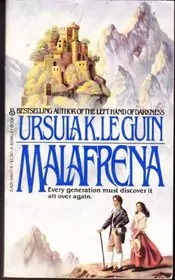
Malafrena
by Ursula K Le Guin
1979
In the imagined country of Orsinia, young Itale Sorde leaves home for the capital and gets pulled into journalism, love, and the dangerous hope of political reform.
Orsinia books in chronological order
Series background & context
Orsinia is Ursula K Le Guin's imaginary Central European country, and it occupies a very different part of her work from Earthsea or the Hainish books. There are no dragons here and no ansibles. Instead, there are mountains, borders, farms, provincial towns, the capital city of Krasnoy, and generations of people trying to live under the pressure of history. Orsinia is invented, but it sits close to the real political weather of Europe, especially the long shadows cast by empire, nationalism, censorship, occupation, and revolution.
Le Guin began imagining Orsinia early. In some ways it was one of her first fully realized invented worlds. That matters, because you can already see the habits that would shape her later fiction: careful attention to geography, political structures, ordinary lives, and the moral cost of authority. The major Orsinia books are Orsinian Tales and Malafrena, though the setting reaches beyond those titles.
Orsinian Tales gathers stories set across different periods of the country's history. Students, musicians, lovers, exiles, workers, aristocrats, and quiet dissenters move through a land that is always being squeezed by forces larger than any one life. The stories are often intimate, but history is never far away. Borders shift. Regimes intrude. Art and private longing become ways of resisting, or at least enduring.
Malafrena goes further back, into the 1820s, when Orsinia is part of the Austrian Empire. It follows Itale Sorde, a young man from the western provinces who leaves home for Krasnoy and becomes involved in journalism, politics, and the risky hope of liberal reform. The novel is broader in scope than the stories, but it carries the same interest in freedom, obligation, and the gap between patriotic feeling and actual political change.
Orsinia is one of Le Guin's quietest worlds.
That quiet should not be mistaken for thinness. These books are dense with atmosphere and feeling. They care about language, music, education, class, and the way a homeland can be both beloved and unbearable. Readers who know Le Guin mainly through speculative fiction may be surprised at how realist these works feel. But the continuity is there. She is still asking how societies shape people, how power gets justified, and what inner freedom might look like when external freedom is limited.
If you like Le Guin at her most overtly fantastic, Orsinia may feel like a side road. If you like the historical and political texture beneath her fantasy and science fiction, Orsinia can feel like a key. It shows how early she was working on questions that never left her. The setting may be invented, but the pressures inside it are very real.







Edited by
Software engineer whose passion for tracking book recommendations from podcasts inspired the creation of MRB.
Lead investor at 3one4 Capital whose startup expertise and love for books helped shape MRB and its growth.
Comments
Did we miss something? Have feedback?
Help us improve this page by sharing your thoughts