
Hainish Cycle Books in Order
Part ofUrsula K Le Guin Books in OrderBrowse the Hainish Cycle by Ursula K Le Guin in order, with summaries, reading order notes, series background, and help choosing a starting book.
Last updated:
As an Amazon Associate, we earn from qualifying purchases (at no extra cost to you).
Hainish Cycle books in publication order
8 books
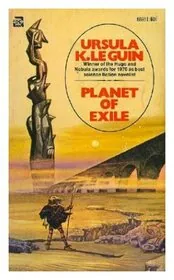
Planet of Exile
by Ursula K Le Guin
1966
A stranded colony on a world of immense seasons struggles to survive its coming long winter. To endure invasion and cold, colonists and natives must learn to trust one another.
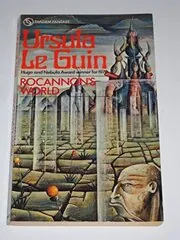
Rocannon's World
by Ursula K Le Guin
1966
After an interstellar attack leaves him stranded, ethnologist Rocannon must rally the peoples of a seemingly primitive world. The result is part quest, part first contact tale, and part legend in the making.
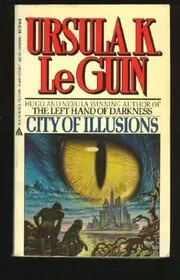
City of Illusions
by Ursula K Le Guin
1967
An amnesiac known as Falk crosses a strange future Earth in search of his identity. The truth he finds about the Shing and about himself is more dangerous than ignorance.
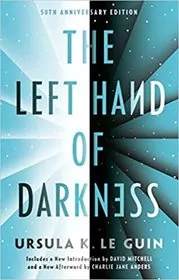
The Left Hand of Darkness
by Ursula K Le Guin
1969
A lone envoy arrives on the icebound world of Gethen to persuade it to join a wider human community. Politics, distrust, and a brutal journey force him to rethink everything he assumes about gender and loyalty.
Recommended by
2 people Adam Savage recommended this book
Adam Savage
"An impressive and powerful experience." - Adam Savage
Adam Savage's recommendation of this book  Brad Feld recommended this book
Brad Feld
"I'm buying [this book] and reading it this weekend in memorium." - Brad Feld
Brad Feld's recommendation of this book
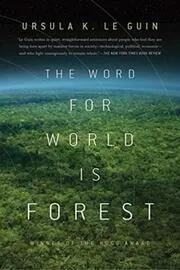
The Word for World is Forest
by Ursula K Le Guin
1972
Terran colonizers strip a forest world and enslave its people. As resistance rises, the cost of fighting back threatens to change the conquered world forever.
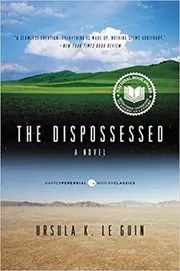
The Dispossessed
by Ursula K Le Guin
1974
Physicist Shevek leaves the anarchist moon Anarres for its wealthy mother world, hoping to reconnect two divided societies. His journey tests every idea he has about freedom, work, and revolution.
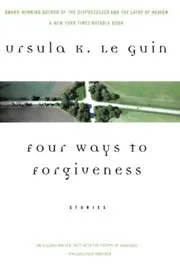
Four Ways to Forgiveness
by Ursula K Le Guin
1994
Four linked Hainish stories explore the aftermath of slavery and revolution on Werel and Yeowe. Le Guin keeps the focus on people trying to build dignity after brutality.
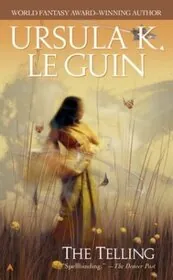
The Telling
by Ursula K Le Guin
2000
Sent to a world where the state has outlawed the past, Sutty uncovers the remnants of an older way of life. Her search becomes both political and deeply personal.
Hainish Cycle books in chronological order
Series background & context
The Hainish books are often talked about as a series, but they are not a tidy sequence with one plot running straight through. Ursula K Le Guin herself was clear about that. These novels and stories share a universe, not a strict order. Human worlds, many of them descended from ancient Hainish settlement, have grown apart for centuries. Different books visit different planets, cultures, and political moments. The loose web connecting them is what gives the whole body of work its unusual breadth.
In the early books, such as Rocannon's World, Planet of Exile, and City of Illusions, you can feel Le Guin exploring what this shared universe can do. There are stranded colonists, shattered identities, and worlds shaped by distance and time. Later books sharpen the focus and become some of her most lasting work. The Left Hand of Darkness sends the envoy Genly Ai to the icebound planet Gethen. The Dispossessed moves between the anarchist moon Anarres and the rich, unequal world of Urras. The Word for World is Forest turns colonization into a brutal ecological and moral crisis.
These are science fiction books, but rarely in a hardware-first way.
What Le Guin cares about most is how people live. Customs, kinship, gender, religion, labor, language, diplomacy, exile, and revolution are the engines here. The Hainish universe gave her a way to place human societies side by side and ask what seems natural only because we are used to it. The books do not argue the same thing over and over. Each planet becomes its own thought experiment, with its own textures and blind spots.
That is especially clear in later works and story suites. Four Ways to Forgiveness and Five Ways to Forgiveness look at the afterlife of slavery and the difficulty of building justice after formal liberation. A Fisherman of the Inland Sea expands the universe through shorter forms. The Telling follows Sutty, an observer from Earth, as she uncovers a suppressed cultural tradition on the planet Aka. Again and again, the conflict is not simply between good people and bad people, but between ways of organizing a world.
The Ekumen matters here too. It is not an empire, and that is important. It is a confederation held together by contact, exchange, and painfully slow understanding. Even with the ansible allowing instant communication, these books know that true understanding is never instant.
So what should you expect from the Hainish Cycle? Not one grand saga, but a shelf of linked, searching books that use other worlds to think hard about this one. Some are political, some intimate, some eerie, some almost anthropological in method. Read them in publication order, or start with the famous ones and circle back. Either way, the reward is the same: a universe large enough to hold deep difference, and a writer patient enough to take that difference seriously.





Edited by
Software engineer whose passion for tracking book recommendations from podcasts inspired the creation of MRB.
Lead investor at 3one4 Capital whose startup expertise and love for books helped shape MRB and its growth.
Comments
Did we miss something? Have feedback?
Help us improve this page by sharing your thoughts