
Orhan Pamuk Books in Order
Browse Orhan Pamuk books in order, with short summaries, helpful starting points, and an easy overview of his major novels, memoirs, and essays.
Last updated:
As an Amazon Associate, we earn from qualifying purchases (at no extra cost to you).
Orhan Pamuk books in publication order
17 books
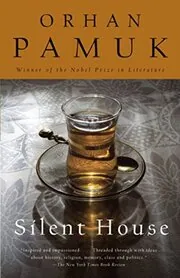
Silent House
by Orhan Pamuk
1983
Over one tense summer week, three siblings visit their aged grandmother in a decaying coastal house near Istanbul. Family resentments, class anger, and political unrest build as Turkey moves toward the 1980 coup.
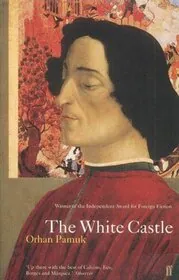
The White Castle
by Orhan Pamuk
1985
In the seventeenth century, a young Italian scholar is captured and brought to Constantinople, where he serves a man who looks exactly like him. Their uneasy bond becomes a sharp, unsettling novel about knowledge, power, and identity.
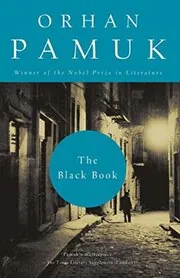
The Black Book
by Orhan Pamuk
1990
In Istanbul, lawyer Galip comes home to find his wife Ruya gone, and the columnist he suspects she is with has vanished too. His search turns into a strange, citywide hunt through borrowed identities and shifting truths.
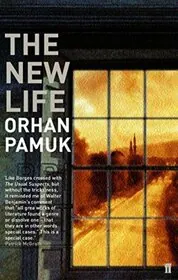
The New Life
by Orhan Pamuk
1994
A university student reads a mysterious book and feels his old life fall away. Chasing the elusive Janan across Turkey, he enters a dreamlike world of conspiracies, bus journeys, and questions about love, fate, and identity.
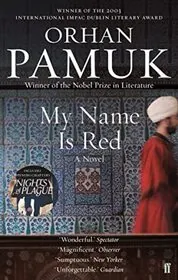
My Name Is Red
by Orhan Pamuk
1998
In sixteenth-century Istanbul, a secret imperial art project is thrown into panic when one of its miniaturists disappears. Love, murder, faith, and artistic rivalry collide as Pamuk turns a mystery into a meditation on how pictures shape a world.
Recommended by
1 person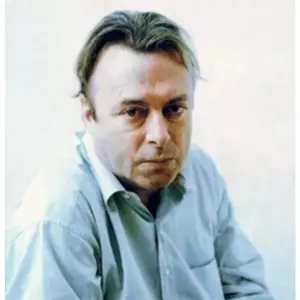 Christopher Hitchens recommended this book
Christopher Hitchens
"[With this book, the author] became a kind of register of this position, dwelling on the interpenetration of Islamic and Western styles." - Christopher Hitchens
Christopher Hitchens's recommendation of this book
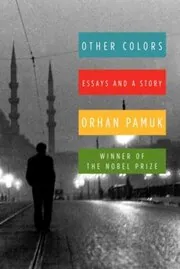
Other Colors
by Orhan Pamuk
1999
This essay collection brings together Pamuk on books, cities, politics, family, and the daily work of writing. It is a good place to meet the nonfiction side of his mind, curious, personal, and quietly combative.
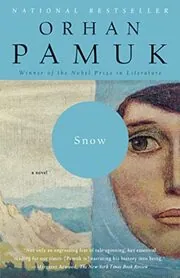
Snow
by Orhan Pamuk
2002
Returning from exile, poet Ka travels to the snowbound city of Kars to investigate suicides among girls barred from wearing headscarves. A love story and political drama unfold together as the town slips toward violence.
Recommended by
1 person- Christopher Hitchens recommended this book
Christopher Hitchens
"From reading [this book] one might easily conclude that all the Armenians of Anatolia had decided for some reason to pick up and depart en masse." - Christopher Hitchens
Christopher Hitchens's recommendation of this book
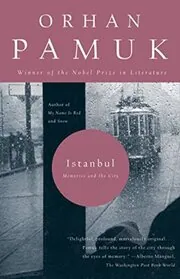
Istanbul
by Orhan Pamuk
2003
Part memoir and part city portrait, this book follows Pamuk through childhood, family life, and the melancholy beauty of Istanbul. It is also a key guide to the moods, streets, and memories that shape his fiction.
My Father's Suitcase
by Orhan Pamuk
2007
In these linked speeches, Pamuk reflects on his father, the private life of writing, and the solitude literature asks for. The title piece, his Nobel lecture, is brief but full of tenderness, doubt, and resolve.
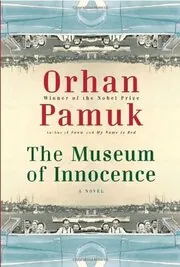
The Museum of Innocence
by Orhan Pamuk
2008
In 1975 Istanbul, wealthy Kemal becomes obsessed with his younger relative Füsun just as he is preparing to marry someone else. His longing turns into a life of collecting, memory, and love that curdles into fixation.
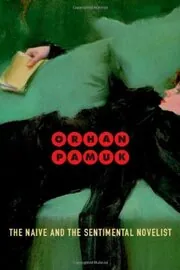
The Naive and the Sentimental Novelist
by Orhan Pamuk
2010
Based on his Norton Lectures, Pamuk thinks aloud about what happens when we read and write novels. He moves through character, plot, images, and point of view with the curiosity of both critic and working novelist.
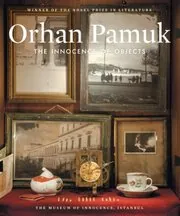
The Innocence of Objects
by Orhan Pamuk
2012
Using photographs and objects from his Istanbul museum, Pamuk extends the world of The Museum of Innocence into nonfiction. It is part catalog, part memoir, and part meditation on collecting, memory, and the stories things can hold.
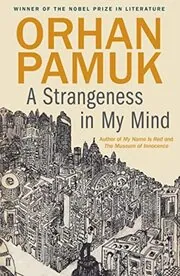
A Strangeness in My Mind
by Orhan Pamuk
2014
Mevlut comes to Istanbul as a boy and grows into a street vendor wandering its changing neighborhoods. His awkward love story and everyday struggles become a big, humane portrait of the city and the people remaking it.

Rebel with a Cause
by Orhan Pamuk
2015
On a dry plain outside Istanbul, a teenage apprentice helps a well digger search for water and finds an unexpected father figure. Then his attraction to a red-haired actress sets off guilt and consequences that last for decades.
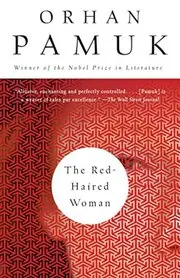
The Red-Haired Woman
by Orhan Pamuk
2016
As a teenager working for a well digger outside Istanbul, Cem is drawn to a traveling actress known as the red-haired woman. One accident, and one desire, echo through the next thirty years of his life.
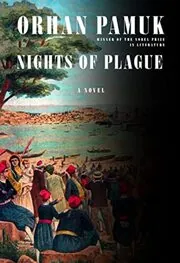
Nights of Plague
by Orhan Pamuk
2021
In 1900, plague reaches Mingheria, a tense Ottoman island split between Muslim and Orthodox Greek communities. Quarantine, murder, and political panic spread together as the island fights disease and starts imagining a future of its own.

Memories of Distant Mountains
by Orhan Pamuk
2024
Pamuk gathers illustrated notebooks from 2009 to 2022, mixing paintings with thoughts on travel, family, politics, and the writing life. The result feels intimate and sketchbook-like, a window into how images and sentences grow together.
Where to start with Orhan Pamuk
If you want a strong first novel: Snow → My Name Is Red
If you want Ottoman history and art: My Name Is Red → The White Castle
If you want Istanbul at the center: Istanbul → The Black Book → A Strangeness in My Mind
If you want love, memory, and obsession: The Museum of Innocence → The Red-Haired Woman
If you want essays and memoir first: Istanbul → Other Colors → My Father's Suitcase
Orhan Pamuk collections, short stories, and related book types
Non-Fiction
Standalone Orhan Pamuk books
Author bio
Orhan Pamuk was born in Istanbul on June 7, 1952, and grew up in Nişantaşı, a secular, well-off district that would later echo through books like The Black Book and Istanbul. Family apartments, old city streets, and the feeling of living among the remains of empire were not background details for him. They became material.
Before he thought of himself as a novelist, he wanted to be a painter. He went to Robert College, then studied architecture at Istanbul Technical University for three years before leaving. He later finished a journalism degree at Istanbul University, but never worked as a journalist.
At twenty-three, he chose the room over the career ladder.
Pamuk has often described writing as a long act of patience and solitude. He more or less shut himself away and worked until fiction became his life. His first novel, Cevdet Bey and His Sons, appeared in 1982, and the books that followed kept returning to questions that would stay with him: identity, memory, family tension, and the pull between Turkey's Ottoman past and its modern, Western-facing present.
For many English-language readers, The White Castle was the breakthrough. Its story of a young Italian captive and his Ottoman double showed how interested Pamuk was in mirrors, doubles, and the shaky border between self and other. He later worked on much of The Black Book while in New York as a visiting scholar at Columbia, and that novel made Istanbul feel like a maze of clues, disguises, and borrowed lives.
Then came the books that carried him to a much wider audience. My Name Is Red mixes murder mystery, love story, and art history in sixteenth-century Istanbul. Snow folds politics, religion, exile, and desire into a snowbound city near Turkey's eastern border. Istanbul brings the scale down and shows the city underneath so much of his fiction, part memoir, part portrait of place and mood.
Objects matter in Pamuk's work.
So do fathers and sons, jealous love, paintings, street vendors, half-remembered family stories, and the strange power of cities. In The Museum of Innocence, he followed a love obsession so far that he eventually opened a real Museum of Innocence in Istanbul, linking the novel to an actual collection of objects. Much later, A Strangeness in My Mind used the life of a street vendor to tell the story of a fast-changing city, while Memories of Distant Mountains returned to the notebooks and paintings he had been keeping for years.
He also has a strong nonfiction side. Other Colors collects essays on books, politics, and daily life. The Naive and the Sentimental Novelist, drawn from his Harvard lectures, shows how seriously he thinks about the act of reading, not just writing. Even there, he tends to sound less like a professor than like a novelist thinking out loud.
In 2006 he won the Nobel Prize in Literature, becoming the first Turkish writer to receive it. He has continued to live in Istanbul, and he has also taught at Columbia University. Even when his books grow large and idea-heavy, he usually starts somewhere small and concrete: a room, a street, a family silence, a suitcase, a cup, a picture on the wall.
That may be why his work feels both intricate and approachable. He writes about history, belief, art, and modern life, but he rarely loses sight of the person standing in the middle of it all, trying to understand where they belong.











Edited by
Software engineer whose passion for tracking book recommendations from podcasts inspired the creation of MRB.
Lead investor at 3one4 Capital whose startup expertise and love for books helped shape MRB and its growth.
Comments
Did we miss something? Have feedback?
Help us improve this page by sharing your thoughts