
Hilary Mantel Books in Order
See Hilary Mantel's books in order, with brief summaries, series background, and reading order tips for her historical novels, memoirs, essays, and short story collections.
Last updated:
As an Amazon Associate, we earn from qualifying purchases (at no extra cost to you).
Hilary Mantel books in publication order
21 books

The Fox in the Attic
by Hilary Mantel
1961
A young Welsh aristocrat, Augustine, flees home after being suspected in a child's death and hides with relatives in Germany. There he falls in love and drifts into the turmoil of the early Nazi movement, witnessing the failed Munich putsch at close quarters.
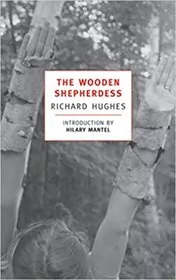
The Wooden Shepherdess
by Hilary Mantel
1973
In this continuation of Augustine's story, he moves between Prohibition era America, a tense, changing Germany and a Britain on the edge of class conflict. Private entanglements play out against the ruthless consolidation of Nazi power and the Night of the Long Knives.
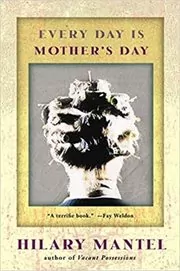
Every Day is Mother's Day
by Hilary Mantel
1985
Every Day is Mother's Day is a blackly comic portrait of Evelyn Axon, a self styled medium, and Muriel, the adult daughter she keeps shut inside a decaying house. As social worker Isabel Field tries to intervene, secrets, lost case files and a hidden pregnancy push everyone toward disaster.
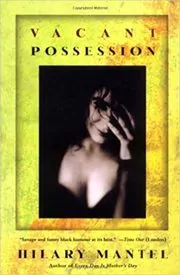
Vacant Possession
by Hilary Mantel
1986
Set about ten years after Every Day is Mother's Day, Vacant Possession follows Muriel Axon after her release from a psychiatric institution. Using disguise and mimicry, she quietly infiltrates the lives of the people who betrayed her, turning suburban respectability into something far more menacing.
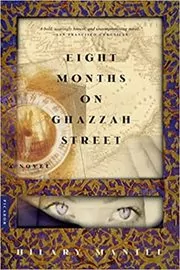
Eight Months on Ghazzah Street
by Hilary Mantel
1988
When cartographer Frances Shore moves to Jeddah to join her engineer husband, she expects boredom, not danger. Trapped in a claustrophobic apartment block, she makes uneasy friends, hears weeping from a supposedly empty flat and slowly realises that something violent is being hidden above her head.
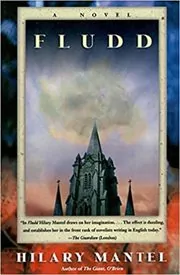
Fludd
by Hilary Mantel
1989
Fludd takes place in a bleak northern village in 1956, where a doubting priest and an unhappy young nun are visited by a mysterious curate who may not be human at all. His presence unsettles a rigid Catholic parish and sparks small miracles, rebellions and escapes.
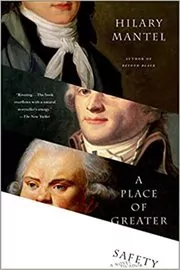
A Place of Greater Safety
by Hilary Mantel
1992
A Place of Greater Safety reimagines the French Revolution through the intertwined lives of Georges Danton, Camille Desmoulins and Maximilien Robespierre. From provincial childhoods to the Jacobin Club and the Terror, friendships, love affairs and private debts drive public events toward the guillotine.
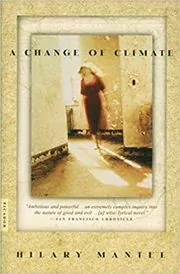
A Change of Climate
by Hilary Mantel
1994
In A Change of Climate, charitable couple Ralph and Anna Eldred run a chaotic open house in rural Norfolk, but their past will not stay buried. Flashbacks to years as missionaries in southern Africa, and an unspoken horror there, slowly explain why their family is starting to fall apart.

An Experiment in Love
by Hilary Mantel
1995
An Experiment in Love follows Carmel McBain from a strict northern Catholic childhood to a women's hall of residence in 1970s London. As she studies on an empty stomach, her uneasy ties with school friends Karina and Julia expose sharp lines of class, ambition and betrayal.
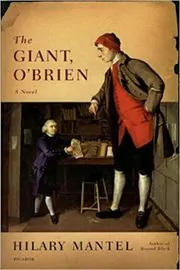
The Giant, O'Brien
by Hilary Mantel
1998
The Giant, O'Brien contrasts an Irish storyteller who earns a living displaying his extraordinary height with John Hunter, a celebrated London surgeon hungry for new specimens. As O'Brien's troupe struggles to survive the city, Hunter quietly plots to claim the giant's body for science.
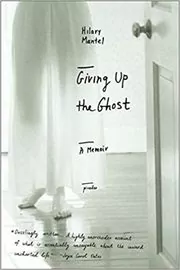
Giving Up the Ghost
by Hilary Mantel
2003
Giving Up the Ghost is Mantel's unsparing memoir of growing up Catholic in Derbyshire, living with a volatile stepfather and later battling undiagnosed pain that turned out to be severe endometriosis. She writes about childlessness, houses she has loved and the ghosts that live in memory.
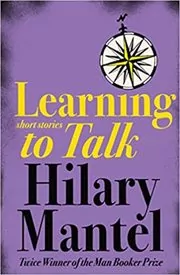
Learning to Talk
by Hilary Mantel
2003
Learning to Talk is a collection of linked stories in which an adult narrator looks back on a difficult northern childhood. Each piece catches a moment when language, class or schooling shows her a way out, while also revealing what can never quite be left behind.
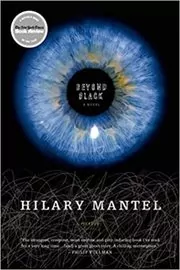
Beyond Black
by Hilary Mantel
2005
Beyond Black follows Alison Hart, an overweight professional medium who tours English suburbs, and her efficient but sceptical assistant Colette. Alison's cheery stage persona masks a brutal childhood and a vicious spirit guide who will not leave her alone, making everyday life more frightening than any séance.
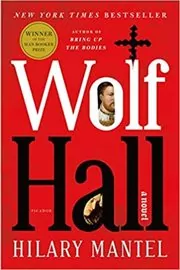
Wolf Hall
by Hilary Mantel
2009
Wolf Hall follows Thomas Cromwell's rise from brutalised blacksmith's son to chief fixer in Henry VIII's court, as the king seeks to divorce Katherine of Aragon and marry Anne Boleyn. Everyday negotiations, jokes and threats quietly decide the fate of England.
Recommended by
2 people Barack Obama recommended this book
Barack Obama
Barack Obama's favorite books of 2019 list.
Barack Obama's recommendation of this book  Christopher Hitchens recommended this book
Christopher Hitchens
"A service to the history it depicts, and puts the author in the very first rank of historical novelists." - Christopher Hitchens
Christopher Hitchens's recommendation of this book
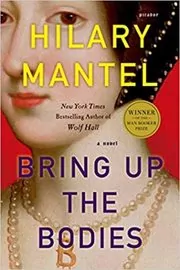
Bring Up the Bodies
by Hilary Mantel
2012
Bring Up the Bodies opens with Henry VIII growing tired of Anne Boleyn and drifting toward Jane Seymour. Thomas Cromwell is tasked with ending the royal marriage, and as he gathers rumours and testimony, he engineers a trial whose outcome he cannot fully control.

How Shall I Know You?
by Hilary Mantel
2014
In How Shall I Know You?, a tired, unwell writer travels to a small town to give a talk for a cash strapped literary society. Promised cosy hospitality, she instead finds a shabby hotel, a feral young porter and a long, wet night that slides from awkwardness toward menace.
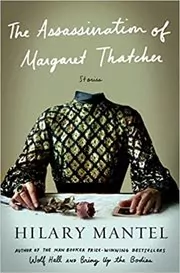
The Assassination of Margaret Thatcher
by Hilary Mantel
2014
This story collection ranges from awkward encounters in Jeddah and bin liners in suburban hallways to a chilling tale of an IRA sniper hiding in a Windsor flat. Throughout, Mantel uses domestic detail and dark humour to expose violence, class resentment and uneasy politics.

The School of English
by Hilary Mantel
2015
The School of English is a long story about an immigrant domestic worker hired to help in a grand Notting Hill house. As she learns the rules of the household, its panic room and its brittle teenage son, fear, class tension and cruelty tighten around her.

Mantel Pieces
by Hilary Mantel
2020
Mantel Pieces gathers essays, reviews and diary pieces written over decades for a literary journal. Subjects range from Robespierre and Tudor courtiers to true crime, religion, royal bodies and life in Saudi Arabia, offering a sharp, funny companion to her novels.
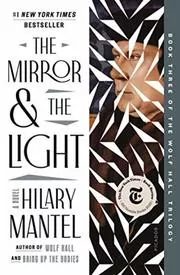
The Mirror and the Light
by Hilary Mantel
2020
Set after Anne Boleyn's execution, The Mirror and the Light traces Cromwell through the final years of his dominance at Henry VIII's court. As he arranges new alliances and marriages, old enemies close in, turning his hard won power into a death sentence.
Recommended by
1 person Craig Newmark recommended this book
Craig Newmark
"Illustrates the use, abuse, and limitations of influence—particularly when the stakes are high." - Craig Newmark
Craig Newmark's recommendation of this book

A Memoir of My Former Self
by Hilary Mantel
2023
A Memoir of My Former Self collects more than forty years of Mantel's nonfiction, from personal essays and lectures to sharp book and film reviews. She writes about childhood, illness, nationalism, the Tudors and other writers, tracing how her interests fed into the novels.
Where to start with Hilary Mantel
If you want to dive into the Cromwell novels first: Wolf Hall → Bring Up the Bodies → The Mirror and the Light
If you prefer big standalone historical epics: A Place of Greater Safety → The Giant, O'Brien
If you like darkly comic contemporary fiction: Every Day is Mother's Day → Vacant Possession → Beyond Black
If you are curious about her life and nonfiction: Giving Up the Ghost → Learning to Talk → A Memoir of My Former Self
If you want a sampler of her shorter fiction and essays: The Assassination of Margaret Thatcher → How Shall I Know You? → Mantel Pieces → The School of English
Hilary Mantel sub-series and character series
Hilary Mantel collections, short stories, and related book types
Short Stories/Novellas
Short Story Collections
Non-Fiction
Standalone Hilary Mantel books
Author bio
Hilary Mantel was born in 1952 in Glossop, Derbyshire, and grew up in nearby mill villages in the north of England. She would go on to write historical novels, memoir and short stories that made the past feel urgently close.
Mantel was the eldest of three children and was raised Roman Catholic. Her parents, both of Irish descent, separated when she was young, and her mother's partner, Jack Mantel, moved into the house; after the family relocated to Cheshire, Hilary took his surname and rarely saw her father again.
At school she found both escape and purpose. She attended convent schools, read voraciously and learned to argue and think on her feet, habits that would later shape the voice of Thomas Cromwell in the Wolf Hall books.
In 1970 Mantel left home to study law at the London School of Economics, then transferred to the University of Sheffield, where she graduated with a law degree. While still a student she married Gerald McEwen, a geology student who later became her long term partner and, eventually, the person who managed the practical side of her writing life.
After university she never practised law. Instead she worked in social services and in the administration of a geriatric hospital, spent time behind the counter in a shop, and wrote in the gaps. Those early jobs, and her glimpse of life inside British institutions, fed straight into her first published novels, the dark comedies Every Day is Mother's Day and Vacant Possession.
In her late twenties Mantel was living abroad, first in Botswana and then in Jeddah, Saudi Arabia, where her husband's work had taken them. During those years she suffered intense, unexplained pain and was repeatedly misdiagnosed with psychiatric illness before discovering that she had severe endometriosis. Major surgery in London brought some relief but left her unable to have children, an experience she later wrote about with unsentimental clarity in her memoir Giving Up the Ghost.
Mantel's fiction kept widening in scope. Eight Months on Ghazzah Street drew directly on her time in Saudi Arabia, while Fludd explored faith and doubt in a northern English parish, and A Place of Greater Safety plunged into the lives of Danton, Desmoulins and Robespierre during the French Revolution. Novels such as A Change of Climate, An Experiment in Love and The Giant, O'Brien took on missionary work, student life, hunger, folklore and the body, always with a careful eye for power and its costs.
She also wrote short stories and essays that circled back to her own past. Learning to Talk and Giving Up the Ghost look at childhood, class and illness, and later collections like The Assassination of Margaret Thatcher, Mantel Pieces and A Memoir of My Former Self gather decades of criticism, reportage and memoir. For many years she reviewed books and films for British magazines, testing ideas in public as she refined them in private.
The Wolf Hall trilogy turned her into a household name. Wolf Hall, Bring Up the Bodies and The Mirror and the Light follow Thomas Cromwell from the mud of his boyhood to the scaffold, and twice won her the Booker Prize, along with stage and television adaptations. Readers who first met her through Cromwell often work back to the earlier novels and discover the same sharp humour, sense of injustice and interest in the unseen.
Mantel spent her later years in Devon with McEwen, still writing, teaching and occasionally appearing on stage to discuss her work. She died in September 2022, aged seventy, leaving behind a body of fiction and nonfiction that keeps asking how private lives are shaped by belief, illness and the hard edges of history.




Edited by
Software engineer whose passion for tracking book recommendations from podcasts inspired the creation of MRB.
Lead investor at 3one4 Capital whose startup expertise and love for books helped shape MRB and its growth.
Comments
Did we miss something? Have feedback?
Help us improve this page by sharing your thoughts