
Nathan Zuckerman Books in Order
Part ofPhilip Roth Books in OrderThe Nathan Zuckerman series by Philip Roth, chronicling the life and career of the author's literary alter ego across decades of American history.
Last updated:
As an Amazon Associate, we earn from qualifying purchases (at no extra cost to you).
Nathan Zuckerman books in publication order
6 books
My Life as a Man
by Philip Roth
1974
This novel introduces the character of Nathan Zuckerman within the fiction of another writer, Peter Tarnopol. It explores the disastrous marriage of a young novelist and his attempts to transform his personal suffering into art.
The Ghost Writer
by Philip Roth
1979
Young Nathan Zuckerman visits the home of his literary idol, E.I. Lonoff, and meets a mysterious young woman he imagines to be Anne Frank. The novel explores the burden of Jewish history and the sacrifices required for an artistic life.
Zuckerman Unbound
by Philip Roth
1981
Nathan Zuckerman deals with the chaotic aftermath of publishing a scandalous bestseller. He faces death threats, fans, and the disapproval of his family, struggling to handle the sudden intrusion of the public into his private life.
The Anatomy Lesson
by Philip Roth
1983
Suffering from undiagnosed chronic pain and a creative block, a middle-aged Nathan Zuckerman looks for a way out of his writing career. His physical agony drives him toward a medical profession, even as his past continues to haunt him.
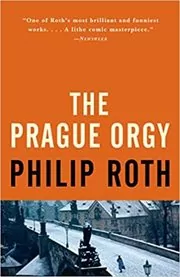
The Prague Orgy
by Philip Roth
1985
A novella in which Nathan Zuckerman travels to Soviet-occupied Prague to recover the manuscript of a martyred Yiddish writer. He encounters a surreal world of oppressed artists and state surveillance.
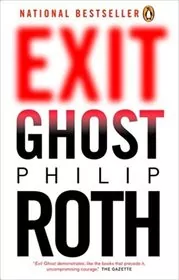
Exit Ghost
by Philip Roth
2007
After years of seclusion, Nathan Zuckerman returns to New York City and finds himself drawn into one final literary conflict. The novel serves as a farewell to Roth’s long-running alter ego as he confronts his own diminishing powers.
Nathan Zuckerman books in chronological order
Series background & context
Nathan Zuckerman isn’t just a character; he is the lens through which Philip Roth examined the peculiar mania of the writing life. Appearing in nine novels and a novella, Zuckerman is easily the most famous and enduring of Roth’s literary inventions. He starts out much like his creator—a young, ambitious writer from Newark, eager to impress his idols and make his mark on the world. But he quickly discovers that the literary life is messier and more dangerous than he imagined.
In the early stories, the drama feels intensely personal. We see a young Nathan grappling with the heavy price of artistic freedom. He writes stories that expose his family’s secrets and challenge the tight-knit Jewish community he comes from, leading to fierce estrangement and guilt. These books are often hilarious, but there’s a sting to them. Roth uses Zuckerman to explore exactly what happens when a writer chooses his craft over his father’s approval.
Then comes the explosion of fame. After publishing a scandalous bestseller that looks suspiciously like Roth’s own Portnoy’s Complaint, Zuckerman finds himself besieged by the absurdity of celebrity. He deals with fans who can’t separate the man from the myth and critics who attack his moral character. It is a brilliant game of smoke and mirrors, allowing Roth to answer his real-life detractors through the voice of his fictional double.
But Zuckerman doesn’t stay the center of attention forever.
As the series moves into the 1990s, the focus shifts outward. Zuckerman transforms from a neurotic protagonist into a quiet observer, acting as a witness to the tragedies of others. He narrates the rise and fall of a high school hero in American Pastoral, the political destruction of a radio star in I Married a Communist, and the hidden life of a classics professor in The Human Stain. Here, Zuckerman is older and physically damaged by prostate cancer, living in isolation. His own life is quiet, which allows him to listen intently to the noise of the American century.
Through these later novels, the series becomes something much larger than a biography of a writer. It evolves into a sweeping history of post-war America. Zuckerman guides us through the anti-communist witch hunts of the McCarthy era, the violent upheavals of the Vietnam War protests, and the moral sanctimony of the Clinton impeachment trial. He is the filter for the chaos, trying to make sense of how history rolls over ordinary people.
By the end of the timeline, the circle closes. In Exit Ghost, Zuckerman returns to New York, confronting the reality of his declining health and fading powers. It is a somber, unsparing look at what it means to age and lose the very vitality that once fueled the work. Ultimately, reading these books offers a complete view of a creative life, from the hungry ambition of youth to the final, silent resignation.




Edited by
Software engineer whose passion for tracking book recommendations from podcasts inspired the creation of MRB.
Lead investor at 3one4 Capital whose startup expertise and love for books helped shape MRB and its growth.
Comments
Did we miss something? Have feedback?
Help us improve this page by sharing your thoughts