
Michael Smith Books in Order
Browse Michael Smith books in reading order, with short summaries for each book and a clear title list to help you find a starting point.
Last updated:
As an Amazon Associate, we earn from qualifying purchases (at no extra cost to you).
Michael Smith books in publication order
15 books
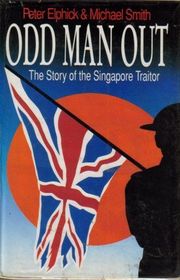
Odd Man Out
by Michael Smith
1994
This account investigates Captain Patrick Heenan, caught transmitting information to Japan during the invasion of Malaya. It examines the secrets he betrayed, their military consequences and the motives behind a case that British authorities kept hidden for decades.
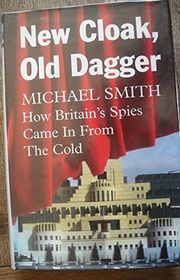
New Cloak, Old Dagger
by Michael Smith
1997
Drawing on material released after the Cold War, Michael Smith examines British espionage and its changing responsibilities. Historical operations lead into newer priorities, including economic intelligence, weapons proliferation and organized crime, as intelligence services seek a different role.

Station X
by Michael Smith
1998
During the Second World War, an unlikely collection of scholars, linguists and other recruits assembled at Bletchley Park to break enemy codes. Michael Smith follows their struggle with Enigma and other systems, connecting technical achievements with the people behind them.

Foley
by Michael Smith
1999
British intelligence officer Frank Foley used his position in Berlin to help thousands of Jews escape Nazi persecution. This biography follows the quiet risks he took, from arranging documents to sheltering fugitives, while maintaining the secrecy demanded by his profession.
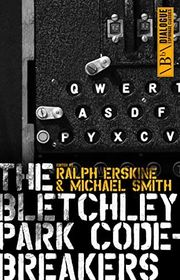
The Bletchley Park Codebreakers
by Michael Smith
2001
Historians and former codebreakers recount the work carried out at Bletchley Park during the Second World War. Technical achievements, personal memories and accounts of early computing reveal the people and methods behind one of Britain’s most consequential intelligence operations.
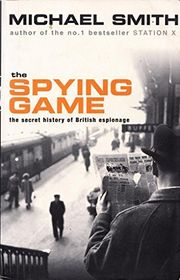
The Spying Game
by Michael Smith
2003
Michael Smith examines Britain’s intelligence services and the changing work of espionage. Alongside the activities of MI5, MI6 and GCHQ, he explores economic intelligence and efforts against organized crime, showing how secret operations extend beyond conventional military threats.
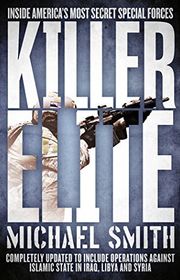
Killer Elite
by Michael Smith
2006
Drawing on interviews with former members, Michael Smith investigates a secretive American military intelligence unit known as the Activity. Its history spans covert surveillance and operations supporting special forces, revealing the hidden work behind prominent counterterrorism missions.

Six
by Michael Smith
2010
This history follows Britain's foreign intelligence service from its birth to the eve of the Second World War. Declassified files and interviews reveal fragile espionage networks, developing tradecraft and the risks faced by officers and agents operating abroad.

Britain's Secret War
by Michael Smith
2011
Michael Smith examines the intelligence operations that supported Britain's Second World War effort. Codebreaking at Bletchley Park, double agents, covert networks, and escape schemes reveal how specialists and clandestine teams influenced military outcomes away from the battlefield.
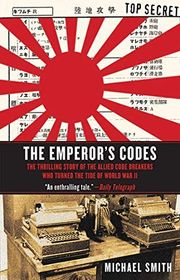
The Emperor's Codes
by Michael Smith
2011
Michael Smith follows the British, American and Allied specialists who worked to decipher Japan’s secret communications during the Second World War. Their methods, rivalries and breakthroughs reveal how difficult intelligence work shaped campaigns across the Pacific and beyond.

The Debs of Bletchley Park and Other Stories
by Michael Smith
2015
Drawing on the experiences of women who worked at Bletchley Park, Michael Smith examines their contributions to wartime codebreaking. Stories from varied backgrounds reveal technical achievement, newfound independence and the personal relationships formed within a highly secretive community.
Codebreakers and Spies
by Michael Smith
2019
This history follows British codebreakers, intelligence officers and special-operations teams during the Second World War. From Enigma and double agents to clandestine networks in occupied Europe, it examines the risky and often unexpected methods used to support Allied victory.
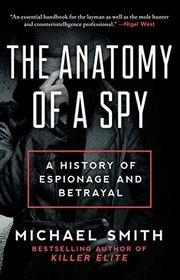
The Anatomy of a Spy
by Michael Smith
2020
Michael Smith explores why people become spies and what persuades them to betray secrets. Interviews and historical cases examine the roles of ideology, money, love, revenge and personal ambition in decisions that can endanger both agents and their countries.

No Man Dies Twice
by Michael Smith
2022
In wartime Bavaria, principled detective Peter Ritter investigates murders while the Gestapo watches his every move. Discovering an assassination plot against Hitler leaves him torn between his duty to solve crimes and his hope of saving Germany from its rulers.
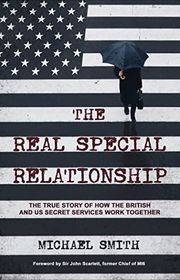
The Real Special Relationship
by Michael Smith
2022
Michael Smith traces the intelligence partnership between Britain and the United States from wartime codebreaking to contemporary security threats. Documents and interviews reveal how shared operations endured through Cold War tensions, political disagreements and changing international dangers.
Where to start with Michael Smith
For wartime codebreaking: Station X → The Emperor's Codes
For one intelligence officer’s life: Foley
For the motives behind espionage: The Anatomy of a Spy
For British-American intelligence history: The Real Special Relationship
For historical crime fiction: No Man Dies Twice
Standalone Michael Smith books
Author bio
Michael Smith came to writing about espionage after working in military intelligence himself. He left school at fifteen to join the British Army, serving first in the Royal Artillery and then in the Intelligence Corps. His work included monitoring communications, studying Arabic, gathering intelligence in the Middle East and working as a German interpreter in Europe.
Journalism followed at BBC Monitoring. He later became the Daily Telegraph’s defence correspondent and wrote for the Sunday Times. That move from collecting intelligence to reporting on defence helps explain the subjects that fill his books: secret organizations, the people inside them and the consequences of decisions made beyond public view.
Codebreaking is one of his main routes into that history.
The bestselling Station X tells the story of Bletchley Park’s wartime codebreakers. It offers a starting point for readers interested in how intelligence was obtained, rather than just how commanders used it. The Emperor's Codes shifts attention toward Japanese ciphers and Bletchley Park’s part in breaking them. Smith also co-edited The Bletchley Park Codebreakers with Ralph Erskine, bringing another collaborative perspective to a subject that runs through his work.
Foley narrows the focus to an individual. It recounts Frank Foley’s efforts to save Jews from Nazi persecution, and Smith’s research helped secure Foley’s recognition as Righteous Among Nations. The book makes a useful entry for someone who would rather follow one person’s choices than begin with an institution or a technical problem.
The individual matters just as much in The Anatomy of a Spy, although its scope is wider. Drawing on interviews with intelligence officers and agents, Smith asks why people spy. Money and patriotism are part of the answer, alongside love, revenge and other motives. It is a book for readers curious about recruitment, loyalty and betrayal, and about the differences between the aims of an intelligence service and the wishes of the people it uses.
His fiction puts those pressures inside a detective story.
In No Man Dies Twice, Inspector Peter Ritter investigates murders in wartime Bavaria while the Gestapo watches him. The setting is Rosenheim, where solving a crime can bring Ritter into conflict with the regime itself. An assassination plot against Hitler makes the problem sharper: his duty to pursue a killer may collide with his hope of saving Germany. Readers coming from Smith’s nonfiction will recognize the concern with divided loyalties, but here the uncertainty belongs to a fictional investigator.
The Real Special Relationship returns to nonfiction and a much larger scale, tracing the intelligence partnership between Britain and the United States. Its documents and interviews follow cooperation through wartime codebreaking, Cold War disagreements and later security threats. Smith lives near Henley-on-Thames in Oxfordshire. Across these different kinds of books, the clearest choice for a new reader is between the machinery of secret work, the motives of a spy and the choices facing a detective under dictatorship.















Edited by
Software engineer whose passion for tracking book recommendations from podcasts inspired the creation of MRB.
Lead investor at 3one4 Capital whose startup expertise and love for books helped shape MRB and its growth.
Comments
Spotted a missing book, a wrong order or a mistake? Tell us and we'll fix this page.
We're a reading guide, not the author or publisher, so we can't send books or pass on messages.