
Maus Books in Order
Part ofArt Spiegelman Books in OrderSee the Maus books in order by Art Spiegelman, with short summaries, reading order help, and background on the story's themes and history.
Last updated:
As an Amazon Associate, we earn from qualifying purchases (at no extra cost to you).
Maus books in publication order
3 books
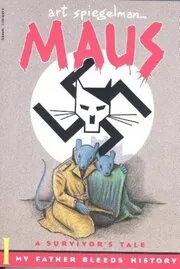
Maus: A Survivor's Tale
by Art Spiegelman
1986
In the first part of Maus, Spiegelman records his father Vladek's life in prewar Poland and the tightening grip of Nazi rule. The book also shows the difficult conversations between father and son that shape the telling.
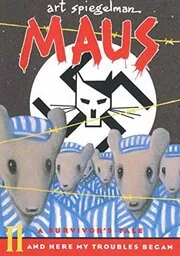
Maus II
by Art Spiegelman
1991
The second half of Maus follows Vladek through Auschwitz and toward the war's end, while Art keeps wrestling with how to tell the story. It is both a survival narrative and a painful portrait of memory after catastrophe.
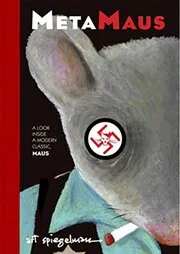
MetaMaus
by Art Spiegelman
2011
Part companion to Maus and part memoir of its making, this book unpacks Spiegelman's sources, interviews, drafts, and choices. It digs into family history, artistic process, and the burden of turning trauma into art.
Maus books in chronological order
Series background & context
Maus is less a conventional series than a two-part work that keeps opening outward. In Maus: A Survivor's Tale, Art Spiegelman records the memories of his father, Vladek Spiegelman, a Polish Jew who survived the Holocaust. The books move between late 1970s New York, where Art interviews Vladek, and prewar Poland and wartime Europe, where Vladek and his wife Anja try to stay alive as the world closes around them.
That split timeline is the key to everything.
On one level, the series is about survival under Nazi rule. Vladek tells Art about courtship, marriage, money problems, the invasion of Poland, ghettos, hiding, black markets, betrayal, transport, and Auschwitz. The danger is constant, but the story never turns into abstraction. It stays close to daily choices, what to trade, whom to trust, where to hide, how hunger and fear shrink life down to hours and minutes.
On another level, Maus is about what happens after survival. The older Vladek is difficult, obsessive, thrifty, wounded, and often hard to live with. Art does not clean that up. The books keep showing the friction between father and son, along with the guilt, impatience, love, and exhaustion that come with trying to turn family memory into a finished story. That is a big part of why the series feels so alive. It is about inheritance as much as history.
The animal masks are the most famous formal choice. Jews appear as mice, Germans as cats, and other groups take on other animal forms. The device looks simple at first, but it lets Spiegelman talk about racial categories, fear, disguise, and propaganda without pretending those categories make sense. The black-and-white art helps too. The pages can be stark, crowded, funny, ugly, and tender, sometimes all within a few panels. Nothing about the look is cute, even when the drawings seem deceptively plain.
It is a hard book, but not a distant one.
Readers coming to the series should expect a Holocaust narrative, a family memoir, and a book about the making of books all at once. Maus II deepens the camp material and also keeps asking what it means for Art to draw any of this at all. That self-questioning is part of the point, not a detour from it. The result is serious without being stiff, intimate without being sentimental, and haunting because it never offers easy closure.









Edited by
Software engineer whose passion for tracking book recommendations from podcasts inspired the creation of MRB.
Lead investor at 3one4 Capital whose startup expertise and love for books helped shape MRB and its growth.
Comments
Did we miss something? Have feedback?
Help us improve this page by sharing your thoughts