
Art Spiegelman Books in Order
Explore Art Spiegelman books in order, with quick summaries, a short biography, notes on the Maus series, and simple guidance on where to start.
Last updated:
As an Amazon Associate, we earn from qualifying purchases (at no extra cost to you).
Art Spiegelman books in publication order
14 books

The Wild Party
by Art Spiegelman
1928
Spiegelman's black-and-white illustrations give new force to Joseph Moncure March's jazz-age poem about Queenie, Burrs, and a party sliding toward violence. The result feels fast, boozy, and dangerous from the first page.
Maus: A Survivor's Tale
by Art Spiegelman
1986
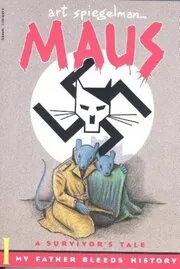
In the first part of Maus, Spiegelman records his father Vladek's life in prewar Poland and the tightening grip of Nazi rule. The book also shows the difficult conversations between father and son that shape the telling.
Maus II
by Art Spiegelman
1991
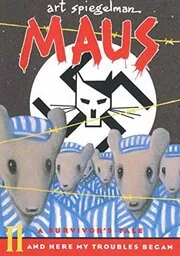
The second half of Maus follows Vladek through Auschwitz and toward the war's end, while Art keeps wrestling with how to tell the story. It is both a survival narrative and a painful portrait of memory after catastrophe.
Open Me...I'm a Dog!
by Art Spiegelman
1997
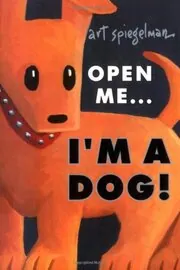
This playful picture book insists it isn't a book at all, but a dog you can hold and lead around. Spiegelman turns the joke into a tactile, child-friendly game with words, pictures, and the book's physical shape.
Jack Cole and Plastic Man
by Art Spiegelman
2001
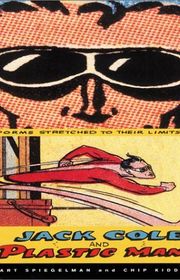
Part comics history and part visual tribute, this book explores cartoonist Jack Cole and his elastic hero Plastic Man. Spiegelman and Chip Kidd mix biography, criticism, and reproduced art to show why the character still matters.
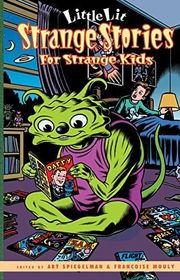
Strange Stories for Strange Kids
by Françoise Mouly, Art Spiegelman & David Sedaris
2001
This all-ages comics anthology, edited by Art Spiegelman and Françoise Mouly, gathers offbeat stories, comics, games, and visual puzzles from a wide range of creators. David Sedaris and Ian Falconer contribute the darkly playful tale “Pretty Ugly.”

In the Shadow of No Towers
by Art Spiegelman
2004
After witnessing the September 11 attacks from lower Manhattan, Spiegelman turns shock and anger into oversized comics pages. The book is personal and political at once, tracing trauma, fear, and the media storm that followed.
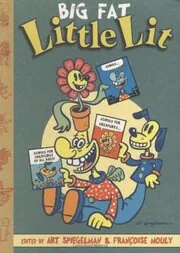
Big Fat Little Lit
by Françoise Mouly, Art Spiegelman, David Sedaris & Daniel Clowes
2006
Edited by Françoise Mouly and Art Spiegelman, this all-ages comics anthology gathers selected short pieces from the first three Little Lit volumes. Stories, visual gags, fairy-tale adaptations, and activities feature work by a wide range of writers and cartoonists, including Daniel Clowes and David Sedaris.
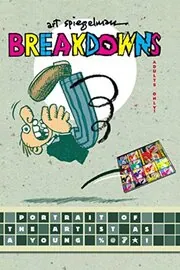
Breakdowns
by Art Spiegelman
2008
This collection of Spiegelman's early comics is messy, inventive, and full of formal experiments that point toward Maus. A later autobiographical introduction helps connect the underground work to the artist he would become.
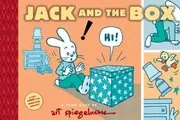
Jack and the Box
by Art Spiegelman
2008
A young rabbit gets a jack-in-the-box that keeps springing bigger surprises on him. It's a simple, sly early-reader comic that turns a familiar toy into a funny little test of nerves and imagination.
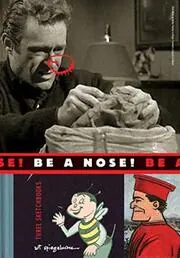
Be a Nose!
by Art Spiegelman
2009
This unusual set of sketchbooks opens up Spiegelman's working process, from rough doodles to sharp visual ideas. The pages are funny, restless, and revealing, giving readers a close look at how his mind moves on paper.
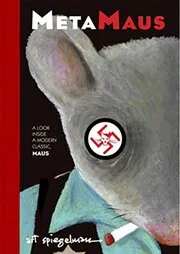
MetaMaus
by Art Spiegelman
2011
Part companion to Maus and part memoir of its making, this book unpacks Spiegelman's sources, interviews, drafts, and choices. It digs into family history, artistic process, and the burden of turning trauma into art.
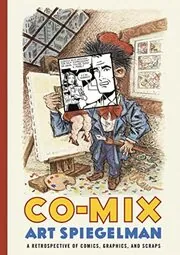
Co-Mix
by Art Spiegelman
2013
A career-spanning retrospective that gathers early underground comics, magazine covers, sketches, and design work. It shows how Spiegelman moved between personal memoir, visual experimentation, and pop culture satire over decades.
The Complete Maus
by Art Spiegelman
Where to start with Art Spiegelman
If you want his defining work: Maus: A Survivor's Tale → Maus II
If you want the full story behind Maus: Maus: A Survivor's Tale → Maus II → MetaMaus
If you want his experimental side: Breakdowns → Be a Nose! → Co-Mix
If you want later personal nonfiction: In the Shadow of No Towers
If you're choosing for younger readers: Jack and the Box → Open Me...I'm a Dog!
Art Spiegelman sub-series and character series
Art Spiegelman collections, short stories, and related book types
TOON Books
Graphic Novels
Children's Books
Non-Fiction
Standalone Art Spiegelman books
by Françoise Mouly, Art Spiegelman, David Sedaris & Daniel Clowes
2006Little Lit, Book 4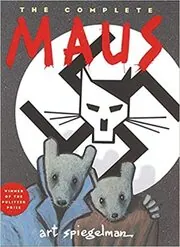
Author bio
Art Spiegelman was born in Stockholm on February 15, 1948, the child of Polish Jewish parents who had survived the Holocaust. His family moved to the United States in 1951, and he grew up in Queens, New York. That mix of European family memory and American city life would stay at the center of his work.
For him, the past was never really past.
As a kid, he drew constantly and soaked up the anarchic energy of Mad magazine. He made fanzines while still in school, studied at the High School of Art and Design, and was already drawing professionally as a teenager. After time at Harpur College, where he studied art and philosophy, he found his way into the underground comix world of the late 1960s, a scene that treated comics as a place for adult ideas, private obsessions, and formal experiments.
He also paid the rent in less glamorous ways. For years he worked with Topps, helping create and shape spoof products like Wacky Packages and later working on Garbage Pail Kids. That job may sound far from literary comics, but it sharpened his sense of layout, joke structure, and how images stick in the mind.
He learned early that comics could be trashy, smart, and emotionally serious all at once.
In the 1970s he published Breakdowns, a restless collection of early comics that already showed how hard he was pushing at the form. He also edited and taught, and from 1979 to 1986 he taught the history and aesthetics of comics at the School of Visual Arts in New York. In 1980 he and his wife, editor and designer Françoise Mouly, launched Raw, a magazine that opened American readers to a wide range of experimental comics from the United States and abroad. Their home and working life became tightly linked, and they later had two children, including writer Nadja Spiegelman.
Then came Maus: A Survivor's Tale and Maus II. Built from interviews with his father, Vladek, the books tell the story of survival in occupied Poland and Auschwitz, but they also show the strain between father and son in the present. Readers responded to the plain black-and-white drawings, the unsettling use of animal figures, and the refusal to turn history into something neat or noble. When Maus received a special Pulitzer Prize in 1992, it changed how many readers, teachers, and publishers thought about comics.
Spiegelman did not spend the rest of his career trying to repeat that success. He illustrated Joseph Moncure March's The Wild Party, turned his own shock after September 11 into In the Shadow of No Towers, and later pulled back the curtain on Maus with MetaMaus. Books like Co-Mix and Be a Nose! let readers see the rough sketches, detours, and side roads that sit behind the finished work. Even his children's books, like Jack and the Box and Open Me...I'm a Dog!, feel like the work of someone testing what a book can do.
What ties his work together is curiosity about memory, media, Jewish identity, and the strange grammar of pictures next to words. He has spent decades arguing, on the page and off it, that comics are not a lesser form. He lives in New York City with Mouly, and his books still invite readers to look harder at what drawings can carry.



Edited by
Software engineer whose passion for tracking book recommendations from podcasts inspired the creation of MRB.
Lead investor at 3one4 Capital whose startup expertise and love for books helped shape MRB and its growth.
Comments
Did we miss something? Have feedback?
Help us improve this page by sharing your thoughts