
Matthew Yglesias Books in Order
Browse Matthew Yglesias books in order, with quick summaries, a short bio, and where-to-start notes for his books on housing, policy, and politics.
Last updated:
As an Amazon Associate, we earn from qualifying purchases (at no extra cost to you).
Matthew Yglesias books in publication order
3 books
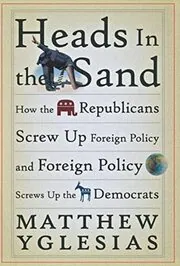
Heads in the Sand
by Matthew Yglesias
2008
Yglesias examines the failures of Republican foreign policy and argues that Democrats need a clearer alternative. He makes the case for liberal internationalism, a rules-based approach meant to make the world safer without nationalist swagger.
The Rent Is Too Damn High
by Matthew Yglesias
2012
This short book argues that high housing costs do more than squeeze renters. Yglesias traces the problem to zoning and low-density rules, then shows how expensive housing hurts growth, commutes, and everyday life.
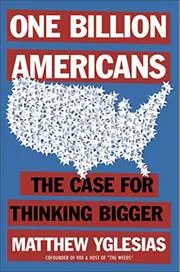
One Billion Americans
by Matthew Yglesias
2020
Yglesias argues that the United States should aim for a population of one billion to stay prosperous and influential. From housing and transit to immigration and family policy, he turns a provocative premise into a broad case for national growth.
Where to start with Matthew Yglesias
If you want the clearest entry point: One Billion Americans
If housing policy is your main interest: The Rent Is Too Damn High → One Billion Americans
If you want his early foreign-policy writing: Heads in the Sand
If you want to read everything in order: Heads in the Sand → The Rent Is Too Damn High → One Billion Americans
Matthew Yglesias collections, short stories, and related book types
Non-Fiction
by Matthew Yglesias
2008How the Republicans Screw Up Foreign Policy and Foreign Policy Screws Up the Democrats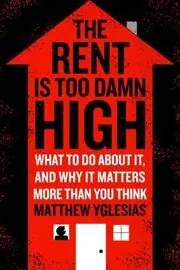
by Matthew Yglesias
2012What To Do About It, And Why It Matters More Than You Think
Standalone Matthew Yglesias books
Author bio
Matthew Yglesias grew up in New York City and built his career by making public policy feel less distant and more legible. He writes about politics, economics, housing, transportation, and the way institutions shape everyday life. A lot of readers first met him through blogging, then through Vox, and later through his newsletter, Slow Boring.
He got started early.
While studying philosophy at Harvard, Yglesias began blogging in 2002, when personal political blogs were still a pretty new way to build an audience. After graduating in 2003, he joined The American Prospect as a writing fellow and soon became a staff writer. That mix of philosophy training and internet-era speed helped set the tone for the rest of his work, serious about ideas, but willing to explain them in plain language.
From there he moved through a run of influential jobs in political media. He wrote for The Atlantic, worked with ThinkProgress and the Center for American Progress, and later became a columnist at Slate, where his Moneybox work helped turn wonky subjects into regular reading for a broader audience. In 2014, he co-founded Vox with Ezra Klein and Melissa Bell, helping build a publication centered on explanation and policy.
His books track the same path. Heads in the Sand from 2008 is an argument about American foreign policy and the Democratic Party's struggle to offer a clear alternative to the nationalism of the George W. Bush years. The Rent Is Too Damn High from 2012 narrows the focus to housing, zoning, density, and the way expensive cities quietly distort work, family life, and economic growth. One Billion Americans from 2020 zooms back out again, using population, immigration, family policy, infrastructure, and housing to argue for a bigger, more ambitious national future.
He likes starting with one concrete problem and then pulling back until you can see the whole system.
That habit is a big part of why people read him. Even when the topic is Senate procedure or land-use regulation, he tends to frame it around questions ordinary readers already care about, why commutes are long, why child care is expensive, why prosperous cities are hard to live in, or why governments that promise big things often struggle to build anything. His recurring themes are growth, abundance, state capacity, and the gap between what America says it wants and what its rules actually allow.
There is also a very online quality to his work, in the best and messiest sense. He came out of the early blog era, and he still writes like someone who wants to answer the question on the table rather than hide behind ceremony. That makes his prose brisk, sometimes stubborn, and usually easy to scan.
Readers who enjoy Yglesias usually like the combination of directness and range. He can be argumentative, but the appeal is less about provocation than about connection. A housing fight becomes a labor-market story. A transit failure becomes a climate story. A debate about immigration becomes a question about national confidence. Even people who disagree with him often find the chain of reasoning easy to follow, because he prefers short steps over grand theory.
In recent years, he has written primarily through Slow Boring, a newsletter focused on politics and public policy. He also continues to write columns and appear in public discussions about economics, cities, government, and Democratic politics. He lives in Washington, DC with his wife and son, and his work still circles the same basic question that has run through his career from the start, what would it look like to make public life function a little better.









Edited by
Software engineer whose passion for tracking book recommendations from podcasts inspired the creation of MRB.
Lead investor at 3one4 Capital whose startup expertise and love for books helped shape MRB and its growth.
Comments
Did we miss something? Have feedback?
Help us improve this page by sharing your thoughts