
Mary McCarthy Books in Order
Mary McCarthy is a series of 25 books written by Mary McCarthy.
Here, you can see them all in order! (publication year included)
Last updated: 25 new books added
As an Amazon Associate, we earn from qualifying purchases (at no extra cost to you).
Mary McCarthy books in publication order
25 books
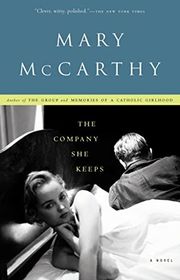
The Company She Keeps
by Mary McCarthy
1942
Six connected episodes follow a young woman through New York's bohemian and intellectual circles. Relationships, social encounters, and conflicting ambitions expose the distance between her self-image and the judgments she makes about others.
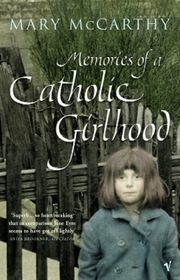
Memories of a Catholic Girlhood
by Mary McCarthy
1946
McCarthy recalls an orphaned childhood shaped by sharply different households and religious expectations. Memories of harsh relatives, grandparents, and Catholic schooling become an inquiry into family stories, personal identity, and the difficulties of reconstructing the past.
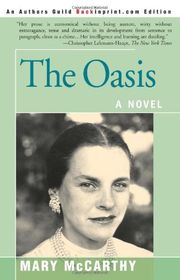
The Oasis
by Mary McCarthy
1949
A group of urban intellectuals attempts to establish a rural utopia in the early Cold War years. Their shared ideals soon collide with personal rivalries and incompatible expectations, turning the experiment into a satire of intellectual community.
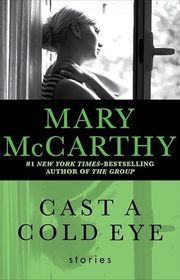
Cast a Cold Eye
by Mary McCarthy
1950
Seven stories examine strained encounters, self-deception, and the uneasy relations between individuals and their surroundings. Tourists in Italy, a hospitalized graduate student, and a family transformed by illness reveal the satire and autobiographical tensions shaping McCarthy's fiction.
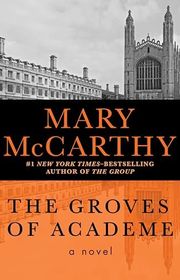
The Groves of Academe
by Mary McCarthy
1951
When professor Henry Mulcahy loses his position at progressive Jocelyn College, he challenges the decision through accusations and maneuvering. The resulting struggle draws colleagues into conflicting loyalties and exposes the institutional anxieties of the McCarthy era.
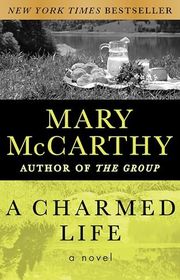
A Charmed Life
by Mary McCarthy
1955
Playwright Martha Sinnott returns with her second husband to a New England artists' community where her former husband still lives. Renewed contact with the past unsettles her hopes for happiness and exposes dangerous patterns of self-deception.
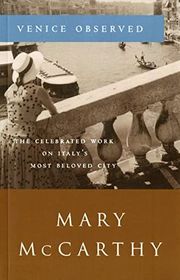
Venice Observed
by Mary McCarthy
1956
McCarthy explores Venice through observations of its character, inhabitants, and distinctive tastes. Her portrait brings a traveler's critical eye to the city, considering the qualities that shape its atmosphere and distinguish its way of life.
Sights and Spectacles
by Mary McCarthy
1957
Mary McCarthy collects her theatre criticism from 1937 to 1956, examining New York's stage through chronicles of its productions. The essays bring her critical perspective to the plays and performances that shaped nearly two decades of American theatrical life.
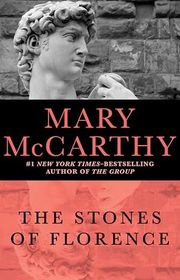
The Stones of Florence
by Mary McCarthy
1959
An exploration of Florence connects the city's art and architecture with its political and commercial history. McCarthy considers Dante, the Renaissance, and the Medici while examining how wealth, rivalry, and civic identity shaped cultural achievement.
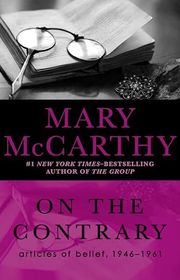
On the Contrary
by Mary McCarthy
1962
These essays address politics, society, sexuality, and literature in the years after World War II. McCarthy considers figures including Hannah Arendt, Simone de Beauvoir, and Dickens while confronting public controversies and the intellectual assumptions behind them.
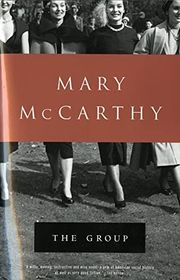
The Group
by Mary McCarthy
1963
Eight Vassar graduates enter adult life in the 1930s, carrying shared expectations into very different circumstances. Marriage, work, sexuality, and motherhood test their friendships as the lives they imagine encounter the pressures of their social world.
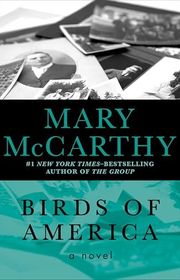
Birds of America
by Mary McCarthy
1965
Nineteen-year-old Peter Levi goes to Paris to study at the Sorbonne, hoping for a thoughtful life informed by his love of birds. Political unrest and the Vietnam era complicate his effort to remain detached from the world.
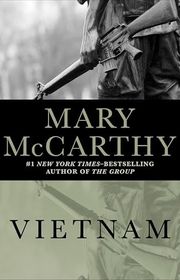
Vietnam
by Mary McCarthy
1967
Reporting from Vietnam, McCarthy examines the American war effort through encounters in Saigon and visits beyond the city. Her critical account considers official claims alongside the experiences of people living amid displacement and conflict.
Hanoi
by Mary McCarthy
1968
Mary McCarthy recounts her wartime visit to Hanoi and examines the American role in Vietnam. Her account also includes an exchange with critic Diana Trilling over the implications of abandoning the war, extending the argument beyond her own observations.
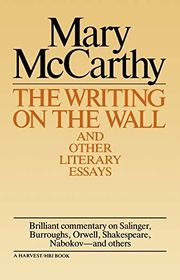
Writing on the Wall and Other Literary Essays
by Mary McCarthy
1971
Literary essays range from Shakespeare to Salinger, bringing McCarthy's critical attention to writers separated by centuries. The collection approaches literature through individual works and authors, gathering her judgments across a broad span of literary history.
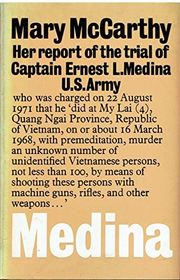
Medina
by Mary McCarthy
1972
Mary McCarthy reports on the court-martial and acquittal of Captain Ernest Medina, commander of American troops involved in the My Lai massacre. Her account examines the proceedings surrounding responsibility for one of the Vietnam War's most notorious atrocities.
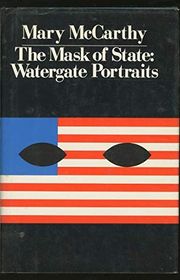
The Mask of State
by Mary McCarthy
1974
McCarthy revisits her reports on the Watergate hearings, expanding her account of deception and arrogance in the Nixon administration. The resulting political portrait follows the scandal through its participants and includes a postscript addressing Nixon's pardon.
Cannibals and Missionaries
by Mary McCarthy
1979
A human-rights delegation and wealthy art collectors share a flight that is hijacked by militants. Held on a Dutch farm, the passengers confront competing political demands and a chilling calculation of the relative value of artworks and human lives.
Ideas and the Novel
by Mary McCarthy
1980
McCarthy examines the place of ideas in fiction, contrasting nineteenth-century novels with later developments. Readings of writers including Eliot, James, Balzac, and Lawrence explore how intellectual arguments interact with storytelling, character, and the authority of the narrator.
The Hounds of Summer and Other Stories
by Mary McCarthy
1981
This short-fiction collection brings together the stories previously published in Cast a Cold Eye alongside two additional works, The Hounds of Summer and The Appalachian Revolution, offering a broader selection of Mary McCarthy's writing in the form.
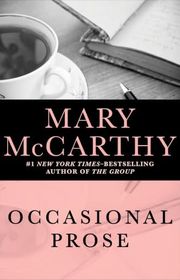
Occasional Prose
by Mary McCarthy
1985
Essays range across reading, romance, gardening, politics, and the novel, extending to an interpretation of La Traviata. A farewell to Hannah Arendt joins these reflections, linking McCarthy's literary interests with personal attachments and public concerns.
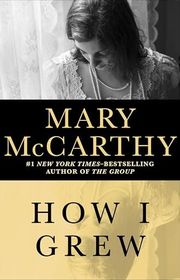
How I Grew
by Mary McCarthy
1987
Recalling the years from thirteen to twenty-one, McCarthy traces her education and emerging independence in Seattle and at Vassar. Family, teachers, and friendships shape an account of the experiences through which her adult identity began to form.
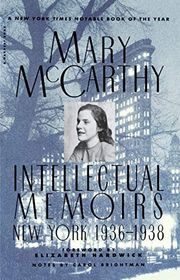
Intellectual Memoirs
by Mary McCarthy
1992
McCarthy revisits her New York life from 1936 to 1938, before establishing herself as a fiction writer. Reviewing, communist politics, intellectual friendships, and her marriage to Harold Johnsrud illuminate a formative period of personal and political change.
Between Friends
by Mary McCarthy
1995
Letters between Hannah Arendt and Mary McCarthy trace a friendship lasting more than twenty-five years. Their exchanges move between personal experience, politics, and moral questions, revealing the intimacy and intellectual disagreements sustaining their relationship.

A Bolt from the Blue and Other Essays
by Mary McCarthy
2001
A selection of McCarthy's essays brings together literary criticism, theater writing, and political observation across several decades. Discussions of novelists and playwrights sit alongside responses to public events, showing the range of her critical interests.



Edited by
Software engineer whose passion for tracking book recommendations from podcasts inspired the creation of MRB.
Lead investor at 3one4 Capital whose startup expertise and love for books helped shape MRB and its growth.
Comments
Spotted a missing book, a wrong order or a mistake? Tell us and we'll fix this page.
We're a reading guide, not the author or publisher, so we can't send books or pass on messages.