
Cormac McCarthy Books in Order
Explore Cormac McCarthy's books in order, with series overviews, summaries, and clear guidance on where to start with his major novels and trilogies.
Last updated:
As an Amazon Associate, we earn from qualifying purchases (at no extra cost to you).
Cormac McCarthy books in publication order
17 books
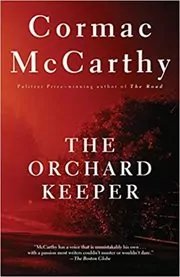
The Orchard Keeper
by Cormac McCarthy
1965
In an isolated Tennessee community between the world wars, young John Wesley Rattner, bootlegger Marion Sylder, and aging orchard keeper Arthur Ownby circle one another, unaware of the crime that secretly links them and the changes creeping into their mountain hollow.
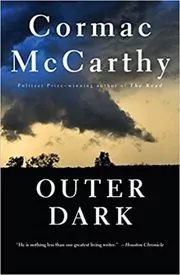
Outer Dark
by Cormac McCarthy
1968
In a bleak Appalachian landscape, Rinthy Holme sets out to find the baby her brother Culla abandoned in the woods, while Culla wanders from town to town haunted by guilt and shadowed by a trio of mysterious, violent men.
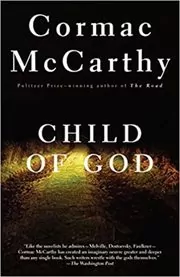
Child of God
by Cormac McCarthy
1973
Lester Ballard, a dispossessed loner in rural Tennessee, drifts farther outside society after losing his family home, his violence and obsessions growing more extreme as he retreats into caves and confronts the darkest corners of human loneliness.
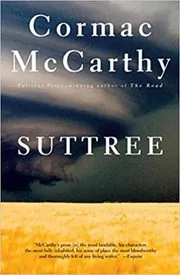
Suttree
by Cormac McCarthy
1979
Choosing exile from his well-off Knoxville family, Cornelius Suttree lives on a houseboat on the Tennessee River, scraping by as a fisherman and drifting among outcasts, drunks, and petty criminals while wrestling with grief, guilt, and the pull of his past.
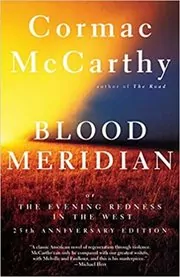
Blood Meridian
by Cormac McCarthy
1985
Following a runaway known only as the kid, this brutal frontier epic tracks a historical gang of scalp hunters across the U.S.–Mexico borderlands, where senseless massacres and the enigmatic Judge Holden force him to confront the nature of violence itself.
Recommended by
2 people Jocko Willink recommended this book
Jocko Willink
"Was able to show the darkness in humanity and there’s nothing pleasant in any way, shape or form." - Jocko Willink
Jocko Willink's recommendation of this book  Bryan Callen recommended this book
Bryan Callen
Bryan Callen recommended this book on YouTube.
Bryan Callen's recommendation of this book
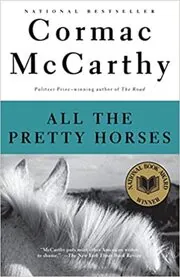
All the Pretty Horses
by Cormac McCarthy
1992
After his Texas ranch is sold, sixteen-year-old John Grady Cole rides south into Mexico with his friend Rawlins, chasing the old cowboy life and falling into a dangerous love affair that tests his ideals about honor, loyalty, and home.
The Crossing
by Cormac McCarthy
1994
Teenage rancher Billy Parham traps a pregnant she-wolf in New Mexico and, instead of killing her, leads her back toward the mountains of Mexico, a choice that sets off a series of perilous journeys marked by family loss, loyalty, and exile.
The Stonemason
by Cormac McCarthy
1994
In Louisville, Kentucky, Ben Telfair abandons college to join his grandfather and father in the family stonemasonry trade, narrating three turbulent years as debt, betrayal, and buried secrets threaten to break apart the tight-knit Black family he’s trying to hold together.
The Gardener's Son
by Cormac McCarthy
1996
Based on a real 19th‑century murder, this screenplay follows Robert McEvoy, an injured mill worker’s son in Graniteville, South Carolina, whose simmering anger at the ruthless Gregg family explodes into violence and a gripping courtroom reckoning.
Cities of the Plain
by Cormac McCarthy
1998
On a struggling New Mexico cattle ranch in the 1950s, cowboys John Grady Cole and Billy Parham share hard work and close friendship, until John Grady falls for a young woman in Ciudad Juárez and their plans collide with a violent underworld.
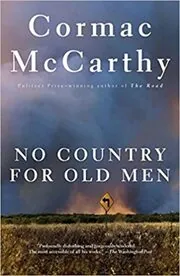
No Country for Old Men
by Cormac McCarthy
2005
While hunting in the Texas desert, Llewelyn Moss stumbles on a drug deal gone wrong and a satchel of cash, drawing the relentless hitman Anton Chigurh and weary sheriff Ed Tom Bell into a deadly chase across the borderlands.
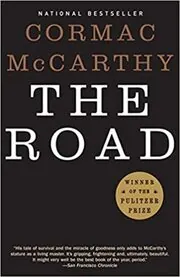
The Road
by Cormac McCarthy
2006
In a burned, ash-covered America, a father and his young son push a grocery cart south along ruined highways, scavenging for food and trying to avoid roving bands of cannibals while clinging to the fragile hope that they still "carry the fire."
Recommended by
8 people- Jocko Willink recommended this book
Jocko Willink
Jocko Willink covered this book in "Jocko Podcast" Ep. 97
Jocko Willink's recommendation of this book  Oprah Winfrey recommended this book
Oprah Winfrey
"Unlike any book I have chosen." - Oprah Winfrey
Oprah Winfrey's recommendation of this book  Aubrey Marcus recommended this book
Aubrey Marcus
"A bleak post-apocalyptic survival story about a father and his son." - Aubrey Marcus
Aubrey Marcus's recommendation of this book  Charlize Theron recommended this book
Charlize Theron
"[This book] changed my life." - Charlize Theron
Charlize Theron's recommendation of this book  Joel McHale recommended this book
Joel McHale
"No novel has ever captured the love a parent has for his child better than this book." - Joel McHale
Joel McHale's recommendation of this book  Sam Hinkie recommended this book
Sam Hinkie
"Unrepayable." - Sam Hinkie
Sam Hinkie's recommendation of this book +2
More recommendations
- Lex Fridman
Lex Fridman mentioned this book on Instagram.
- Ryan Holiday
"Read it when you have kids. When I finished this book, [I] walked into my son's room when he was asleep, sat on the floor, and I just wept." - Ryan Holiday
- Lex Fridman
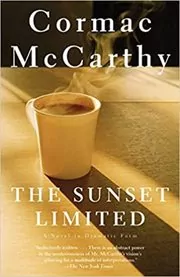
The Sunset Limited
by Cormac McCarthy
2006
After pulling a stranger away from an oncoming train, an ex-con named Black brings the suicidal professor he calls White back to his small New York apartment, where a long, searching conversation pits faith against nihilism and asks whether life is worth living.
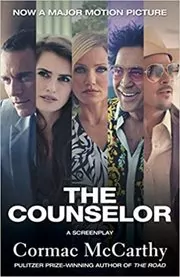
The Counselor
by Cormac McCarthy
2013
A successful lawyer known only as the Counselor risks a quick score by backing a gigantic drug shipment along the U.S.–Mexico border, only to discover how quickly the cartels turn on him when things go wrong and innocence offers no protection.
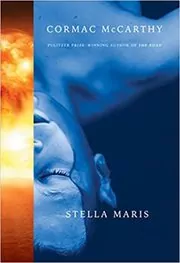
Stella Maris
by Cormac McCarthy
2022
In 1972, twenty-year-old mathematics prodigy Alicia Western checks herself into the remote psychiatric clinic called Stella Maris, where searching conversations with her psychiatrist circle her work, her hallucinated companions, her love for her brother, and her growing desire to disappear.
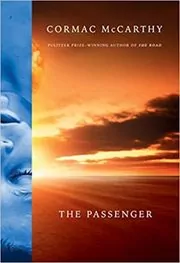
The Passenger
by Cormac McCarthy
2022
Salvage diver Bobby Western descends to a crashed jet off the Gulf Coast and finds a missing passenger and flight recorder, drawing the attention of shadowy investigators as he drifts from New Orleans across the South, haunted by his brilliant, troubled sister Alicia.

The Road: A Graphic Novel Adaptation
by Cormac McCarthy
2024
This graphic novel adaptation of The Road turns the journey of a father and son through a ruined, ash-choked America into stark panels, capturing their constant search for food, shelter, and a reason to keep moving in a world gone silent.
Where to start with Cormac McCarthy
If you want an accessible entry point: All the Pretty Horses → The Crossing → Cities of the Plain.
If you’re drawn to his darkest Westerns: Blood Meridian → No Country for Old Men.
If you prefer post-apocalyptic stories: The Road → The Road: A Graphic Novel Adaptation.
If you’re curious about his late philosophical work: The Passenger → Stella Maris.
Cormac McCarthy sub-series and character series
Cormac McCarthy collections, short stories, and related book types
Plays
Graphic Novels
Standalone Cormac McCarthy books
Author bio
Cormac McCarthy was born Charles Joseph McCarthy Jr. in Providence, Rhode Island, on July 20, 1933, and grew up mostly in Knoxville, Tennessee, in a big Irish Catholic family that would quietly shape the people and places in his fiction.
As a boy he preferred wandering and tinkering to schoolwork, and Catholic school in Knoxville never quite stuck. He enrolled at the University of Tennessee in 1951, left to serve in the U.S. Air Force, then returned to campus, where an assignment to repunctuate old essays nudged him toward writing. Two student stories published under the name C. J. McCarthy Jr. earned him early prizes, but he dropped out again in 1959 and headed for Chicago.
In the 1960s he married, lived in a shack in the Smoky Mountains without heat or running water, and wrote whenever he could afford the time. He finished his first novel, The Orchard Keeper, while working in an auto‑parts warehouse. Published in 1965, it introduced readers to his dense, image‑heavy prose and rural Tennessee settings. Grants and fellowships let him travel to Europe, where he wrote Outer Dark, and later back in Appalachia he produced the disturbing Child of God.
McCarthy spent years in and around Knoxville working on Suttree, a long, semi‑autobiographical novel about a man who abandons a comfortable life to live on a houseboat on the Tennessee River. The book didn’t sell much, but it deepened his reputation among writers. A MacArthur Fellowship in 1981 helped him shift west to El Paso and the deserts and borderlands that would define his next phase. There he researched and wrote Blood Meridian, a nightmarish nineteenth‑century journey with a gang of scalp hunters that many readers now see as his harshest work.
Through all this he kept living simply and mostly out of public view, typing on the same small Olivetti Lettera 32 he’d bought in a Knoxville pawnshop. The 1990s finally brought wider attention. All the Pretty Horses, the first volume of what became the Border Trilogy, followed a teenage cowboy into Mexico and won both the National Book Award and the National Book Critics Circle Award. Two companion novels, The Crossing and Cities of the Plain, completed a loose, mournful portrait of young men chasing an older idea of the West.
In the 2000s McCarthy’s audience expanded again. No Country for Old Men, first imagined as a screenplay, became a lean border thriller and then an Oscar‑winning film. The Road, a post‑apocalyptic journey of a father and son through a burned America, won the Pulitzer Prize for fiction and brought his stripped‑down later style to a huge new readership.
Even as his books reached more people, McCarthy kept his daily life quiet. He settled in the Southwest, spent long stretches working at a desk in the library of the Santa Fe Institute, and preferred the company of scientists to literary scenes. After decades of use he auctioned off his battered Olivetti typewriter and donated the proceeds to the institute, replacing it with another of the same model.
His final novels, The Passenger and Stella Maris, appeared in 2022 after sixteen years of silence. Together they follow siblings Bobby and Alicia Western, children of a physicist from the Manhattan Project, and fold in his late‑life fascinations with quantum mechanics, consciousness, and the costs of knowledge. They feel at once more talkative and more haunted than almost anything he wrote before.
McCarthy died in Santa Fe, New Mexico, on June 13, 2023, leaving behind books that return again and again to borderlands, ruined landscapes, hard families, and the stubborn question of how to live decently in a violent world.

Edited by
Software engineer whose passion for tracking book recommendations from podcasts inspired the creation of MRB.
Lead investor at 3one4 Capital whose startup expertise and love for books helped shape MRB and its growth.
Comments
Did we miss something? Have feedback?
Help us improve this page by sharing your thoughts