
Martin Amis Books in Order
This page shows Martin Amis books in order, with short summaries, where to start, and a quick guide to his novels, memoirs, essays, and stories.
Last updated:
As an Amazon Associate, we earn from qualifying purchases (at no extra cost to you).
Martin Amis books in publication order
31 books
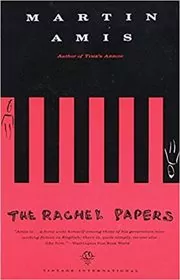
The Rachel Papers
by Martin Amis
1973
On the eve of Oxford, bright, vain teenager Charles Highway plots to seduce Rachel and control every feeling on paper. Instead he runs into real love, embarrassment, and the chaos of growing up.
Recommended by
1 person Christopher Hitchens recommended this book
Christopher Hitchens
"A huge critical and commercial grand slam." - Christopher Hitchens
Christopher Hitchens's recommendation of this book
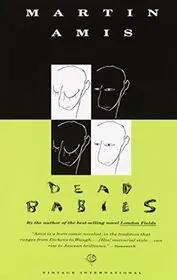
Dead Babies
by Martin Amis
1975
A group of young people gather at a country house for a weekend of drugs, sex, and cruelty. The party starts as black comedy, then curdles into something nastier and more dangerous.
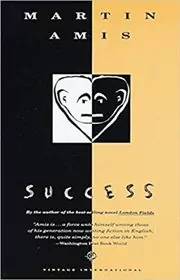
Success
by Martin Amis
1978
Foster brothers Gregory Riding and Terry Service narrate a year in which their fortunes reverse. It is a dark, funny study of envy, class, sex, and how fast social confidence can collapse.
Recommended by
1 person Patrick O'Shaughnessy recommended this book
Patrick O'Shaughnessy
"Because I like to laugh around the holidays." - Patrick O'Shaughnessy
Patrick O'Shaughnessy's recommendation of this book
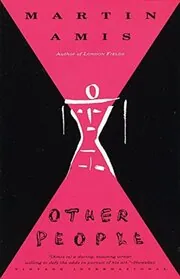
Other People
by Martin Amis
1981
Waking with no memory, Mary Lamb has to relearn London, language, and her own past from scratch. The novel works as an eerie mystery and a darkly comic study of innocence under pressure.
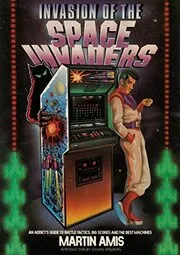
Invasion of the Space Invaders
by Martin Amis
1982
A lively snapshot of arcade culture at the start of the 1980s, part scene report and part strategy guide. Amis writes about machines like Pac-Man and Defender with surprise, humor, and real competitive zeal.
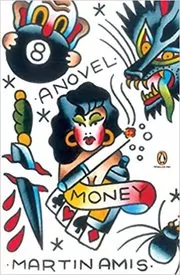
Money
by Martin Amis
1984
John Self, an ad man and would-be filmmaker, bounces between London and New York chasing a movie deal and feeding every appetite he has. It is a savage, very funny satire of greed, excess, and self-deception.
Recommended by
1 person- Christopher Hitchens recommended this book
Christopher Hitchens
"The Great English Novel of the 1980s." - Christopher Hitchens
Christopher Hitchens's recommendation of this book
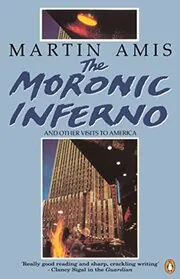
The Moronic Inferno and Other Visits to America
by Martin Amis
1986
A collection of pieces on America, from writers and filmmakers to politics, religion, and pop culture. It shows Amis as a sharp traveler, interviewer, and essayist, fascinated and baffled in equal measure.

Einstein's Monsters
by Martin Amis
1987
Five linked stories and an opening essay take on nuclear fear from odd, satirical angles. Amis treats the bomb as a fact of imagination as much as politics, making the collection unsettling and strangely playful.

London Fields
by Martin Amis
1989
In a grimy near-future London, dying writer Samson Young watches Nicola Six move toward a murder she seems to foresee. Keith Talent, Guy Clinch, and a city running on rot turn it into a feverish comic apocalypse.
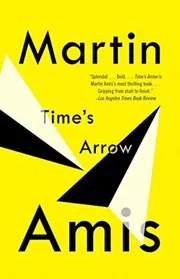
Time's Arrow
by Martin Amis
1991
Told backward, this novel retraces the life of a doctor from death to birth and slowly reveals his role in the Holocaust. The reverse timeline makes moral horror feel strange, intimate, and impossible to dodge.

Visiting Mrs. Nabokov
by Martin Amis
1993
Essays, profiles, interviews, and reviews gathered from Amis's journalism. The title piece visits Vera Nabokov, and the whole book shows his range as a literary critic and curious, sometimes mischievous reporter.

Two Stories
by Martin Amis
1994
A slim volume containing *Denton's Death* and *Let Me Count the Times*. Both pieces are intimate, sharp, and uneasy, showing Amis working at shorter length with obsession, sex, and emotional misfire.

God's Dice
by Martin Amis
1995
A short Penguin 60s volume that reprints two nuclear-age stories from *Einstein's Monsters*. Amis mixes scientific unease, dark comedy, and looming catastrophe in a compact, unsettling pair.
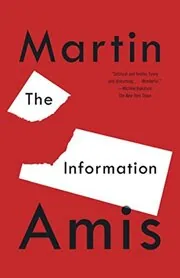
The Information
by Martin Amis
1995
Failed novelist Richard Tull becomes consumed by envy of his old friend Gwyn Barry, whose books sell while his do not. Amis turns literary jealousy into a vicious, funny portrait of rivalry and humiliation.
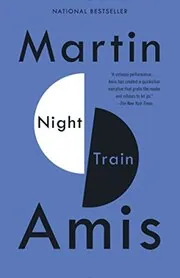
Night Train
by Martin Amis
1997
Detective Mike Hoolihan investigates the apparent suicide of Jennifer Rockwell, a brilliant scientist who seemed to have everything. What begins like noir becomes a bleak inquiry into despair and the limits of explanation.

Heavy Water and Other Stories
by Martin Amis
1998
Nine stories ranging from satire to melancholy, including the famous role-reversal tale *Career Move*. The collection shows how comfortable Amis was with outrageous premises, bleak jokes, and sudden turns into sadness.
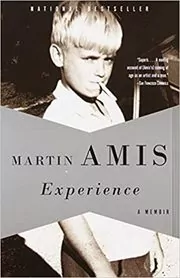
Experience
by Martin Amis
2000
Amis's memoir moves through childhood, family, friendship, grief, and the odd business of becoming a public writer. Kingsley Amis stands at its center, but the book also opens into loss, literary life, and memory.

The War against Cliché
by Martin Amis
2001
This large collection of criticism gathers Amis on novelists, style, bad writing, and the pleasures of fresh language. It is a strong place to meet his literary tastes, his arguments, and his impatience with lazy prose.
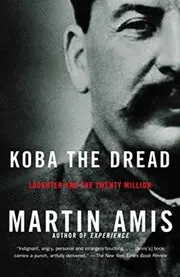
Koba the Dread
by Martin Amis
2002
Amis wrestles with Stalin, Soviet terror, and the moral evasions that let mass murder be minimized. Part history, part polemic, and part personal reckoning, it is one of his angriest nonfiction books.

Yellow Dog
by Martin Amis
2003
After actor and writer Xan Meo is brutally attacked, his mind, marriage, and moral bearings begin to slide. Amis mixes his crisis with royal scandal, tabloid filth, and gangster violence in a jagged London comedy.
Recommended by
1 person- Christopher Hitchens recommended this book
Christopher Hitchens
"You might think that the contempt shown by the reporters for both their subjects and their readers is overdone, but you would be wrong." - Christopher Hitchens
Christopher Hitchens's recommendation of this book

Pornoland
by Martin Amis
2004
With photographs by Stefano De Luigi and text by Amis, this illustrated book goes behind the scenes of the global porn industry. The result is less lurid than curious, mixing blunt observation, unease, and dry humor.

Vintage Amis
by Martin Amis
2004
A sampler of Amis at work across memoir, fiction, stories, and essays. It is a useful doorway if you want one book that shows his voice in several forms.
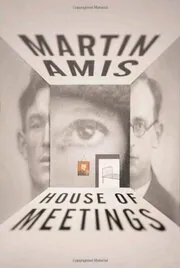
House of Meetings
by Martin Amis
2006
An unnamed man looks back on life in a Soviet gulag, where he and his half-brother loved the same woman. The novel is spare, cold, and fixed on violence, memory, and the scars of Stalinism.

The Second Plane
by Martin Amis
2008
Essays, reportage, and stories written in the years after September 11. Amis grapples with terrorism, war, ideology, and public argument in a book that is tense, confrontational, and very much of its moment.

The Pregnant Widow
by Martin Amis
2010
In the long hot summer of 1970, Keith Nearing and a small group of young people drift through sex, jealousy, and confusion in an Italian castle. Amis uses their holiday to examine the sexual revolution while it is still unsettled.
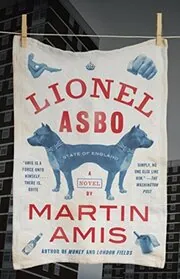
Lionel Asbo
by Martin Amis
2012
Teenager Desmond Pepperdine tries to build a decent life while living with his brutal, vulgar uncle Lionel in Diston. When Lionel wins the lottery, the book turns into a nasty, funny satire of celebrity and social decay.
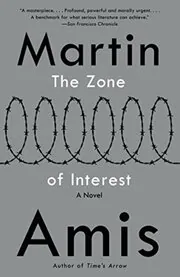
The Zone of Interest
by Martin Amis
2014
Set at Auschwitz, the novel follows a camp commandant, a Nazi officer infatuated with the commandant's wife, and a Jewish Sonderkommando. Amis forces love, bureaucracy, and moral collapse into the same terrible space.

The Rub of Time
by Martin Amis
2017
This late essay collection moves through literature, politics, sport, America, and friendship. Nabokov, Bellow, Hitchens, tennis, poker, and Trump all appear, giving a broad view of Amis the critic and reporter.
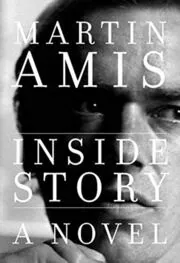
Inside Story
by Martin Amis
2020
Part novel, part memoir, this late work circles friendship, desire, writing, and death. Amis looks hard at Christopher Hitchens, Saul Bellow, Philip Larkin, and himself, while stopping to talk directly about how stories get made.
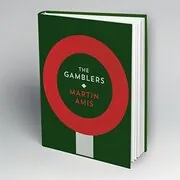
The Gamblers
by Martin Amis
2020
An illustrated book of photographs from racecourses in southern England. It watches bettors, bookies, and spectators in moments of hope, boredom, nerves, and brief triumph, turning a day at the races into a social portrait.

Chess Players
by Martin Amis
2024
An illustrated survey of chess in culture, history, and photography, with an essay by Amis. It is less a manual than a stylish celebration of the game's strange hold on artists, celebrities, and serious players.
Where to start with Martin Amis
If you want the sharpest social satire: Money → London Fields → The Information
If you want an early, shorter entry point: The Rachel Papers → Success → Other People
If you want history and moral pressure: Time's Arrow → House of Meetings → The Zone of Interest
If you want memoir and literary life: Experience → Inside Story → The Rub of Time
Martin Amis collections, short stories, and related book types
Short Story Collections
Non-Fiction
Standalone Martin Amis books
Author bio
Martin Amis was born in Oxford on August 25, 1949, into a household where books were part of everyday life. His father was the novelist Kingsley Amis, and his mother was Hilary Bardwell. He spent parts of his childhood in Swansea, Princeton, and Cambridge, and his parents' divorce when he was twelve left its mark. For a while he was more interested in getting by than in becoming a serious reader.
Books came a little later than people assume.
That changed when his stepmother, the novelist Elizabeth Jane Howard, handed him a reading list and expected him to catch up. He did. After cramming in Brighton, he went to Exeter College, Oxford, read English, and graduated with first-class honors. In his early twenties he worked at the Times Literary Supplement, then moved to the New Statesman, where he became literary editor while still in his twenties and formed the close friendship with Christopher Hitchens that would matter for the rest of his life.
His first novel, The Rachel Papers, arrived in 1973 and won the Somerset Maugham Award. It introduced Charles Highway, a clever, vain young man trying to script his own love life, and it showed Amis's liking for comedy that hurts a little. Early books such as Dead Babies, Success, and Other People kept pushing at ugliness, vanity, sex, and self-invention, but they were also playful, quick, and very alert to how people actually sound.
The book that made him impossible to ignore was Money. Its hero, John Self, lurches between London and New York chasing a film deal and feeding every appetite in sight. Then came London Fields, a long, dirty, end-of-century murder story full of prophecy, rot, and bad behavior. Readers who love Amis often come for that mix, the verbal energy, the black comedy, the sense that modern life is both ridiculous and dangerous.
He did not stay in one mode. Time's Arrow tells the life of a Nazi doctor backward, so that the Holocaust emerges in reverse and becomes newly shocking. House of Meetings turns to the Soviet gulag. The Zone of Interest goes back to Auschwitz from another angle. Alongside the novels, he wrote memoir and criticism. Experience, his book about family, grief, and literary life, won the James Tait Black Memorial Prize.
He liked big subjects and nasty jokes, often in the same paragraph.
Certain themes kept returning: money, status, sex, shame, male rivalry, political delusion, and the pressure of history on ordinary bodies. He was also drawn to doubles and pairings, friends and enemies, fathers and sons, successful men and failed ones. Even when the subject was huge, Stalinism, nuclear fear, terrorism, he usually found a way to bring it back to voice, ego, appetite, and the comedy of people trying to talk their way out of reality.
Later in life he lived for a time in Uruguay with his wife, the writer Isabel Fonseca, returned to Britain, and later made a home in Brooklyn. From 2007 to 2011 he taught creative writing at the University of Manchester. His late book Inside Story blends fiction, memoir, and writing talk as it circles the deaths of Philip Larkin, Saul Bellow, and Hitchens. Amis died in Florida on May 19, 2023, leaving behind novels, essays, stories, and arguments that still feel very awake.






Edited by
Software engineer whose passion for tracking book recommendations from podcasts inspired the creation of MRB.
Lead investor at 3one4 Capital whose startup expertise and love for books helped shape MRB and its growth.
Comments
Did we miss something? Have feedback?
Help us improve this page by sharing your thoughts