
Marilynne Robinson Books in Order
See all Marilynne Robinson books in order, with short summaries, Gilead series background, key nonfiction, and simple guidance on where to start reading.
Last updated:
As an Amazon Associate, we earn from qualifying purchases (at no extra cost to you).
Marilynne Robinson books in publication order
17 books
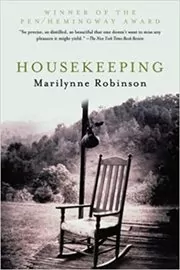
Housekeeping
by Marilynne Robinson
1980
Housekeeping follows sisters Ruth and Lucille, orphaned and handed from relative to relative in the isolated town of Fingerbone, Idaho. When their eccentric aunt Sylvie arrives, her drifting, disorderly way of life pulls one girl toward freedom and the other toward conventional safety.
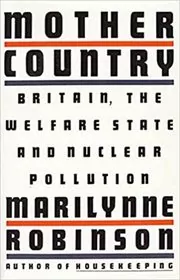
Mother Country
by Marilynne Robinson
1989
Mother Country is Robinson’s fierce nonfiction exposé of Britain’s Sellafield nuclear reprocessing plant and its environmental toll. Blending reportage, history, and moral argument, she asks how a modern welfare state can accept such risks to its people and neighboring seas.
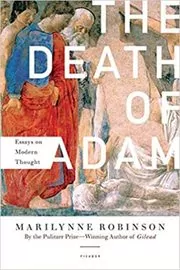
The Death of Adam
by Marilynne Robinson
1998
The Death of Adam collects wide-ranging essays on Calvin, American history, Darwinism, and modern ideas about progress. Robinson revisits classic texts and forgotten episodes to question tidy stories about Western culture and to argue for a more generous humanism.
Puritans And Prigs
by Marilynne Robinson
1999
Puritans And Prigs presents Robinson’s pointed reconsideration of Calvinism and the American Puritans. She contrasts their complex, often generous theology with today’s quick moral judgments, urging readers to rethink easy stereotypes about piety, virtue, and the nation’s religious past.
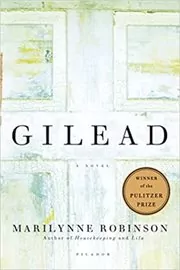
Gilead
by Marilynne Robinson
2004
Gilead is framed as a long letter from Reverend John Ames, an elderly minister in small-town Iowa, to the young son he will not see grow up. As he writes, he recounts family history, old friendships, doubts, and hard-won moments of grace.
Recommended by
1 person Barack Obama recommended this book
Barack Obama
On the "favorite books" section of Barack Obama's Facebook profile.
Barack Obama's recommendation of this book
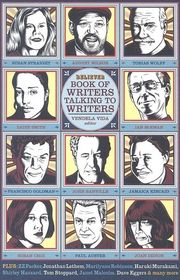
The Believer Book of Writers Talking to Writers
by Vendela Vida, Marilynne Robinson, Haruki Murakami & John Banville
2005
Edited by Vendela Vida, this volume collects writer-to-writer conversations first published in The Believer, supplemented by previously unpublished interviews. The exchanges move beyond craft to subjects such as politics, philosophy, work, and the personal habits that shape a writing life.
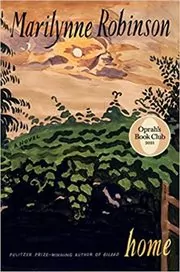
Home
by Marilynne Robinson & Maggi-Meg Reed
2008
Home returns to Gilead, Iowa, where Glory Boughton has come back to care for her dying father when her troubled brother Jack finally returns after years away. In their crowded old house, buried secrets, regrets, and small acts of tenderness surface.
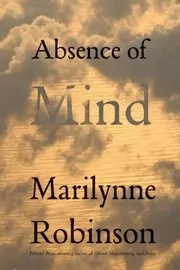
Absence of Mind
by Marilynne Robinson
2010
Absence of Mind gathers Robinson’s Terry Lectures on science, religion, and consciousness. She challenges fashionable claims that the mind is nothing but brain chemistry, defending inwardness, moral imagination, and the mystery of personhood against overly tidy scientific and popular stories.
Recommended by
1 person Jon Stewart recommended this book
Jon Stewart
"A fascinating study." - Jon Stewart
Jon Stewart's recommendation of this book
When I Was A Child I Read Books
by Marilynne Robinson
2012
When I Was A Child I Read Books gathers personal and political essays on faith, reading, and American public life. Robinson writes about her Idaho childhood, the Bible, economics, and civic generosity, arguing for a more hopeful, intellectually serious vision of democracy.
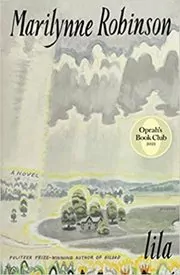
Lila
by Marilynne Robinson
2014
Lila follows a drifter who wanders into Gilead, Iowa, takes shelter in a church, and unexpectedly marries Reverend John Ames. As her harsh childhood surfaces, she wrestles with shame, Calvinist theology, and whether she can trust a settled life of love.
The World Split Open
by Literary Arts, Inc & Marilynne Robinson
2014
This Literary Arts anthology collects ten talks by major writers on the purposes and practice of literature. Drawn from Portland’s long-running lecture series, the essays consider imagination, artistic creation, morality, and the writer’s life; Marilynne Robinson contributes an essay on beauty.
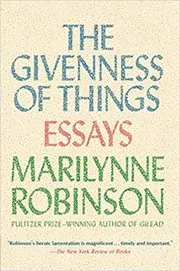
The Givenness Of Things
by Marilynne Robinson
2015
The Givenness Of Things offers seventeen theological and cultural essays that defend the dignity of the human soul in a technocratic age. Robinson turns to Scripture, Calvin, Shakespeare, and others to question fear-driven politics and to insist on reverence for human complexity.
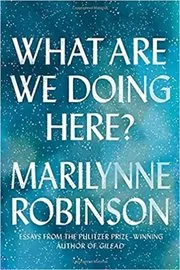
What Are We Doing Here?
by Marilynne Robinson, Carrington MacDuffie & Dolors Udina Abelló
2018
What Are We Doing Here? brings together lectures and essays on history, politics, higher education, and Christian thought. Robinson challenges fashionable cynicism, revisits neglected thinkers, and asks how generosity, beauty, and serious learning might reshape public life today.
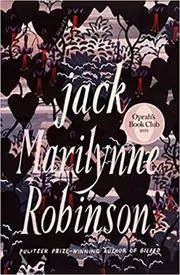
Jack
by Marilynne Robinson
2020
Jack centers on John Ames “Jack” Boughton, the wayward son of a minister, drifting through postwar St. Louis. There he falls in love with Della Miles, a Black schoolteacher, and the two test whether their forbidden, interracial relationship can survive hostile laws and customs.
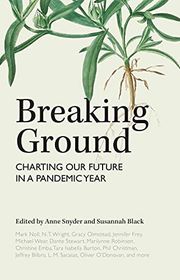
Breaking Ground: Charting Our Future in a Pandemic Year
by Marilynne Robinson
2022
Edited by Anne Snyder and Susannah Black, this wide-ranging anthology records Christian humanist responses to the COVID-19 pandemic, racial reckoning, economic disruption, and political polarization. Marilynne Robinson is among the contributors considering how communities might serve the common good and rebuild social life.
Reading Genesis
by Marilynne Robinson
2024
Reading Genesis is Robinson’s extended reflection on the Bible’s first book, approached as both sacred text and enduring literature. She traces themes of creation, covenant, and human freedom, inviting readers to linger over familiar stories with fresh theological and imaginative attention.
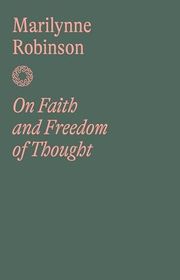
On Faith and Freedom of Thought
by Marilynne Robinson
2026
The written version of Marilynne Robinson’s 2026 Jon Fosse Lecture considers faith, metaphysics, and intellectual freedom. Looking to figures including Edgar Allan Poe and John Calvin, Robinson argues for a fuller humanism and for literature’s capacity to preserve imaginative and moral possibility.
Where to start with Marilynne Robinson
If you want to start with her most famous novels: Gilead → Home → Lila → Jack.
If you prefer a single, stand-alone story first: Housekeeping.
If you’re drawn to essays on faith, politics, and American life: When I Was A Child I Read Books → The Givenness Of Things → What Are We Doing Here?.
If you like big ideas about science, mind, and modern thought: Absence of Mind → The Death of Adam.
If you’re curious about her biblical writing: Reading Genesis.
Marilynne Robinson sub-series and character series
Gilead books in order
Explore this seriesMarilynne Robinson collections, short stories, and related book types
Non-Fiction

by Marilynne Robinson
2010The Dispelling of Inwardness from the Modern Myth of the Self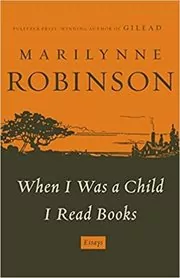

Anthologies
The Believer Book of Writers Talking to Writers
by Vendela Vida, Marilynne Robinson, Haruki Murakami & John Banville
2005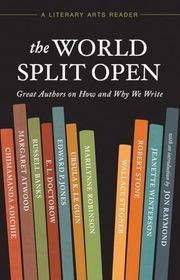
Standalone Marilynne Robinson books
Author bio
Marilynne Robinson was born in 1943 in Sandpoint, Idaho, and grew up in the mountain West with a long view of lakes, trains, and big skies. Those landscapes, and the sense of distance and solitude they gave her, have stayed with her on the page ever since.
As a child she read far beyond what was expected, pulling thick old books off small-town shelves and trusting them to explain a world that felt both remote and wide open. Later she would say that growing up in the West taught her that being alone with your own thoughts could be a kind of wealth, not a lack.
Robinson left Idaho for college at Pembroke, then the women’s college of Brown University, where she studied literature and began to see how theology, history, and politics moved through the English language. Graduate work at the University of Washington led to a Ph.D. in English and a life built around reading, teaching, and slow, careful writing.
In 1980 she published Housekeeping, a novel about two sisters and their drifter aunt in a fictional Idaho town called Fingerbone. The book’s quiet voice and strange, luminous images caught readers off guard, winning the PEN/Hemingway Award and becoming a finalist for the Pulitzer Prize. For many writers and readers, it remains a touchstone for how much feeling a short novel can hold.
Instead of following that success with another novel right away, Robinson turned outward. She wrote Mother Country, an angry, meticulously argued account of nuclear pollution and public responsibility, and The Death of Adam, a set of essays that reopens old arguments about Calvinism, American history, and the way modern thought talks about human beings. These books announced the shape of her nonfiction career: contrarian, historical, and deeply interested in the moral life of communities.
Her return to fiction came with Gilead in 2004, the story of an aging Congregationalist minister in Iowa writing a long letter to his young son. The novel won the Pulitzer Prize for Fiction and introduced readers to the small town of Gilead, its abolitionist past, and the intertwined Ames and Boughton families. Two companion novels, Home and Lila, and a later volume, Jack, circle the same years from different angles, turning family arguments, old sins, and daily kindness into a sustained meditation on grace.
Alongside the novels she has kept writing essays, often drawn from lectures. Absence of Mind challenges easy stories about the brain and the self; When I Was A Child I Read Books, The Givenness Of Things, and What Are We Doing Here? return again and again to questions of democracy, education, generosity, and the place of religion in public life. In Reading Genesis, she turns her attention to the Bible’s first book, reading it as both scripture and astonishing literature.
For many years Robinson taught at the Iowa Writers’ Workshop and other universities, working with younger writers while continuing her own slow, steady practice. Her fiction is known for its patient pacing, layered sentences, and its trust that readers will stay with a story even when the most important events are interior—an uneasy prayer, a remembered slight, a change of heart that no one else can see.
She has raised two children, spent decades in Iowa City, and remained active in church and civic life. Across all of her work, the same preoccupations keep resurfacing: the worth of every human mind, the long shadows of American history, the pull of home, and the possibility that grace can meet people in very ordinary rooms. Readers who come to her for theology or politics often stay for that steady, searching attention to how people actually live with one another.



Edited by
Software engineer whose passion for tracking book recommendations from podcasts inspired the creation of MRB.
Lead investor at 3one4 Capital whose startup expertise and love for books helped shape MRB and its growth.
Comments
Did we miss something? Have feedback?
Help us improve this page by sharing your thoughts