
Levant Trilogy Books in Order
Part ofOlivia Manning Books in OrderFollow the Levant Trilogy by Olivia Manning in order, with summaries, reading order, series background, and help deciding where to begin this wartime follow-up.
Last updated:
As an Amazon Associate, we earn from qualifying purchases (at no extra cost to you).
Levant Trilogy books in publication order
3 books
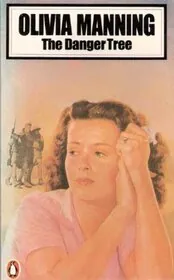
The Danger Tree
by Olivia Manning
1977
Now in wartime Cairo, Harriet and Guy try to make a life amid refugees, gossip, and military panic. Alongside them, young officer Simon Boulderstone enters the desert war and loses his innocence fast.
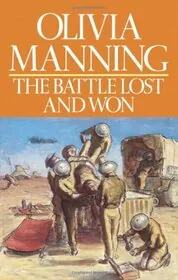
The Battle Lost and Won
by Olivia Manning
1978
With Rommel threatening Egypt, Cairo feels unstable even far from the front. Guy throws himself into work while Harriet watches their marriage weaken, and Simon Boulderstone faces the chaos of combat head-on.
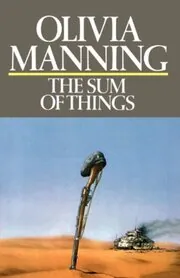
The Sum of Things
by Olivia Manning
1981
The final volume follows Harriet across the eastern Mediterranean while Guy remains in Cairo, each confronting separation, rumor, and loss. Simon Boulderstone's war reaches a brutal turning point as the trilogy closes on endurance rather than certainty.
Levant Trilogy books in chronological order
Series background & context
The Levant Trilogy picks up where the Balkan books leave off and follows Guy and Harriet Pringle into the Middle East during the Second World War. The center of gravity shifts from Bucharest and Athens to Cairo, Palestine, Syria, and Lebanon. The result feels broader, hotter, harsher, and more unsettled. These books still care deeply about marriage and friendship, but they also keep a steady eye on soldiers, refugees, and the fraying edges of empire.
Guy is still Guy, charming, talkative, generous, exasperating. He throws himself into teaching and into other people's problems, often with more energy than he gives Harriet. Harriet, by this point, is less naive and more self-possessed. She has already learned what it means to be displaced, disappointed, and left to manage on her own. In the Levant books, that knowledge gives her a tougher kind of clarity.
The books get broader here.
A major new thread comes through Simon Boulderstone, a young British officer whose story runs alongside the Pringles' civilian life. Simon arrives in Egypt young, uncertain, and badly in need of guidance. Through him, Manning can move closer to the desert war and show how bewildering, tedious, frightening, and arbitrary military life can be. His chapters give the trilogy another rhythm and widen its emotional reach.
The Danger Tree brings the Pringles to wartime Cairo, where private frustrations rub against military panic and the city fills with rumor, heat, and temporary arrangements. The Battle Lost and Won unfolds as Rommel's advance threatens Egypt and the Pringles' marriage comes under even greater strain. The Sum of Things ranges farther across the eastern Mediterranean, following separation, uncertainty, and the ways war can scramble every plan people make for themselves.
The tone is a little different from the Balkan books. There is still wit, still sharp social comedy, still Manning's gift for exposing vanity and bad faith in a single scene. But the Levant sequence is more bruised. More tired. More aware that history does not just interrupt ordinary life, it can wear people down until they barely recognize themselves. That change in atmosphere suits Harriet especially well, because these novels give her even more room to emerge as one of Manning's strongest creations.
Setting matters here, too. Cairo is crowded, brittle, and improvised, full of uniforms, officials, opportunists, and exhausted civilians. Palestine and the surrounding region bring another layer of tension, with colonial authority, local politics, and wartime movement all pressing together. Manning does not reduce the region to scenery. She uses it to show how unstable the British world around the Pringles really is.
If the Balkan books are about discovering the terms of a marriage under siege, the Levant books are about what is left after that discovery. They ask how love survives selfishness, how decency survives fatigue, and what adulthood looks like when every map keeps changing.
Together with the earlier trilogy, these novels were adapted as Fortunes of War. Read on their own, though, the Levant books stand as a strong second movement: more expansive, more openly political, and often more painful, while still grounded in the small human details Manning handled so well.








Edited by
Software engineer whose passion for tracking book recommendations from podcasts inspired the creation of MRB.
Lead investor at 3one4 Capital whose startup expertise and love for books helped shape MRB and its growth.
Comments
Did we miss something? Have feedback?
Help us improve this page by sharing your thoughts