
Olivia Manning Books in Order
Explore Olivia Manning books in order, with quick summaries, Balkan and Levant trilogy reading order, series background, and advice on where to start.
Last updated:
As an Amazon Associate, we earn from qualifying purchases (at no extra cost to you).
Olivia Manning books in publication order
17 books
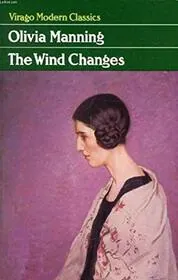
The Wind Changes
by Olivia Manning
1937
Set against Ireland's political unrest around the 1921 settlement, Manning's first novel shows how public conflict shapes private lives. It is less a war story than a close look at ideals, loyalties, and disillusion.
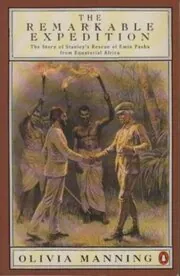
The Remarkable Expedition
by Olivia Manning
1947
Manning retells Henry Stanley's attempt to relieve Emin Pasha as a gripping history of ambition, endurance, and imperial confusion. She keeps the adventure moving while never quite letting heroics go unquestioned.
Artist Among The Missing
by Olivia Manning
1949
In wartime Jerusalem, a sensitive British officer unravels amid artists, refugees, and the pressures of colonial society. Manning turns the city into a tense, complicated stage for loneliness, prejudice, and emotional strain.

The Dreaming Shore
by Olivia Manning
1950
This travel book follows Manning along Ireland's west coast, mixing landscape, history, and personal response. It is observant company on the road, and it also hints at her deep, divided feelings about Ireland.
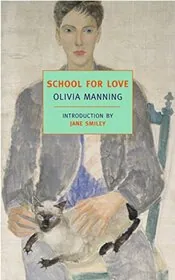
School for Love
by Olivia Manning
1951
Recently orphaned Felix Latimer arrives in wartime Jerusalem and ends up in a boarding house ruled by the formidable Miss Bohun. As he searches for kindness and belonging, the city teaches him harder lessons than he expected.
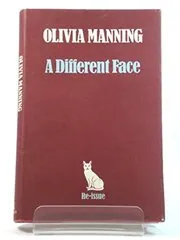
A Different Face
by Olivia Manning
1953
In a drab city modeled on Portsmouth, a young woman dreams of escape and a larger life. Manning captures the ache of adolescence and early adulthood, when ambition, class, and family all pull in different directions.
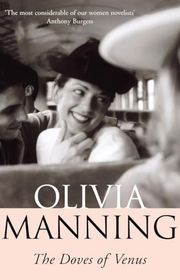
The Doves of Venus
by Olivia Manning
1955
Eighteen-year-old Ellie comes to London looking for adventure and finds it in Chelsea's shabby-smart world. Her affair with the older Quintin Bellot brings glamour, confusion, and a quick education in how unequal love can be.
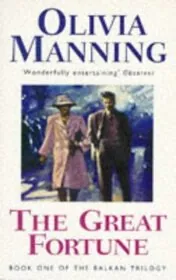
The Great Fortune
by Olivia Manning
1960
Newlyweds Guy and Harriet Pringle arrive in Bucharest in 1939, where expatriate parties and private tensions unfold under the shadow of war. Harriet must learn who her charming, exasperating husband really is before Europe collapses around them.
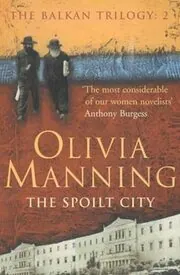
The Spoilt City
by Olivia Manning
1962
Bucharest grows more dangerous as the Nazis move closer and the Pringles' fragile marriage frays. When escape becomes necessary, Harriet and Guy must choose between idealism, loyalty, and simple survival.
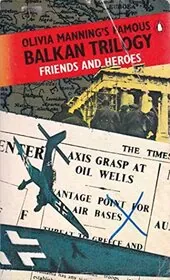
Friends and Heroes
by Olivia Manning
1965
Reunited in Athens in 1941, Harriet and Guy find that war has not simplified their marriage. As Greece falls and old friendships shift, Harriet is pulled between longing, duty, and the need to keep going.
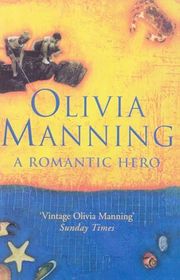
A Romantic Hero
by Olivia Manning
1967
This story collection brings together fourteen pieces about lonely children, brittle marriages, missed chances, and darkly comic domestic stalemates. It shows Manning at her sharpest in short form, exact about feeling and quietly unsparing.
Extraordinary Cats
by Olivia Manning
1967
In this affectionate nonfiction book, Manning writes about the cats she lived with and loved, from their odd habits to their tyrannical charm. It is funny, sharp-eyed, and full of daily feline drama.

The Play Room
by Olivia Manning
1969
Laura Fletcher is fifteen, clever, restless, and desperate to outgrow her provincial world. Manning tracks her emotional awakening with real sympathy, catching the vanity, hunger, and loneliness that make adolescence so intense.
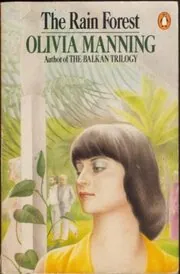
The Rain Forest
by Olivia Manning
1974
Hugh and Kristy Foster arrive on the island of Al-Bustan with a marriage already under strain. Colonial manners, political unrest, and the heavy presence of the forest push them toward a reckoning they cannot avoid.
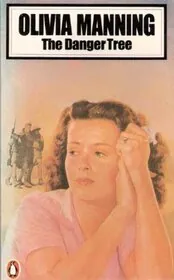
The Danger Tree
by Olivia Manning
1977
Now in wartime Cairo, Harriet and Guy try to make a life amid refugees, gossip, and military panic. Alongside them, young officer Simon Boulderstone enters the desert war and loses his innocence fast.
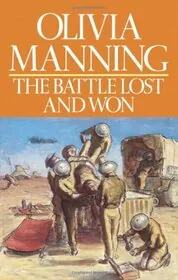
The Battle Lost and Won
by Olivia Manning
1978
With Rommel threatening Egypt, Cairo feels unstable even far from the front. Guy throws himself into work while Harriet watches their marriage weaken, and Simon Boulderstone faces the chaos of combat head-on.
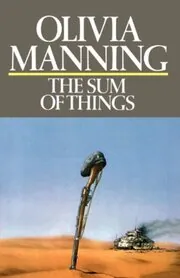
The Sum of Things
by Olivia Manning
1981
The final volume follows Harriet across the eastern Mediterranean while Guy remains in Cairo, each confronting separation, rumor, and loss. Simon Boulderstone's war reaches a brutal turning point as the trilogy closes on endurance rather than certainty.
Where to start with Olivia Manning
If you want the famous wartime sequence: The Great Fortune → The Spoilt City → Friends and Heroes
If you want to continue Harriet and Guy's story: The Danger Tree → The Battle Lost and Won → The Sum of Things
If you prefer a strong standalone first: School for Love → The Rain Forest
If you want London growing-up and relationship fiction: The Doves of Venus → A Different Face → The Play Room
Olivia Manning sub-series and character series
Olivia Manning collections, short stories, and related book types
Short Story Collections
Non-Fiction
Standalone Olivia Manning books
Author bio
Olivia Manning was born in Portsmouth on 2 March 1908, and she spent parts of her childhood between Portsmouth and Bangor in County Down. That split background mattered. She later described the feeling of belonging nowhere, and that sense of displacement runs through a lot of her fiction, whether she is writing about wartime refugees, uneasy marriages, or young people trying to escape the place that made them.
Before she was known for novels, she trained in art and worked a string of ordinary jobs. She left school young, did office work, and in London worked as a typist, a furniture painter, and in book production. She had already started writing in the late 1920s, publishing detective serials under the name Jacob Morrow, a practical disguise in a literary world that was still quick to dismiss women.
She was stubborn about the work.
A big early turning point came through the writer and critic Hamish Miles, who encouraged her and helped her keep going. Her first novel under her own name, The Wind Changes, came out in 1937. It is set against the Irish Troubles and already shows something that would stay central to her writing, the way public crisis presses on private lives.
In 1939 she met Reginald "Reggie" Smith, married him within weeks, and went with him to Bucharest, where he was working for the British Council. They arrived just as the Second World War began. Over the next years they were pushed onward by the war, first through Romania and Greece, then to Egypt and Palestine. Those experiences became the deep well for the six novels that later made her name, especially The Great Fortune, The Spoilt City, Friends and Heroes, and the later Levant books.
Those wartime novels are often grouped as The Balkan Trilogy and The Levant Trilogy, and together they follow Guy and Harriet Pringle through Europe and the Middle East. Readers tend to come for the history and stay for the people. Manning is very good on crowded rooms, bad manners, sudden danger, and the strain of loving someone who is charming, generous, and maddening all at once.
She could be very funny, even when the pressure was high.
Her standalones show the same eye for social discomfort and emotional hunger. School for Love, set in wartime Jerusalem, follows the orphaned Felix Latimer as he looks for warmth in a cold boarding house. The Doves of Venus turns to postwar London and a young woman learning that glamour can be a trap. The Rain Forest moves to a fictional island in the Indian Ocean and watches a marriage buckle under colonial tension, political unrest, and private disappointment.
Again and again, Manning wrote about people in transit. Couples abroad. Lonely children. Young women who want more than the life in front of them. She also kept writing reviews, radio work, stories, travel writing, and nonfiction after the war, building a career that was steady even when the recognition she wanted came slowly.
She died in 1980, after suffering a stroke while on the Isle of Wight. A few years later, the television adaptation Fortunes of War, with Emma Thompson and Kenneth Branagh, brought many new readers back to her fiction. The books still feel alive because Manning never treats history as wallpaper. In her work, war changes train timetables, friendships, marriages, careers, moods, and dinner tables. That close, human scale is what makes her last.


%20-%20Those%20Manning%20Men%2C%20Book%205.jpg)

%20-%20Those%20Manning%20Men%2C%20Book%206.jpg)
Edited by
Software engineer whose passion for tracking book recommendations from podcasts inspired the creation of MRB.
Lead investor at 3one4 Capital whose startup expertise and love for books helped shape MRB and its growth.
Comments
Did we miss something? Have feedback?
Help us improve this page by sharing your thoughts