
Balkan Trilogy Books in Order
Part ofOlivia Manning Books in OrderSee the Balkan Trilogy by Olivia Manning in order, with brief summaries, reading order, series background, and a clear guide to where this wartime saga begins.
Last updated:
As an Amazon Associate, we earn from qualifying purchases (at no extra cost to you).
Balkan Trilogy books in publication order
3 books
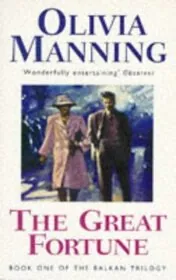
The Great Fortune
by Olivia Manning
1960
Newlyweds Guy and Harriet Pringle arrive in Bucharest in 1939, where expatriate parties and private tensions unfold under the shadow of war. Harriet must learn who her charming, exasperating husband really is before Europe collapses around them.
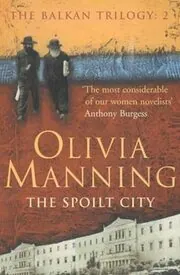
The Spoilt City
by Olivia Manning
1962
Bucharest grows more dangerous as the Nazis move closer and the Pringles' fragile marriage frays. When escape becomes necessary, Harriet and Guy must choose between idealism, loyalty, and simple survival.

Friends and Heroes
by Olivia Manning
1965
Reunited in Athens in 1941, Harriet and Guy find that war has not simplified their marriage. As Greece falls and old friendships shift, Harriet is pulled between longing, duty, and the need to keep going.
Balkan Trilogy books in chronological order
Series background & context
The Balkan Trilogy begins in autumn 1939, when newly married Guy and Harriet Pringle arrive in Bucharest. Guy is an English lecturer, sociable, idealistic, and forever drawn toward other people's needs. Harriet is sharper, more watchful, and much less at ease in the noisy circle that forms around him. That difference, between Guy's expansive charm and Harriet's private unease, powers the whole trilogy.
The setting does a lot of the work. Manning's Bucharest is full of diplomats, teachers, students, drifters, minor aristocrats, and opportunists, all trying to act normal while Europe slides toward disaster. The parties, cafes, hotel rooms, classrooms, and embassy corridors are not just background. They show how people carry on, gossip, flirt, borrow money, and make bad decisions even when war is getting closer every day.
It is a marriage story as much as a war story.
Across The Great Fortune, The Spoilt City, and Friends and Heroes, Harriet keeps learning that Guy's generosity has a cost. He wants to help everyone, and he often does, but he can be strangely blind to what his wife needs from him. Harriet, meanwhile, is not a saintly sufferer. She can be proud, jealous, funny, stubborn, and painfully alert to every social shift in the room. Manning lets both of them be fully human, which is one reason the books still feel fresh.
The trilogy also widens out beyond the couple. There is the unforgettable Prince Yakimov, a comic scavenger and shameless hanger-on. There are students, officials, would-be lovers, and English expatriates who are by turns ridiculous, brave, selfish, and kind. Manning is excellent at building a crowd, then showing exactly how fear changes that crowd when politics stop feeling distant.
The first two books stay largely in Romania as life becomes more precarious and escape turns from possibility into necessity. Friends and Heroes shifts to Athens, where reunion does not make life simpler and war keeps pressing in. The movement from Bucharest to Greece gives the trilogy its shape, but the deeper arc is Harriet's growing understanding of Guy, of herself, and of what survival really asks from a person.
What should you expect as a reader? Not battlefield heroics, at least not mainly. These books are about civilians under pressure, about waiting, shortages, rumor, bureaucracy, compromised loyalties, and the odd comedy of people clinging to routine while history tears up the script. Manning is interested in how large events are felt at table level, in classrooms, rented rooms, and strained conversations after midnight.
That is what makes the trilogy so good.
It was later adapted, together with the Levant books, as Fortunes of War. But the novels themselves are the real draw: big, socially alert, tense without shouting, and full of people you may not always like but will keep wanting to follow.













Edited by
Software engineer whose passion for tracking book recommendations from podcasts inspired the creation of MRB.
Lead investor at 3one4 Capital whose startup expertise and love for books helped shape MRB and its growth.
Comments
Did we miss something? Have feedback?
Help us improve this page by sharing your thoughts