
Leonardo Padura Books in Order
Explore Leonardo Padura's books in order, with Mario Conde mysteries, standalones, short summaries, series background, and advice on where to start.
Last updated:
As an Amazon Associate, we earn from qualifying purchases (at no extra cost to you).
Leonardo Padura books in publication order
10 books
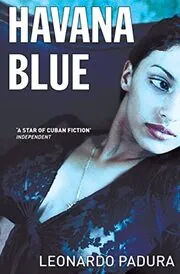
Havana Blue
by Leonardo Padura
1991
On New Year's Day, Mario Conde is assigned the disappearance of Rafael Morin, a polished official from his school days. The search forces him to revisit old rivalries, lost love, and the rot hiding behind revolutionary success.
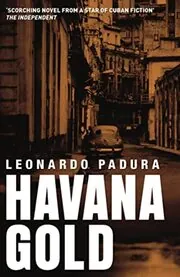
Havana Gold
by Leonardo Padura
1994
Lieutenant Mario Conde investigates the murder of a young teacher whose life was more complicated than it first seemed. As pressure mounts from above, the case pulls him through school politics, black markets, and the city's moral heat.
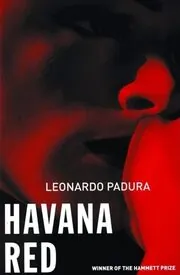
Havana Red
by Leonardo Padura
1997
In the sweltering Havana summer, Mario Conde investigates the killing of a young man found in a red dress. The case leads him into worlds of repression, performance, and old wounds that polite society prefers not to see.
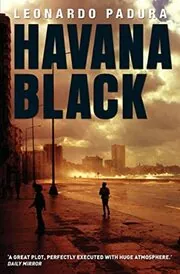
Havana Black
by Leonardo Padura
1998
As a hurricane closes in on Havana, Mario Conde investigates the brutal murder of a returning exile with ties to confiscated art and old privilege. The case exposes family secrets, corruption, and a city worn down by disappointment.
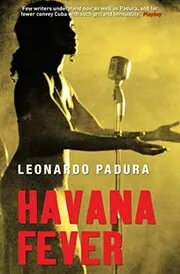
Havana Fever
by Leonardo Padura
2005
Now making a living in the secondhand book trade, Mario Conde discovers a clipping about a vanished bolero singer. His curiosity leads him through old libraries, hidden family histories, and a Havana steeped in nostalgia and loss.
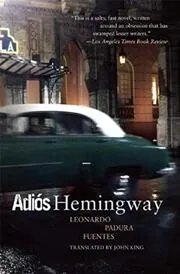
Adios Hemingway
by Leonardo Padura
2006
When human bones turn up at Ernest Hemingway's old Cuban estate, ex-cop Mario Conde is pulled back into an investigation. The case becomes a smart, moody search through literary legend, memory, and the uneasy truth behind a hero.
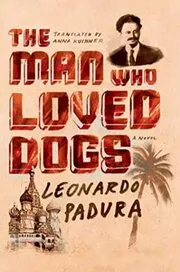
The Man Who Loved Dogs
by Leonardo Padura
2009
In Havana, a disillusioned writer meets a mysterious man with Russian wolfhounds and is drawn into the story of Leon Trotsky and his killer. Padura turns a famous political crime into a tense, human novel about faith, betrayal, and fear.
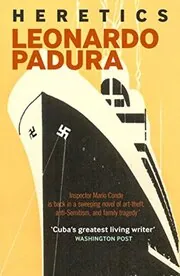
Heretics
by Leonardo Padura
2013
A lost Rembrandt and the 1939 voyage of Jewish refugees to Havana pull Mario Conde into a case that crosses decades and continents. Padura blends mystery, history, and moral reckoning without losing the grit of the city.
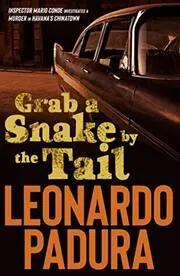
Grab a Snake by the Tail
by Leonardo Padura
2018
In Havana's Chinatown, Inspector Mario Conde investigates the hanging of an elderly Chinese Cuban man marked with unsettling symbols. What starts as an odd murder case opens onto smuggling, old grievances, and the fading life of a once-thriving community.
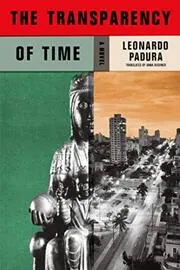
The Transparency of Time
by Leonardo Padura
2021
Approaching sixty and worn down by Havana's hardships, Mario Conde is hired to find a stolen black Madonna statue. The search ranges from present-day streets to deep history, turning a small case into something much stranger and sadder.
Where to start with Leonardo Padura
If you want the Mario Conde story from the beginning: Havana Blue → Havana Gold → Havana Red → Havana Black
If you want a later Conde mystery with books and old Havana: Havana Fever
If you want history, art, and a broader canvas: Heretics → The Transparency of Time
If you want a major standalone first: The Man Who Loved Dogs
If you want a shorter side case: Grab a Snake by the Tail → Adios Hemingway
Leonardo Padura sub-series and character series
Mario Conde Mystery books in order
Explore this seriesMario Conde Mystery books in chronological order
Standalone Leonardo Padura books
Author bio
Leonardo Padura was born on October 9, 1955, in Mantilla, a working-class neighborhood on the edge of Havana, and he has spent most of his life there. That matters, because Havana is not just the backdrop of his books. It is the weather, the memory, the pressure, and often the wound.
He studied Latin American literature at the University of Havana and went into journalism in 1980, writing cultural and literary pieces for El Caimán Barbudo and Juventud Rebelde, and later working at La Gaceta de Cuba. He has said those years gave him the experience and life lessons he lacked, and you can feel that training in the way his fiction notices streets, jobs, private rituals, and the small compromises people make to get through the day.
He came to fiction by way of reporting, not by hiding from the world.
His first novel, Fiebre de caballos, appeared in 1988, but the turning point came when he created Mario Conde, the weary Havana detective who first appeared in Havana Blue in 1991. Conde let Padura do several things at once: build a crime story, follow the disappointments of his own generation, and write about Cuba with both affection and irritation. The character also gave him a durable alter ego, a man who wanted to be a writer and kept looking for truth in places where truth was rarely neat.
Readers often start with the Conde books because they work on two levels. In Havana Red, Havana Black, and Havana Fever, the cases are gripping, but so are the friendships, the meals, the music, and the sense that the past is always leaning over the present. Padura is very good at showing how a murder investigation can open onto a whole neighborhood, a whole institution, or a whole era.
He did not stay inside detective fiction, though. The Man Who Loved Dogs follows the long shadow of Leon Trotsky's assassination through the lives of Trotsky, Ramón Mercader, and a frustrated Cuban writer named Iván. Heretics moves from the 1939 voyage of the St. Louis to a missing Rembrandt and modern Havana. The Transparency of Time sends Conde after a stolen black Madonna and opens into a larger story about faith, age, and the stubborn survival of the past. These books are bigger in scope, but they still carry Padura's feel for doubt, memory, and people pinned between ideals and reality.
Havana is everywhere in his work.
Over the years he has also written essays, screenplays, and journalistic nonfiction, and his work has traveled widely in translation. He received Cuba's National Prize for Literature in 2012 and the Princess of Asturias Award for Literature in 2015. The early Mario Conde novels were adapted for the screen as Four Seasons in Havana. What keeps readers with him, though, is the mix of melancholy, wit, political pressure, ordinary tenderness, and a city shown with both love and impatience.
Padura has kept living in Mantilla, the Havana neighborhood where he was born, raised, and later married, and he has long worked close to home with his wife, the screenwriter Lucía López Coll. That steadiness helps explain the point of view in his fiction. It stays close to the street, skeptical of slogans, loyal to memory, and alert to the gap between the life people were promised and the life they actually got.




Edited by
Software engineer whose passion for tracking book recommendations from podcasts inspired the creation of MRB.
Lead investor at 3one4 Capital whose startup expertise and love for books helped shape MRB and its growth.
Comments
Did we miss something? Have feedback?
Help us improve this page by sharing your thoughts