
Leonardo Da Vinci Books in Order
Part ofMartin Woodhouse Books in OrderExplore the Leonardo Da Vinci series by Martin Woodhouse, with books in order, brief summaries, series background, and advice on where to start.
Last updated:
As an Amazon Associate, we earn from qualifying purchases (at no extra cost to you).
Leonardo Da Vinci books in publication order
3 books
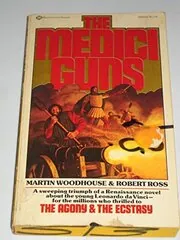
The Medici Guns
by Martin Woodhouse
1974
A young Leonardo da Vinci is pulled into Florence's power struggles when Lorenzo de' Medici needs brains as much as soldiers. Leonardo answers with geometry, artillery, and nerve as he tries to break a siege and change the rules of war.
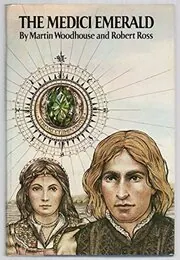
The Medici Emerald
by Martin Woodhouse
1976
When Bianca is kidnapped and Venice demands a legendary emerald in exchange, Leonardo faces a rescue mission wrapped in code and statecraft. To save the woman he loves and protect Florence, he must unlock the secret hidden in the stone.

The Medici Hawks
by Martin Woodhouse
1978
War reaches the Italian coast, and Leonardo is forced to think beyond guns and fortresses. With Bianca in danger and invasion closing in, he turns his dreams of flight into a desperate weapon against a far stronger enemy.
Leonardo Da Vinci books in chronological order
Series background & context
The Leonardo Da Vinci series takes a figure most readers know as a painter and inventor and turns him into the hero of a fast-moving adventure trilogy. Written by Martin Woodhouse with Robert Ross, these books imagine a young Leonardo in the dangerous gap between artist and engineer, where sketches can become weapons and a clever idea can change a city-state's future.
That setup gives the series its personality. In The Medici Guns, Leonardo is drawn into Medici politics and asked to help break a siege. In The Medici Emerald, a kidnapping and a legendary stone pull him into a race between Florence and Venice. In The Medici Hawks, the scale gets larger still, with invasion, war, and Leonardo's ideas about flight pushed toward the battlefield. Across all three books, he is not treated as a distant genius in a museum. He is young, active, argumentative, and fully stuck in the mess of events.
Bianca is an important part of that mess. She gives the trilogy a recurring emotional thread, and her relationship with Leonardo helps keep the books human when the politics and inventions begin to widen out. The Medici family, rival city-states, soldiers, church power, and hired killers all press in from the other side, so the series keeps balancing private stakes against public ones.
The setting does a lot of work.
Renaissance Italy here is not just backdrop. Florence, Rome, Venice, and the southern coast all feel like places where power is fragmented, loyalties shift quickly, and intelligence matters almost as much as force. Because relatively little is known about Leonardo's movements when he was in his twenties, the authors have room to imagine missions, conspiracies, and inventions without losing the historical frame completely. The result is closer to a historical thriller than a strict historical novel, and that is part of the fun.
The real pleasure is watching ideas get weaponized. Woodhouse and Ross keep returning to the same question: what happens when imagination meets war. Guns, coded secrets, navigation, and flying machines all become story engines. Leonardo wins less by swordplay than by seeing patterns first, drawing faster than other people think, and refusing to believe that the world has already settled into its final shape.
Readers who enjoy these books usually want pace, intrigue, and a slightly pulpy what-if version of history. The tone is adventurous rather than solemn, and the series treats Leonardo as a brilliant, skeptical problem-solver more than a saintly icon. Read in order if you can. The political threads, the inventions, and Leonardo's bond with Bianca all land better that way.







Edited by
Software engineer whose passion for tracking book recommendations from podcasts inspired the creation of MRB.
Lead investor at 3one4 Capital whose startup expertise and love for books helped shape MRB and its growth.
Comments
Did we miss something? Have feedback?
Help us improve this page by sharing your thoughts