
Legal Novels Books in Order
Part ofClifford Irving Books in OrderSee the Legal Novels by Clifford Irving in order, with quick summaries, courtroom themes, series background, and simple advice on where to start.
Last updated:
As an Amazon Associate, we earn from qualifying purchases (at no extra cost to you).
Legal Novels books in publication order
4 books
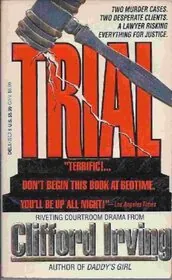
Trial
by Clifford Irving
1990
Houston lawyer Warren Blackburn defends two murder cases that seem unrelated, one involving a nightclub owner, the other a desperate immigrant. As the trials start to connect, the courtroom fight becomes a test of conscience as well as skill.
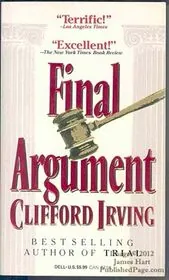
Final Argument
by Clifford Irving
1993
Florida lawyer Ted Jaffe is forced back into a murder case he thought was settled when evidence suggests a man on death row may have been wrongly convicted. Saving him could destroy Ted's career, marriage, and carefully buried past.
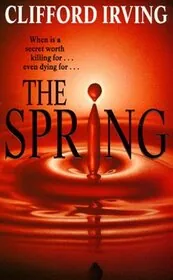
The Spring
by Clifford Irving
1996
New York criminal lawyer Dennis Conway moves to secluded Springhill, Colorado, for love and a quieter life. Then two bodies are found in the snow, his in-laws are accused, and the town's silence becomes as threatening as the case itself.

Boy on Trial
by Clifford Irving
2014
Billy Braverman is a gifted twelve-year-old, a TV star, and a rock climber. When juvenile court charges him with murdering his girlfriend's father, the case turns into a searching look at brilliance, innocence, and what adults refuse to see.
Legal Novels books in chronological order
Series background & context
The Legal Novels work best as a loose series, not as one ongoing story with the same hero walking from book to book. What ties them together is Irving's fascination with what happens when a courtroom case stops being neat and starts pulling at marriages, reputations, and buried guilt. The law matters here, but pressure matters more.
Trial sets the pattern. Warren Blackburn, a Houston criminal lawyer, is defending two murder cases that look separate until the moral lines begin to blur. One case has money and glamour around it. The other turns on poverty and vulnerability. Irving uses that contrast to show how class, race, and performance shape the stories that judges and juries believe.
Nobody in these books gets to stay certain for long.
Final Argument shifts to Florida and follows Ted Jaffe, a former prosecutor who starts to suspect that a man he helped send to death row may not be guilty. That premise gives Irving a rich kind of legal suspense. The danger is not just losing a case. It is what happens when a lawyer's own past, including the compromises he made to win, starts to look like evidence.
The Spring moves the action to a secluded Colorado mountain town. Dennis Conway leaves New York for love and a fresh start, only to find himself defending his in-laws after a double death in the snow. Here the courtroom story runs beside something more atmospheric: a closed community, a family with secrets, and a local culture that would rather protect itself than explain itself. Irving keeps asking the same question in a new setting. What if the truth is real, but nobody wants it spoken plainly?
Boy on Trial tightens the focus again. Billy Braverman is a gifted boy, a television performer, and a juvenile defendant accused of killing his girlfriend's father. The case has the energy of a headline story, but Irving keeps it personal. He is interested in how adults project innocence, menace, brilliance, and damage onto a child who may be more complicated than any label.
These are courtroom books, but never only courtroom books.
Across the series, Irving writes lawyers as capable, flawed people who do not always trust themselves as much as their clients need them to. The tone is serious, readable, and built for momentum rather than legal lecture. Expect murder cases, reversals, cross-examinations, ethical traps, and the uneasy feeling that facts are only part of what wins in court. If you like standalone legal thrillers with moral mess at the center, this is a strong place to start.






Edited by
Software engineer whose passion for tracking book recommendations from podcasts inspired the creation of MRB.
Lead investor at 3one4 Capital whose startup expertise and love for books helped shape MRB and its growth.
Comments
Did we miss something? Have feedback?
Help us improve this page by sharing your thoughts