
Lee Conell Books in Order
See Lee Conell's books in order, with quick summaries, where to start tips, and background on her fiction, from Subcortical to The Party Upstairs.
Last updated:
As an Amazon Associate, we earn from qualifying purchases (at no extra cost to you).
Lee Conell books in publication order
2 books
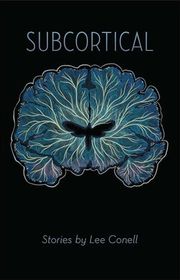
Subcortical
by Lee Conell
2017
This story collection follows off-kilter people navigating work, desire, family, and the strange logic of the mind. Funny, unsettling, and humane, the stories keep asking how people connect, and how class and ambition shape that search.
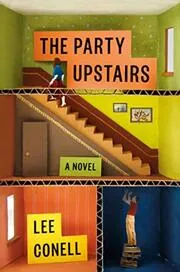
The Party Upstairs
by Lee Conell
2020
Over a single day in an Upper West Side co-op, Ruby returns to her superintendent father's basement apartment just as tensions among residents start to boil. It's a sharp, funny novel about debt, family, and the violence hidden inside class.
Where to start with Lee Conell
If you want her novel first: The Party Upstairs
If you want the short stories first: Subcortical
If you want the clearest path through her work: Subcortical → The Party Upstairs
Lee Conell collections, short stories, and related book types
Collections
Standalone Lee Conell books
Author bio
Lee Conell grew up in New York City, in Manhattan, where her father worked as a building superintendent. That vantage point, close to wealth but not inside it, gave her a lasting feel for class, labor, cramped space, and the small daily dramas that play out when people live on top of one another.
She writes about people who are trying to make a life while the ground keeps shifting under them.
One early break came when she was still a junior at SUNY New Paltz and published a piece in the New York Times "Modern Love" column. She stayed at New Paltz for both a BA and an MA, then went on to earn an MFA in creative writing at Vanderbilt University. Later, she taught there too, which makes her path look a little circular in the best way.
Conell has described writing as a private act, something separate from the public performance of being an author. That inwardness matters. Even when her stories are funny, odd, or outwardly plotty, they usually keep one eye on the inner weather of a character, the half-formed thought or old pressure that explains why someone makes a bad choice, a brave choice, or both at once.
Before her first book appeared, her short fiction had already started drawing notice. Her story "The Lock Factory" won the Nelson Algren Award in 2016, and she has said it grew partly from her mother's experience. The story asks what traps people, what frees them, and how people manage to connect across pride, hurt, and misunderstanding. Those questions would keep showing up in the books that followed.
Her first book, Subcortical, arrived in 2017. It won The Story Prize Spotlight Award, and it quickly showed the range of what Conell likes to do on the page. The stories move through work, desire, family, memory, and the weird logic of the mind. In the title story, a young woman who wants to become a doctor gets pulled into an older man's medical study. Elsewhere, the collection shifts between the eerie and the everyday, but it never loses sight of the people at the center of the trouble.
Then came The Party Upstairs.
Published in 2020, the novel unfolds over a single day inside an Upper West Side co-op. At the center are Ruby, a young woman who has had to move back into her childhood basement apartment, and her father Martin, the building's super. Conell has said she began the book after the recession years, when many people her age were moving back home, and that living away from New York helped her imagine the building where she grew up with more freedom. Readers tend to like the novel for its dark humor, its sharp sense of class tension, and the way it turns one building into a whole social system. The book later received the Wallant Award.
Across both books, Conell keeps returning to a few big pressures: money, status, family duty, and the gap between the life people imagined and the life they actually have. She is especially good at characters who are smart enough to understand the system and still stuck inside it. Her settings matter too, whether that is a Manhattan co-op, a workplace, or a mind that won't sit still.
Her career has been supported by a National Endowment for the Arts Creative Writing Fellowship, along with fellowships and residencies from places including Yaddo, the Japan-United States Friendship Commission, the Tennessee Arts Commission, Millay Arts, the Sewanee Writers' Conference, Vanderbilt University, and the Yiddish Book Center. The list is long, but the pattern is simple: people who read her work keep wanting to give it room to grow.
Her work has also appeared in places such as Oxford American, Kenyon Review, Glimmer Train, Guernica, and Paris Review Daily. She now teaches creative writing as an assistant professor at Purchase College, SUNY, and has also taught at Tufts, Vanderbilt, Sewanee, Vanderbilt Psychiatric Hospital, the Nashville Public Library, and Vanderbilt University. It feels like a natural fit. Her fiction pays close attention to how people talk, what they hide, and what they hope for, which is probably what good teachers do too.





Edited by
Software engineer whose passion for tracking book recommendations from podcasts inspired the creation of MRB.
Lead investor at 3one4 Capital whose startup expertise and love for books helped shape MRB and its growth.
Comments
Did we miss something? Have feedback?
Help us improve this page by sharing your thoughts