
Jenny Erpenbeck Books in Order
Browse Jenny Erpenbeck books in reading order, with short summaries for each book and a clear title list to help you find a starting point.
Last updated:
As an Amazon Associate, we earn from qualifying purchases (at no extra cost to you).
Jenny Erpenbeck books in publication order
7 books
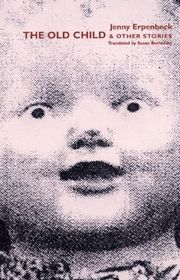
The Old Child and Other Stories
by Jenny Erpenbeck
1999
A novella and four stories enter the lives of women who exist at society’s edges. Spare narratives move beyond ordinary realism, exploring isolation, eccentricity and the small possibilities of hope within unsettling, sometimes mystical experiences.
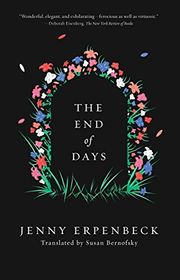
The End of Days
by Jenny Erpenbeck
2012
One unnamed woman lives through five possible stories, each ending in a different death. Moving from the Habsburg Empire through twentieth-century upheavals, the novel explores how chance and historical forces redirect a life that might have unfolded otherwise.

Go, Went, Gone
by Jenny Erpenbeck
2017
Retired Berlin professor Richard notices African refugees protesting and begins visiting their shelter. Listening to their stories transforms his quiet widowhood, drawing him into struggles over asylum and forcing him to reconsider belonging, privilege and his own country’s history.

Not a Novel
by Jenny Erpenbeck
2018
Jenny Erpenbeck reflects on growing up in East Berlin, the collapse of the GDR and her path through theater to writing. Personal essays connect memory and literary influences with questions of history, silence, displacement and contemporary political life.

Kairos
by Jenny Erpenbeck
2021
In late-1980s East Berlin, nineteen-year-old Katharina begins an affair with Hans, a married writer decades older. Their passionate, troubled relationship unfolds alongside the collapse of the GDR, as private expectations and public certainties give way to an unfamiliar future.

Things That Disappear
by Jenny Erpenbeck
2025
Brief interconnected prose pieces explore disappearance, from misplaced everyday objects to lost friends and vanished East German landmarks. Jenny Erpenbeck considers how memory preserves what the world removes, tracing the relationship between personal experience, historical change and absence.
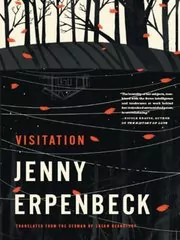
Visitation
by Jenny Erpenbeck
A house beside a Brandenburg lake connects the lives of twelve people across a century of German history. Their stories move through public upheaval and private experience, tracing changing ownership, attachment, memory, and loss within one enduring landscape.
Where to start with Jenny Erpenbeck
For the International Booker winner: Kairos
For a house across German history: Visitation
For alternative paths through one life: The End of Days
For contemporary displacement and belonging: Go, Went, Gone
Standalone Jenny Erpenbeck books
Author bio
Jenny Erpenbeck writes about what people lose when a country, a home or an assumed future disappears. Born in East Berlin in 1967, she returns to the ways large political changes enter private life. Her fiction often makes time itself part of the structure: a place holds successive lives, or a person’s story branches toward different possibilities.
Literature was part of her family background, with both her parents and grandparents active in that world. Her own working life began with an apprenticeship in bookbinding, followed by theatre work in props and wardrobe. She studied theatre at Humboldt University and musical theatre production at the Hanns Eisler Academy of Music.
Opera direction, playwriting and fiction all became parts of her career.
Visitation centers on a house beside a Brandenburg lake. As the people attached to it change, the same landscape gathers experiences of possession, belonging and departure. The house gives a long stretch of German history a physical scale, allowing public upheaval to be felt through rooms, land and the idea of home.
The End of Days approaches history through alternatives. It imagines different paths for the same woman, returning to moments when a small change might allow a life to continue in another direction. That structure asks how much of a biography comes from circumstance, how much from choice and how much from chance. The book won the Independent Foreign Fiction Prize.
In Go, Went, Gone, a retired Berlin professor encounters African refugees and begins to reconsider the boundaries of his own world. Their uncertain position puts questions of welcome, identity and displacement into everyday encounters. It is a novel about listening across very different experiences, and about what becomes visible when a familiar routine is interrupted.
Kairos brings the private and political together through Katharina, a young woman, and Hans, an older married writer. Their relationship unfolds in East Berlin during the late 1980s, as the world around them approaches enormous change. Michael Hofmann’s English translation won the International Booker Prize in 2024.
Her work has been translated into more than thirty languages.
The shorter pieces in Things That Disappear continue her attention to absence through lost objects, people and places. Alongside the reflections collected in Not a Novel, they offer another approach to the concerns running through her fiction. Erpenbeck lives in Berlin.














Edited by
Software engineer whose passion for tracking book recommendations from podcasts inspired the creation of MRB.
Lead investor at 3one4 Capital whose startup expertise and love for books helped shape MRB and its growth.
Comments
Spotted a missing book, a wrong order or a mistake? Tell us and we'll fix this page.
We're a reading guide, not the author or publisher, so we can't send books or pass on messages.