
James Hilton Books in Order
See James Hilton books in order, with short summaries, standout novels like Lost Horizon and Goodbye, Mr. Chips, and help choosing where to start.
Last updated:
As an Amazon Associate, we earn from qualifying purchases (at no extra cost to you).
James Hilton books in publication order
17 books
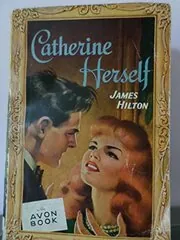
Catherine Herself
by James Hilton
1920
Hilton's first novel follows a young woman from childhood into early adulthood as she tests talent, independence, and the life others expect her to live. Music, family pressure, and first attachments shape a coming-of-age story already interested in inner conflict.
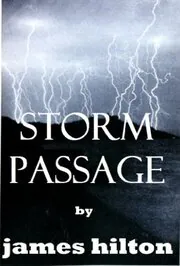
Storm Passage
by James Hilton
1922
A young woman leaves a small village and tries to build a life on her own terms, only to find that love, respectability, and security rarely pull in the same direction. It is an early Hilton novel about hard choices and costly second chances.
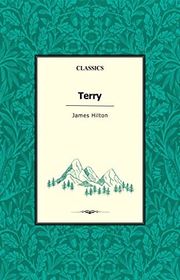
Terry
by James Hilton
1927
M. Terrington, a shy research lecturer in bacteriology, is pulled out of isolation when he falls in with the lively Severn household. Hilton uses the slow thaw between reserve and intimacy to tell a quiet, intelligent story about love and self-knowledge.
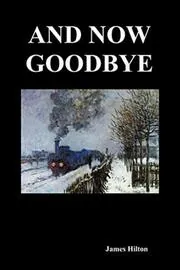
And Now Goodbye
by James Hilton
1931
Reverend Howat Freemantle is a kind, tired minister in a Lancashire town whose routine life is shaken by an unexpected romantic entanglement. Over the course of a few crowded days, Hilton follows him toward choices that feel small at first and life-changing by the end.
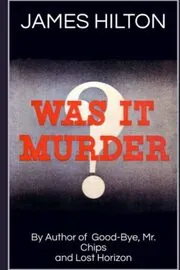
Murder At School / Was It Murder?
by James Hilton
1931
At Oakington school, one boy's strange death is troubling enough, but when his brother dies soon after, coincidence stops looking innocent. Hilton builds a classic school-set mystery from suspicious accidents, amateur detection, and a final fair-play solution.
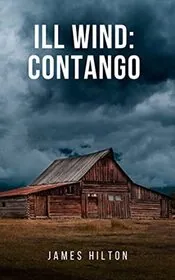
Contango / Ill Wind
by James Hilton
1932
This unusual novel links a chain of seemingly separate lives through one chance event and the consequences that follow. Beginning with a murder in the Far East, Hilton traces how accident, timing, and human weakness keep altering people who never meant to meet.
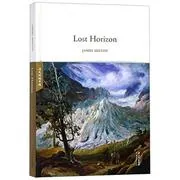
Lost Horizon
by James Hilton
1933
While fleeing unrest in Asia, British diplomat Hugh Conway is swept off course into a hidden Himalayan valley called Shangri-La. What begins as a survival story becomes a quiet argument about peace, time, and whether paradise can ever be left unchanged.
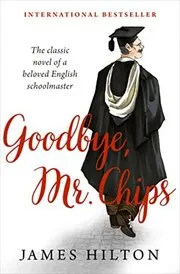
Goodbye, Mr. Chips
by James Hilton
1934
Mr. Chipping spends decades at Brookfield School, growing from a stiff young classics master into the teacher generations of boys remember simply as Mr. Chips. A brief, happy marriage changes him, and Hilton makes a whole life feel both modest and deeply moving.
We Are Not Alone
by James Hilton
1937
Dr. David Newcome is a well-liked small-town doctor whose unhappy home life draws him toward a woman the town already mistrusts. When tragedy strikes, gossip and wartime hysteria turn private misery into a harsh public judgment.
To You Mr. Chips
by James Hilton
1938
This follow-up to Goodbye, Mr. Chips returns to Brookfield in a set of warm, lightly comic stories about the old schoolmaster and his boys. It also includes an autobiographical opening in which Hilton reflects on his own schooldays and what shaped Mr. Chips.
Random Harvest
by James Hilton
1941
After the First World War, Charles Rainier loses his memory and builds a fragile new life under another name. When his past returns, the happiness he found slips out of reach, and Hilton turns romance, identity, and memory into a haunting long game.
The Story of Dr. Wassell
by James Hilton
1943
Based on a true wartime story, this book follows Navy doctor Corydon Wassell as he tries to get badly wounded sailors out of Java after the Japanese advance. Hilton treats the ordeal as both an adventure and a portrait of stubborn, practical courage.
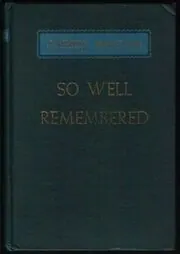
So Well Remembered
by James Hilton
1945
On VE Day, George Boswell looks back on the years that bound him to Browdley, the Lancashire mill town he wanted to change. Politics, class tension, and his troubled marriage to Olivia Channing turn civic ambition into something far more personal.
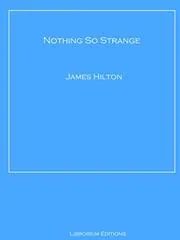
Nothing So Strange
by James Hilton
1947
When Jane meets young American scientist Mark Bradley in London, attraction quickly gives way to a life shaped by science, war, and dangerous secrets. Their story moves from Europe to America, asking what private loyalty can survive in an age of public catastrophe.
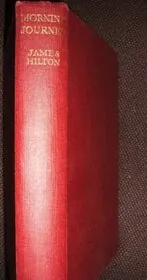
Morning Journey
by James Hilton
1951
Carey Arundel's rise from hopeful Irish actress to international star is tangled up with Paul Saffron, the dazzling producer who first made her career and broke her heart. Hilton turns backstage ambition, fame, and old love into a reflective drama.
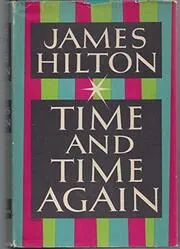
Time and Time Again
by James Hilton
1953
A middle-aged British diplomat, Charles Anderson, looks back on schooldays at Brookfield, first love, marriage, and a career shaped by two wars. As he prepares for his son's seventeenth birthday in Paris, the past starts echoing in uneasy, revealing ways.

Good Bye Mr. Chips & Other Stories
by James Hilton
1995
This collection pairs Goodbye, Mr. Chips with several later Mr. Chips stories, including Young Waveney and Merry Christmas, Mr. Chips. It is a good way to get the original novella and a few extra visits to Brookfield in one volume.
Where to start with James Hilton
If you want the best-known James Hilton: Lost Horizon → Goodbye, Mr. Chips
If you prefer tender, bittersweet drama: Random Harvest → So Well Remembered → And Now Goodbye
If you like school stories and more Mr. Chips: Goodbye, Mr. Chips → To You Mr. Chips → Good Bye Mr. Chips & Other Stories
If you want Hilton at his darkest: We Are Not Alone → Nothing So Strange → Morning Journey
James Hilton collections, short stories, and related book types
Collections
Standalone James Hilton books
Author bio
James Hilton was born in Leigh, Lancashire, on September 9, 1900, but much of his childhood was shaped elsewhere, in Walthamstow, where his father John Hilton was a school headmaster. School life was not just background scenery for him, it was the air around him. He went to the Monoux School, later to The Leys in Cambridge, and then to Christ's College, Cambridge, where he studied English and history and wrote his first novel, Catherine Herself, while still an undergraduate.
He did not step straight into fame. After university he worked as a journalist, first for the Manchester Guardian and later as a fiction reviewer for the Daily Telegraph. Those years mattered. They taught him how to write clearly, how to sketch a character fast, and how to build a story around ordinary people under pressure.
The long climb was real.
Hilton published several novels in the 1920s, but his real breakthrough came with And Now Goodbye in 1931. Then, in quick succession, came the books that fixed his name in readers' minds: Lost Horizon in 1933 and Goodbye, Mr. Chips in 1934. Lost Horizon gave the world Shangri-La, that dream of a hidden peaceful place, and won the Hawthornden Prize. Goodbye, Mr. Chips, with its aging schoolmaster and quiet emotional pull, made him widely loved on both sides of the Atlantic.
He had a gift for mixing comfort with unease.
Even in his gentler books, Hilton was interested in what big public events do to private lives. War, class, ambition, memory, and disappointment keep turning up in his fiction. Readers who come to Random Harvest often remember the amnesia plot and love story first, but what lingers is the sense of a life knocked off course. In We Are Not Alone, he wrote much more darkly, showing how gossip and fear can wreck decent people. In So Well Remembered, he returned to the English provincial town and showed how civic pride, old wounds, and personal mistakes can become tangled over decades.
Hollywood changed his life. By the late 1930s he had moved to California, and film work became a major part of what he did. Several of his novels were adapted for the screen, and he also wrote directly for film, co-writing the screenplay for Mrs. Miniver, which brought him an Academy Award. Later he hosted the radio anthology Hallmark Playhouse, a reminder that his voice worked well on the page and out loud.
For all the success, his fiction stayed recognizably his own. He liked schools, diplomats, doctors, provincial towns, and people who look conventional until life exposes the ache underneath. He was rarely flashy. What readers tend to like in Hilton is the steady storytelling, the melancholy without self-pity, and the way he can make a modest life feel worth close attention.
His personal life was less settled. He married Alice Brown in 1935, divorced her in 1937, then married actress Galina Kopernak later that year; that marriage ended in divorce as well. He became an American citizen in 1948. In his last years he remained in California, still writing, still known for the books that had made him famous, and still carrying a strong sense of England in his work.
Hilton died in Long Beach, California, on December 20, 1954, at only fifty-four. That feels young, especially for a writer so associated with memory and passing time. But his best books are still easy to see the appeal of: Lost Horizon for its dream of escape, Goodbye, Mr. Chips for its tenderness, and Random Harvest for its ache. They are calm books on the surface. Underneath, they know how fragile a life can be.


Edited by
Software engineer whose passion for tracking book recommendations from podcasts inspired the creation of MRB.
Lead investor at 3one4 Capital whose startup expertise and love for books helped shape MRB and its growth.
Comments
Did we miss something? Have feedback?
Help us improve this page by sharing your thoughts