
Jack Lynch Books in Order
Browse Jack Lynch books in order, from Peter Bragg mysteries to language and literary studies, with quick summaries, related series, and where to start.
Last updated:
As an Amazon Associate, we earn from qualifying purchases (at no extra cost to you).
Jack Lynch books in publication order
33 books
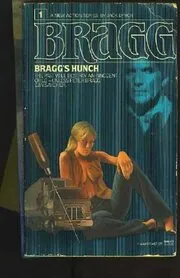
Braggs Hunch
by Jack Lynch
1982
In Bragg's first case, a retired mobster hires him to investigate threats against his family. The job sends Bragg into a desert town where old violence is ready to start again.
Pieces of Death
by Jack Lynch
1982
Bragg goes to the airport to guard a man carrying something valuable and walks into a gun battle instead. Soon he is chasing smugglers, assassins, and a fortune in gem-encrusted chess pieces.
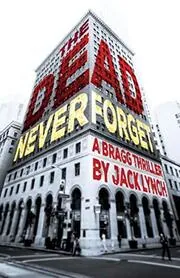
The Dead Never Forget
by Jack Lynch
1982
Peter Bragg is hired to protect a retired mobster and his young stepdaughter after death threats turn gruesomely real. The trail leads to a bleak California desert town and a violent past that refuses to stay buried.
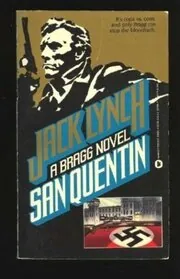
San Quentin
by Jack Lynch
1984
A deadly stand-off inside San Quentin leaves hostages trapped and Peter Bragg under pressure to solve a murder. The prison crisis gives him almost no time and no room for mistakes.
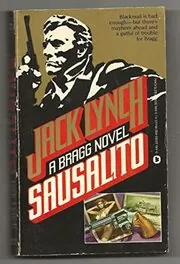
Sausalito
by Jack Lynch
1984
A blackmail job drags Peter Bragg into Sausalito real estate warfare, where money and bay views are worth killing for. What starts as a local case quickly turns brutal and personal.
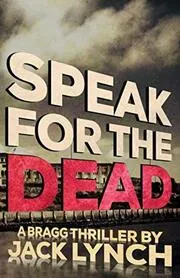
Speak for the Dead
by Jack Lynch
1984
After a failed escape at San Quentin erupts into a hostage crisis, the convicts want Bragg to clear one man's teenage brother of murder. To stop a massacre, he has to solve a case far beyond the prison walls.
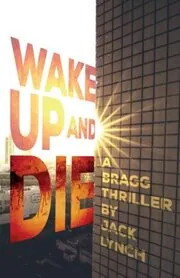
Wake Up and Die
by Jack Lynch
1984
A blackmail case pulls Bragg across the Golden Gate to Sausalito, where developers are fighting dirty over waterfront land. Arson, torture, and murder turn a local feud into a deadly war.
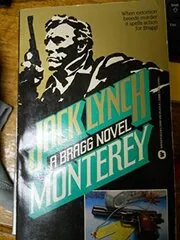
Monterey
by Jack Lynch
1985
At a Central California gathering, Peter Bragg reconnects with an old lover and soon finds her accused of murder. His search for the truth uncovers blackmail, extortion, and a secret worth killing to keep buried.
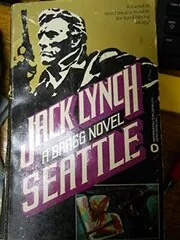
Seattle
by Jack Lynch
1985
When a Seattle writer starts getting threats that turn violent, Peter Bragg heads home to protect him. The case forces Bragg to deal with old wounds as the attacks keep escalating.
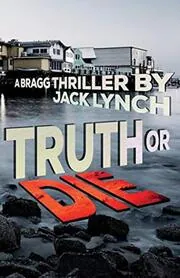
Truth or Die
by Jack Lynch
1985
When Bragg runs into an old lover and she is soon accused of killing her husband, he steps in to help. The case leads to blackmail, extortion, and a buried secret someone still wants to protect with murder.
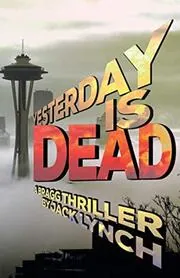
Yesterday is Dead
by Jack Lynch
1985
Threats and gunfire drive Seattle freelancer Benny Bartlett to call Peter Bragg for help. Back in his hometown, Bragg faces both hired killers and the painful return of his own past.
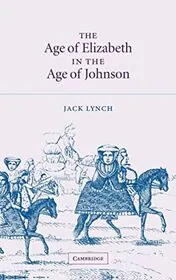
The Age of Elizabeth in the Age of Johnson
by Jack Lynch
1998
Lynch examines how eighteenth-century Britain imagined the Renaissance and the age of Elizabeth. It is a study of how later readers used Shakespeare, humanism, and the past to define their own culture.
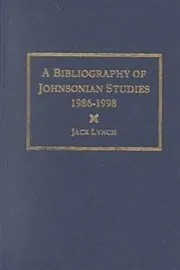
A Bibliography Of Johnsonian Studies, 1986 1998
by Jack Lynch
2000
A research tool for readers working on Samuel Johnson and his circle. Lynch gathers scholarship from 1986 to 1998 into a clear bibliographic guide that helps map the field.
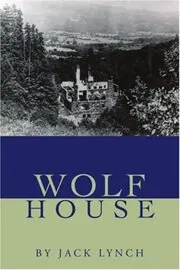
Wolf House
by Jack Lynch
2002
Peter Bragg is drawn into a case by a psychic's visions of bodies in the woods near Jack London's ruined Wolf House. As fresh corpses appear, Bragg races to find the killer before the visions catch up with him.
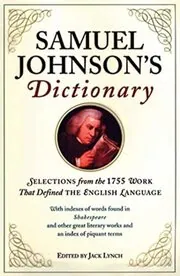
Samuel Johnson's Dictionary
by Jack Lynch
2004
An edited selection from Johnson's 1755 dictionary, built from thousands of entries and quotations. It lets modern readers sample a landmark work that shaped English for generations.
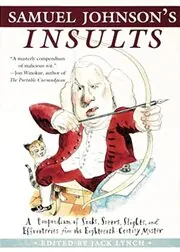
Samuel Johnson's Insults
by Jack Lynch
2004
A sharp, entertaining selection of Samuel Johnson's put-downs, quarrels, and verbal swipes. It offers the pleasure of the jokes along with a glimpse of the man behind them.
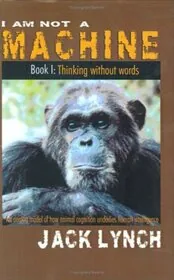
Thinking Without Words
by Jack Lynch
2004
The opening I Am Not a Machine book argues that much cognition happens before language enters the picture. Lynch challenges the idea that thought is just inner verbal or symbolic computation.
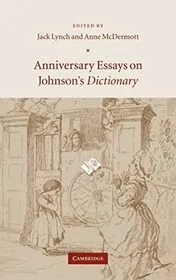
Anniversary Essays on Johnson's Dictionary
by Jack Lynch
2005
A collection of scholarly essays marking the anniversary of Johnson's Dictionary. The contributors treat the dictionary as a working piece of scholarship and a major event in the history of English.
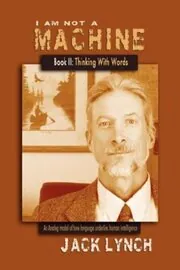
Thinking with Words
by Jack Lynch
2005
The second I Am Not a Machine book asks what language adds to human thought. Lynch argues that words do more than label ideas, they help reshape memory, reasoning, and self-awareness.
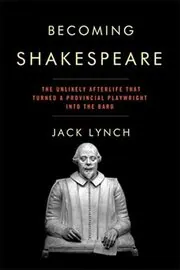
Becoming Shakespeare
by Jack Lynch
2007
Instead of starting with Shakespeare's life, Lynch starts with his death and follows the long rise of his reputation. The book shows how theater, politics, editors, and readers helped make the Bard.
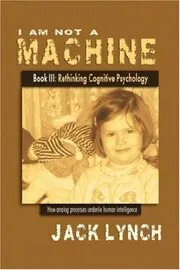
Rethinking Cognitive Psychology
by Jack Lynch
2007
The third book in the I Am Not a Machine sequence challenges mainstream cognitive science. Lynch questions the mind-as-computer model and argues for a different account of thought and meaning.
The English Language
by Jack Lynch
2007
An accessible guide to English usage that explains not just the rules but the reasons behind them. It is designed to help students and writers make clearer, stronger choices on the page.
Deception and Detection in Eighteenth-Century Britain
by Jack Lynch
2008
This study looks at forgery, fraud, and fake identities in eighteenth-century Britain. Lynch shows how public arguments over evidence and truth shaped literary culture and everyday belief.
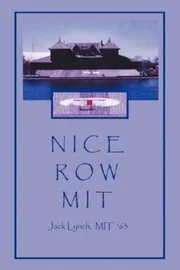
Nice Row MIT
by Jack Lynch
2008
A compact rowing memoir about MIT's push for a national championship, told by an oarsman who did not start out looking like a natural athlete. It mixes hard training, campus life, and college competition.
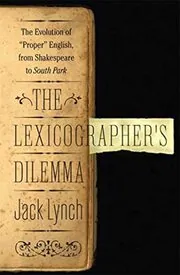
The Lexicographer's Dilemma
by Jack Lynch
2009
Why do some English rules feel permanent when many were invented by particular people at particular moments? Lynch traces the long fight over proper English from early grammarians to modern usage wars.
Don't Quit Your Day Job
by Jack Lynch
2010
A biographical look at the working lives behind public success. Lynch follows the odd jobs, side careers, and early detours that shaped famous people before they became widely known.
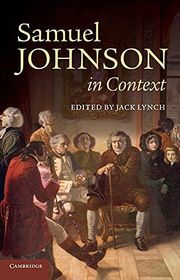
Samuel Johnson in Context
by Jack Lynch
2011
This reference collection places Samuel Johnson inside the literary, political, religious, and social world around him. It is designed to help readers see both the writer and the contexts that shaped his work.
Sleep
by Jack Lynch
2013
The first book in a post-apocalyptic series opens after collapse, with survival suddenly more urgent than comfort or certainty. It sets up a harsh new world where staying alive means adapting fast.
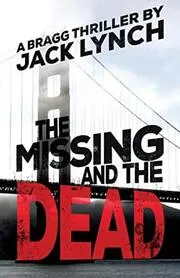
The Missing and The Dead
by Jack Lynch
2014
Peter Bragg's search for a missing insurance investigator opens into stolen art, vanished money, and a killer obsessed with death itself. The deeper he digs, the more personal the danger becomes.
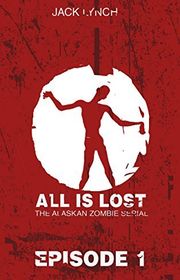
All Is Lost
by Jack Lynch
2015
This opening episode begins in crisis and leans into survival, uncertainty, and the costs of collapse. It works as a short, bleak setup for a larger post-apocalyptic story.
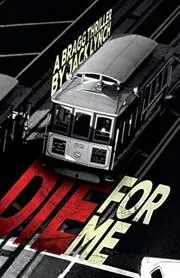
Die for Me
by Jack Lynch
2015
A psychic Peter Bragg once saved from suicide now foresees her own murder. Bragg has to sort intuition from evidence before a serial killer turns a warning into a body count.
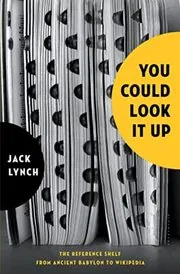
You Could Look It Up
by Jack Lynch
2015
A lively history of reference books, from ancient lists and dictionaries to encyclopedias, search engines, and Wikipedia. Lynch explores how people have tried to organize knowledge, and why that urge never really fades.
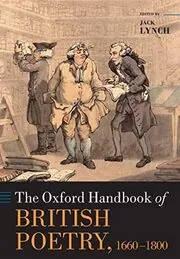
The Oxford Handbook of British Poetry, 1660-1800
by Jack Lynch
2020
A wide-ranging reference volume on British poetry from 1660 to 1800. It gathers essays on major poets, forms, contexts, and critical approaches across the long eighteenth century.
Where to start with Jack Lynch
If you want hard-boiled PI fiction: The Dead Never Forget → The Missing and The Dead → Pieces of Death → Wake Up and Die
If you like language history and usage: The English Language → The Lexicographer's Dilemma → You Could Look It Up
If you want Shakespeare and Johnson: Becoming Shakespeare → Samuel Johnson's Dictionary → Samuel Johnson in Context
If you want the cognitive-science side of this page: Thinking Without Words → Thinking with Words → Rethinking Cognitive Psychology
Jack Lynch sub-series and character series
Jack Lynch collections, short stories, and related book types
Short Stories/Novellas
Non-Fiction
Literature in Context
Author bio
Jack Lynch is one of those names that takes readers to a few very different shelves.
This page pulls together books by several writers who share that name, and the mystery novels belong to the Jack Lynch who was born and raised in Seattle. He studied journalism at the University of Washington, worked for newspapers in the Seattle area and later in Kansas and Iowa, then moved to the Bay Area in the 1960s. Before joining the San Francisco Chronicle, he also spent time working at a brokerage house and tending bar in Sausalito.
He eventually stepped away from newspaper work and turned to fiction. His best-known creation was Peter Bragg, a former reporter turned San Francisco private eye, who drives books like The Dead Never Forget, Pieces of Death, and Wolf House. Readers tend to like the books for their Bay Area settings, their tough but not flashy hero, and the way Bragg mixes dry wit with real wear and tear.
That Jack Lynch died in 2008 at the age of seventy-eight.
A different Jack Lynch built his career in classrooms and archives. He took both his BA and PhD at the University of Pennsylvania and joined Rutgers University-Newark in 1998, where he went on to become a Distinguished Professor of English. His work centers on Samuel Johnson, the history of the English language, Shakespeare's changing reputation, and the long history of literary fakery and fraud.
He is the Jack Lynch behind Becoming Shakespeare, The Lexicographer's Dilemma, The English Language, and You Could Look It Up. He also edited or co-edited books such as Samuel Johnson's Dictionary, Samuel Johnson's Insults, Samuel Johnson in Context, and The Oxford Handbook of British Poetry, 1660-1800. What makes these books stick is that they treat dictionaries, grammar fights, reference shelves, and literary reputations as human stories, full of strong opinions, odd detours, and people trying to make order out of language.
And then there is the cognitive-science Jack Lynch.
He earned a PhD in electrical engineering at Stanford, spent much of his career doing engineering research at MIT Lincoln Laboratory, and after retiring in 1996 devoted years to independent study in cognitive science. That work led to the three I Am Not a Machine books, Thinking Without Words, Thinking with Words, and Rethinking Cognitive Psychology, which argue against the idea that the mind works like a formal computer system. He also taught adult-learning courses on cognition and, for a time, taught swing dancing, which is a good reminder that this particular Jack Lynch did not stay in one lane either.
That mix helps explain why this bibliography ranges from hard-boiled detective fiction to literary history and theories of mind. It is best read as a shared byline rather than one tidy career arc, which can actually be part of the fun if you know what kind of Jack Lynch book you are looking for.


Edited by
Software engineer whose passion for tracking book recommendations from podcasts inspired the creation of MRB.
Lead investor at 3one4 Capital whose startup expertise and love for books helped shape MRB and its growth.
Comments
Did we miss something? Have feedback?
Help us improve this page by sharing your thoughts