
I Am Not a Machine Books in Order
Part ofJack Lynch Books in OrderExplore the I Am Not a Machine books by Jack Lynch in order, with short summaries, series background, reading order, and help on where to begin.
Last updated:
As an Amazon Associate, we earn from qualifying purchases (at no extra cost to you).
I Am Not a Machine books in publication order
3 books
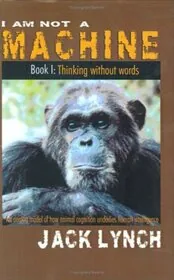
Thinking Without Words
by Jack Lynch
2004
The opening I Am Not a Machine book argues that much cognition happens before language enters the picture. Lynch challenges the idea that thought is just inner verbal or symbolic computation.
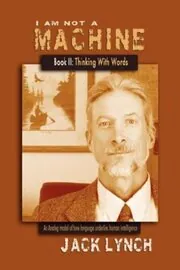
Thinking with Words
by Jack Lynch
2005
The second I Am Not a Machine book asks what language adds to human thought. Lynch argues that words do more than label ideas, they help reshape memory, reasoning, and self-awareness.
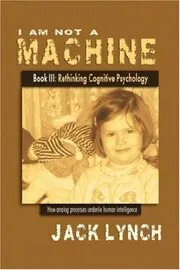
Rethinking Cognitive Psychology
by Jack Lynch
2007
The third book in the I Am Not a Machine sequence challenges mainstream cognitive science. Lynch questions the mind-as-computer model and argues for a different account of thought and meaning.
I Am Not a Machine books in chronological order
Series background & context
I Am Not a Machine is a three-book nonfiction series about the mind, language, and what human thought really is. Across Thinking Without Words, Thinking with Words, and Rethinking Cognitive Psychology, Jack Lynch argues against the familiar idea that the mind works like a computer that manipulates symbols according to formal rules. The series is less about polishing the standard model than challenging it at the foundation.
The basic question is simple, even if the answer is not. If animals solve problems, if infants understand parts of the world before they have full language, and if adults often grasp things before they can explain them, then thought cannot just be silent inner speech. Lynch uses that tension to push toward a different account of mind, one built from perception, pattern recognition, bodily experience, and only later language.
These are contrarian books, on purpose.
The first volume, Thinking Without Words, lays out the central claim that cognition begins before language and cannot be reduced to it. The second, Thinking with Words, turns to what language adds once it arrives, especially in memory, classification, reasoning, and shared meaning. The third book, Rethinking Cognitive Psychology, broadens the argument and tries to redraw the map of cognitive science around a less mechanical picture of intelligence.
Along the way, the series pulls in questions from psychology, linguistics, artificial intelligence, developmental study, and primate cognition. Lynch is especially interested in what gets flattened when living thought is treated as if it were just computation. His engineering background matters here. He knows the machine metaphor from the inside, which is part of why he presses so hard against it.
Readers should not expect a standard textbook or a light pop-science overview. These books are more like a sustained case made over time, sometimes technical, often philosophical, and best read in order. Each volume builds on the last, so the series works most clearly when you follow the argument from wordless thought, to language, to the larger field that Lynch wants to rethink.
What links all three books is a stubbornly human question. How do minds make meaning before words, with words, and sometimes beyond words? If that question interests you more than tidy consensus, I Am Not a Machine offers a thoughtful and provocative route through it.











Edited by
Software engineer whose passion for tracking book recommendations from podcasts inspired the creation of MRB.
Lead investor at 3one4 Capital whose startup expertise and love for books helped shape MRB and its growth.
Comments
Did we miss something? Have feedback?
Help us improve this page by sharing your thoughts