
Iain Pears Books in Order
This page gathers Iain Pears books in order, with plot summaries, Jonathan Argyll series details, reading order help, and guidance on where to start.
Last updated:
As an Amazon Associate, we earn from qualifying purchases (at no extra cost to you).
Iain Pears books in publication order
14 books
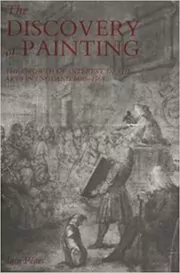
The Discovery of Painting
by Iain Pears
1988
An accessible study of how painting moved from elite pastime to national obsession in England between 1680 and 1768, tracing collectors, dealers, patrons, and early galleries as a new public appetite for art slowly takes shape.
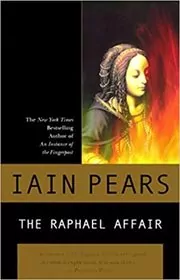
The Raphael Affair
by Iain Pears
1990
Young British art historian Jonathan Argyll follows a hunch about a lost Raphael in a shabby Roman church. When the supposed masterpiece is sold, burned, and linked to murder, he joins Italy's art theft squad to uncover the truth.
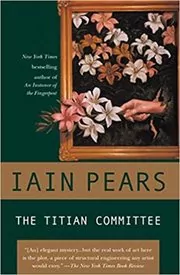
The Titian Committee
by Iain Pears
1991
Called to Venice after a Titian scholar is found murdered in a public garden, Flavia di Stefano and Jonathan Argyll probe rivalries on an international research committee, uncovering jealousies, forgeries, and a missing portrait worth killing for.
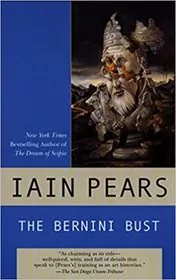
The Bernini Bust
by Iain Pears
1992
Sent to Los Angeles to finalize the sale of a Titian, Jonathan Argyll walks into chaos when the museum's owner is shot and a smuggled Bernini bust vanishes. Soon he needs Flavia's help just to stay alive.
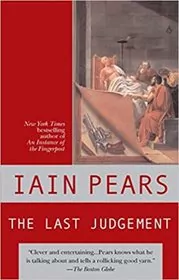
The Last Judgement
by Iain Pears
1993
Asked to courier a seemingly dull French painting from Paris to Rome, Jonathan Argyll instead finds the buyer murdered and the canvas reported stolen. Tracing its shadowy wartime history, he and Flavia expose old betrayals with deadly consequences.
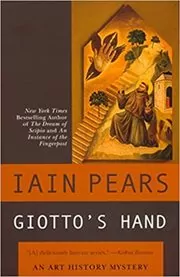
Giotto's Hand
by Iain Pears
1995
A dying woman's confession points Rome's art theft squad toward a legendary criminal known as Giotto. When Jonathan Argyll finds their prime suspect dead in England, he and Flavia must untangle decades of thefts before Bottando is forced out.
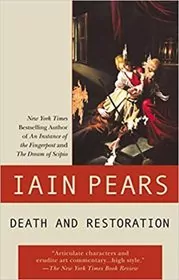
Death and Restoration
by Iain Pears
1996
An anonymous warning about a raid on a Roman monastery sends Flavia di Stefano and Jonathan Argyll chasing thieves, forgers, and a volatile restorer. When a venerated icon disappears, they uncover tangled church politics and a relic with a perilous history.
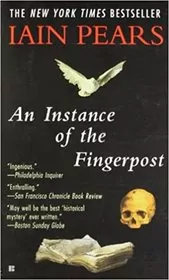
An Instance of the Fingerpost
by Iain Pears
1997
In 1660s Oxford, a scholar is found dead and a servant girl is accused of murder. Four very different witnesses each retell the crime, revealing clashing motives, secret politics, and a twisting search for truth in a world on the brink of modern science.
Recommended by
1 person Donald Knuth recommended this book
Donald Knuth
"Also Oxford but in the 1660s." - Donald Knuth
Donald Knuth's recommendation of this book
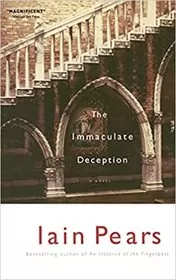
The Immaculate Deception
by Iain Pears
2000
Newly promoted to lead Italy's art theft squad, Flavia di Stefano must recover a stolen masterpiece on loan for a high-profile exhibition, quietly and without paying ransom. As Jonathan traces the murky past of a small devotional painting, their cases collide in murder and buried scandal.
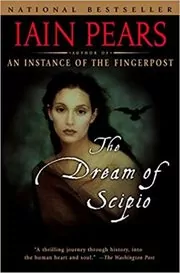
The Dream of Scipio
by Iain Pears
2002
Set in Provence during the fall of Rome, the Black Death, and World War II, this novel follows three intellectuals bound by a single philosophical text and their love for extraordinary women, asking what can be saved when civilization seems to be ending.
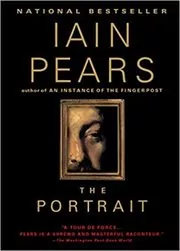
The Portrait
by Iain Pears
2004
On a windswept island off Brittany, reclusive painter Henry MacAlpine welcomes an old friend, the powerful critic who once shaped his career. As he paints and talks, a lifetime of favors, betrayals, and simmering resentment builds toward a quiet act of revenge.
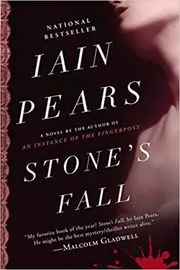
Stone's Fall
by Iain Pears
2009
After financier John Stone falls to his death in 1909 London, a young journalist is hired to uncover how and why it happened. His search moves backward through Paris and Venice, exposing tangled loves, arms deals, and the ruthless power of money.

Arcadia
by Iain Pears
2015
In Cold War Oxford, former spy Henry Lytten is quietly drafting a fantasy world when his young neighbor Rosie slips through a doorway into that imagined landscape. Meanwhile, in a tightly controlled future city, a brilliant scientist's time-bending experiment threatens all their realities.

Parallel Lives
by Iain Pears
2025
This work of nonfiction traces the intertwined lives of art historians Francis Haskell and Larissa Salmina, from her survival of wartime Leningrad and rise in Soviet cultural circles to their unlikely Cold War romance and shared life inside Europe's fading intellectual world.
Where to start with Iain Pears
If you want a single defining novel: An Instance of the Fingerpost.
If you enjoy art-soaked crime stories: The Raphael Affair → The Titian Committee → The Bernini Bust.
If you prefer thoughtful historical epics: The Dream of Scipio → Stone's Fall.
If you like inventive speculative fiction: Arcadia.
If you are curious about his art-historical roots: The Discovery of Painting → Parallel Lives.
Iain Pears sub-series and character series
Iain Pears collections, short stories, and related book types
Non-Fiction
Standalone Iain Pears books
Author bio
Iain Pears was born in Coventry, England, in 1955 and grew up in the nearby city of Warwick. At school he was drawn to history and art in roughly equal measure, an interest that quietly set the course for his career.
He studied at Wadham College, Oxford, and went on to complete a doctorate at Wolfson College, focusing on the history of art. At Oxford he worked with influential scholar Francis Haskell, whose mix of archival digging and big, human stories left a lasting mark.
Before turning to fiction, Pears spent much of the 1980s as a working journalist. He reported for the BBC, Channel 4, and the German broadcaster ZDF, and served as a correspondent for Reuters in Italy, France, the United Kingdom, and the United States. In 1987 he spent a year at Yale University as a Getty fellow, deepening his research into art and its institutions.
Alongside this reporting life he built a parallel career as an art historian. His early book The Discovery of Painting looks at how eighteenth century Britain learned to value art, from private collectors and dealers to the first stirrings of a public museum culture. That mix of close research, clear storytelling, and an eye for odd corners of the past runs through his later fiction.
Pears began publishing crime novels in 1990 with The Raphael Affair, the first book about slightly hapless art dealer Jonathan Argyll and sharp, determined investigator Flavia di Stefano of Italy's art theft squad. Over seven novels he used their cases to explore stolen paintings, forged provenances, and the ways politics, money, and taste all tug on the art world.
His reputation widened sharply with An Instance of the Fingerpost, a large historical mystery set in 1660s Oxford and told by four unreliable narrators. The book folds together the birth of modern science, Restoration intrigue, religious conflict, and a single suspicious death, showing how the same events can look utterly different from another angle.
He kept playing with structure in later novels. The Dream of Scipio braids together three stories set in Provence during the fall of Rome, the Black Death, and the Second World War. Stone's Fall works backwards in time, unpacking the life and death of a powerful financier across London, Paris, and Venice. With Arcadia he pushed further, building a story that moves between Cold War Britain, a pastoral fantasy realm, and a distant future, and releasing it both as a conventional book and as an app that lets readers choose their route through the plot.
Alongside fiction, Pears has returned to real historical figures. Parallel Lives follows the intertwined lives of art historians Francis Haskell and Larissa Salmina, turning their Cold War love story into a portrait of European cultural life in the later twentieth century.
Pears married historian Ruth Harris in 1985, and they have two sons. He lives in Oxford, where the worlds of scholarship, old buildings, and everyday city life continue to feed the kinds of stories he likes best: ones where ideas, objects, and flawed human beings all jostle for space.








Edited by
Software engineer whose passion for tracking book recommendations from podcasts inspired the creation of MRB.
Lead investor at 3one4 Capital whose startup expertise and love for books helped shape MRB and its growth.
Comments
Did we miss something? Have feedback?
Help us improve this page by sharing your thoughts