
Iain M Banks Books in Order
Browse all Iain M Banks books in order, with reading guides, Culture and non‑Culture summaries, series background and tips on the best place to start.
Last updated:
As an Amazon Associate, we earn from qualifying purchases (at no extra cost to you).
Iain M Banks books in publication order
31 books
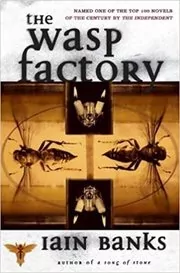
The Wasp Factory
by Iain M Banks
1984
On a remote Scottish island, teenage Frank Cauldhame fills his days with strange rituals, makeshift weapons and cruel pranks. As his unstable brother escapes from a psychiatric hospital, buried family secrets and the truth behind Frank’s past begin to surface.
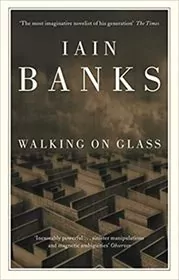
Walking on Glass
by Iain M Banks
1985
In contemporary London, shy Graham pines after the mysterious Sara, while roadmender Steven is convinced he’s an exiled space admiral and reads science fiction for clues. Far away, two war criminals must solve an impossible riddle in a bizarre castle. Their seemingly separate stories slowly twist together.
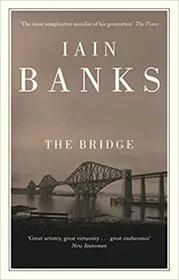
The Bridge
by Iain M Banks
1986
After a car crash on the Forth Road Bridge, a man wakes with no memory on an endless, dreamlike bridge‑city. As doctors and strange companions probe his mind, his fractured identities fight over whether to stay in this surreal refuge or return to a damaged real life.
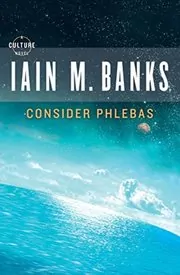
Consider Phlebas
by Iain M Banks
1987
Shape‑shifting mercenary Bora Horza Gobuchul is hired by the fanatical Idiran Empire to recover a runaway Culture Mind hidden on a forbidden planet. His hunt drags him through heists, cults and a doomed orbital as a brutal interstellar war rages in the background.
Recommended by
2 people Max Levchin recommended this book
Max Levchin
Max Levchin recommended this book on LinkedIn.
Max Levchin's recommendation of this book  PewDiePie recommended this book
PewDiePie
"Overall just a fun space adventure." - PewDiePie
PewDiePie's recommendation of this book

Espedair Street
by Iain M Banks
1987
Dan “Weird” Weir looks back on his rise from Paisley housing‑scheme kid to bass player and songwriter in a massively successful rock band. Hiding in a crumbling Glasgow folly, he replays the excess, tragedies and friendships that fame brought him, and wonders if there’s still time to make amends.
The Player of Games
by Iain M Banks
1988
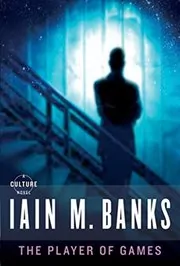
Jernau Morat Gurgeh, a bored master of strategy games, is recruited by the Culture to play Azad, a vast game that decides rank and power in a distant empire. As he advances through its vicious tournament, Gurgeh realises the stakes involve far more than winning a title.
Recommended by
2 people Mark Zuckerberg recommended this book
Mark Zuckerberg
"A science fiction book about an advanced civilization with AI and a vibrant culture." - Mark Zuckerberg
Mark Zuckerberg's recommendation of this book  Lex Fridman recommended this book
Lex Fridman
Lex Fridman mentioned this book on Instagram.
Lex Fridman's recommendation of this book
Canal Dreams
by Iain M Banks
1989
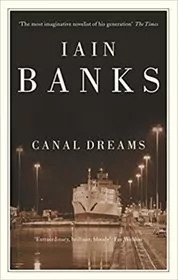
Japanese cellist Hisako Onoda, terrified of flying, takes a supertanker through the Panama Canal on her way to a concert. When political violence traps the ship on a remote lake and armed attackers seize control, her quiet, haunted retreat turns into a brutal fight for survival and revenge.
The State of the Art
by Iain M Banks
1989
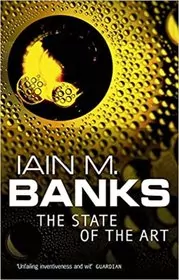
In the title novella, a Culture ship covertly surveys Earth in 1977 while its crew argue over whether humanity should be contacted, helped or left alone. The collection also gathers other short tales, some set in the Culture, some not, that showcase Banks’s weirder, sharper edges in miniature.
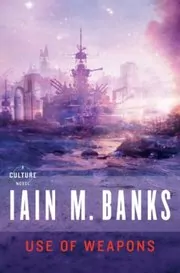
Use of Weapons
by Iain M Banks
1990
Cheradenine Zakalwe is a brilliant, damaged soldier hired again and again by the Culture’s Special Circumstances to tilt wars in their favour. Told in interlocking timelines, the novel follows brutal campaigns and the buried childhood trauma that shapes how he chooses—and misuses—his weapons.
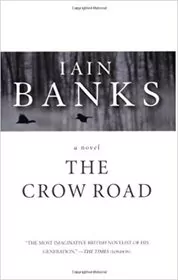
The Crow Road
by Iain M Banks
1992
Prentice McHoan juggles university life, drink, unrequited love and arguments about God while obsessing over his vanished uncle Rory. Shifting through time and viewpoint, this Scottish family saga blends dark humour and mystery as Prentice pieces together what really happened and what growing up is going to cost him.
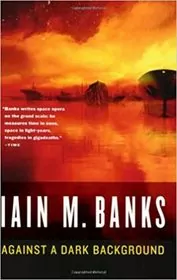
Against a Dark Background
by Iain M Banks
1993
Lady Sharrow, former combat pilot and relic thief, learns a fanatical cult has a legal licence to hunt her for a year. To buy them off she must track down the last legendary Lazy Gun, an ancient, capricious super‑weapon, leading her crew across a quirky, dangerous planetary system and into her family’s past.
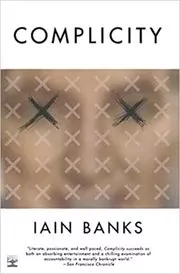
Complicity
by Iain M Banks
1993
Edinburgh journalist Cameron Colley makes a career exposing powerful people’s corruption, then discovers someone is murdering his targets in ways that echo his own fantasies. As the police close in, Cameron must work out who is orchestrating the killings and how deep his own complicity really runs.
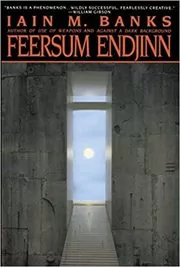
Feersum Endjinn
by Iain M Banks
1994
On a far‑future Earth threatened by a vast cosmic cloud, power struggles play out inside a decaying mega‑castle and a chaotic virtual realm called the crypt. A dead count, a rebel scientist, an odd young ‘teller’ and a mysterious girl each hold pieces of the plan that might save the planet.
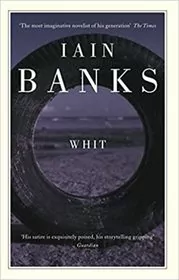
Whit
by Iain M Banks
1995
Isis Whit is the devout teenage heir of a small Scottish religious cult that shuns most modern life. When her wayward cousin goes missing before an important ceremony, Isis is sent out into the wider world, where encounters with cities, technology and buried family truths quietly dismantle her certainty.
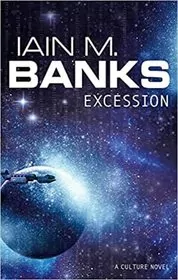
Excession
by Iain M Banks
1996
When an impossibly ancient, inscrutable artifact appears at the edge of Culture space, the galaxy’s most powerful Minds scramble to understand or control it. Amid their secretive manoeuvres, human diplomat Byr Genar‑Hofoen is dragged into a conspiracy involving a brutally expansionist alien race.
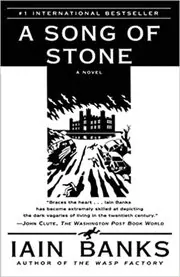
A Song of Stone
by Iain M Banks
1997
Fleeing a nameless civil war, aristocrat Abel and his lover Morgan are captured by a ruthless female lieutenant and forced back into their looted castle. Over a few days of siege, shifting alliances and erotic power games, Abel narrates the slow destruction of his world and of any illusions about honour.
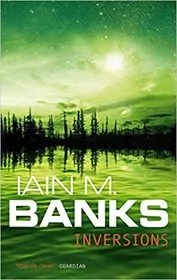
Inversions
by Iain M Banks
1998
On a war‑torn, vaguely medieval world, two outsiders take very different roles: a mysterious female doctor at one royal court and a bodyguard to a revolutionary ruler elsewhere. Through intertwined stories and rumours, hints emerge that both may be agents from a far more advanced civilisation.
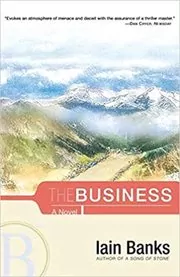
The Business
by Iain M Banks
1999
Kate Telman is a high‑ranking executive in the Business, a secretive corporation older than many nations. Investigating suspicious accounting and a plan to buy a tiny Himalayan kingdom, she uncovers internal betrayals and must decide how far her loyalty extends—to the company, to its new ‘acquisition’, or to herself.
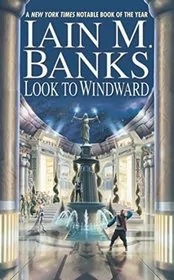
Look to Windward
by Iain M Banks
2000
Major Quilan, a grief‑stricken alien veteran, travels to the Culture’s lush orbital Masaq’ on what seems like a diplomatic mission to a reclusive composer. Unbeknown to most of the inhabitants, his real purpose is tied to an old war and a quiet plan for spectacular revenge.
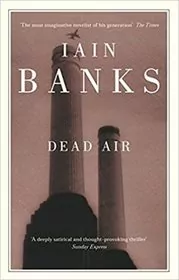
Dead Air
by Iain M Banks
2002
Ken Nott, a provocative left‑wing radio DJ in post‑9/11 London, thrives on on‑air rants and late‑night parties. An affair with a crime boss’s wife and one careless voicemail drag him into a world of surveillance, blackmail and sudden violence that even he can’t talk his way out of.
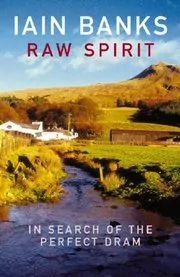
Raw Spirit
by Iain M Banks
2003
In this nonfiction road trip, Banks drives across Scotland in search of the perfect single malt whisky. Between distillery visits he talks about roads, cars, music, politics and friendship, offering a relaxed, sideways look at his own life and the country that shaped his fiction.
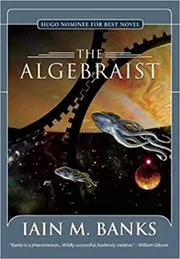
The Algebraist
by Iain M Banks
2004
In a distant future ruled by the rigid Mercatoria, archivist Fassin Taak studies the secretive, long‑lived Dwellers inside a gas giant. When hints of a hidden wormhole network emerge and a fanatical fleet closes in, Fassin’s race to decode the Dwellers’ clues could change the balance of power in the galaxy.
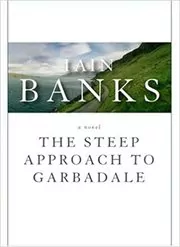
The Steep Approach to Garbadale
by Iain M Banks
2005
Alban McGill returns to his eccentric Highland family as they debate selling their board‑game empire to an American corporation. Haunted by his mother’s death and an unresolved love for his cousin Sophie, Alban digs into old secrets while deciding whether to help the sale or sabotage it.
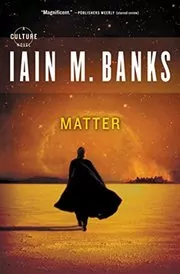
Matter
by Iain M Banks
2008
On the vast artificial ‘shellworld’ of Sursamen, three royal siblings are scattered across layers of civilisation after their father is murdered. As one brother flees into exile and another navigates court intrigue, their sister—now an agent of the Culture—returns home, forcing a clash between feudal politics and galactic power.
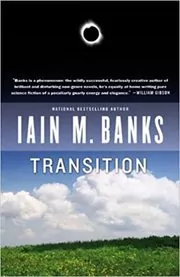
Transition
by Iain M Banks
2009
Across countless parallel worlds, the Concern moves covert agents between bodies to ‘improve’ history as it sees fit. One assassin begins to question his orders, a City trader grows entangled in the organisation’s schemes, and a hidden patient narrates how a struggle for control of reality itself is unfolding.
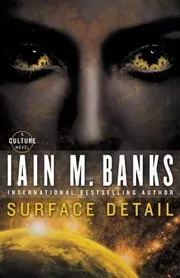
Surface Detail
by Iain M Banks
2010
Lededje Y’breq, an indentured servant whose body is literally marked with her owner’s power, is murdered and secretly revived by the Culture. Her quest for revenge intersects with a shadow war over virtual Hells—simulated afterlives where some societies condemn their dead to eternal torment.
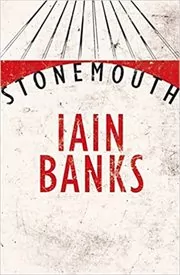
Stonemouth
by Iain M Banks
2012
After five years in exile, Stewart Gilmour returns to his foggy home town for the funeral of a crime‑family patriarch. Promised a fragile truce, he revisits old friends, past mistakes and a broken engagement, only to find the town’s grudges and secrets are more dangerous than ever.
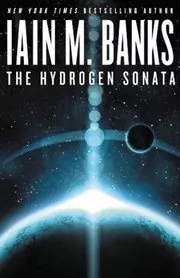
The Hydrogen Sonata
by Iain M Banks
2012
As the ancient Gzilt civilisation prepares to ‘Sublime’ and leave the material universe, musician and soldier Vyr Cossont is pulled into a last‑minute hunt for a buried truth about their past. Meanwhile Culture ships argue, scheme and improvise their way through the political fallout.
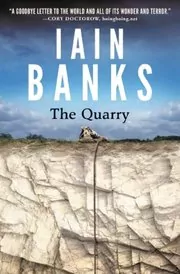
The Quarry
by Iain M Banks
2013
Teenager Kit lives with his terminally ill, sharp‑tongued father in a crumbling house beside a quarry. When Guy’s old university friends gather for a last weekend and an incriminating lost video surfaces, Kit pieces together the truths they’ve been avoiding about loyalty, regret and the end of a life.
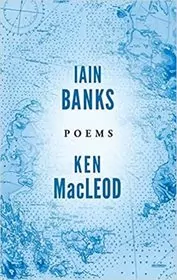
Poems
by Iain M Banks
2015
This posthumous collection gathers poetry by Iain Banks, edited and introduced by his friend Ken MacLeod. The poems range from youthful experiments to later pieces, mixing politics, myth, science fiction imagery and sharp personal observation in a raw, sometimes playful voice.

The Culture: The Drawings
by Iain M Banks
2023
This art book presents Banks’s own sketches and diagrams of the Culture universe, reproduced from his working notebooks. Detailed drawings of ships, habitats, drones and symbols give fans a behind‑the‑scenes look at how he imagined the series’ technology and worlds.
Where to start with Iain M Banks
If you’re new to the Culture: The Player of Games → Use of Weapons → Consider Phlebas
If you want standalone space epics: The Algebraist → Against a Dark Background → Feersum Endjinn
If you prefer contemporary Scottish fiction: The Crow Road → Whit → Stonemouth → The Quarry
If you like darker, more unsettling stories: The Wasp Factory → Complicity → A Song of Stone
If you’re sampling his later work: Look to Windward → Matter → Surface Detail → The Hydrogen Sonata
Iain M Banks sub-series and character series
Iain M Banks collections, short stories, and related book types
Collections
Non-Fiction
Standalone Iain M Banks books
Author bio
Iain M. Banks grew up finding stories in both the everyday and the wildly speculative, and he never felt a need to choose between them. As Iain Banks he wrote dark, contemporary novels set close to home; as Iain M. Banks he built vast, playful space operas about the far future.
He was born in Dunfermline, Fife, in 1954, the only child of a professional ice‑skater and a Royal Navy Admiralty officer. The family lived first in North Queensferry, under the gaze of the Forth bridges, then moved to Gourock, where he devoured science‑fiction paperbacks and began writing stories in his teens. He later studied English, philosophy and psychology at the University of Stirling.
After graduating he treated writing as a long apprenticeship, taking whatever day jobs left time and headspace for fiction. Office work, factory shifts and technical posts in industry paid the rent while he drafted novels at night and hitch‑hiked through Europe and North America, storing up places and arguments for later.
That patience paid off when The Wasp Factory appeared in 1984, its mix of grotesque humour and isolated Scottish setting giving him enough success to write full‑time.
His first published science‑fiction novel, Consider Phlebas, followed in 1987 and launched the Culture, a sprawling, post‑scarcity society loosely run by benevolent artificial intelligences called Minds. Later books like The Player of Games, Use of Weapons and Excession returned to this universe, usually following misfits, spies and diplomats working at its messy edges rather than its hedonistic core. His final Culture novel, The Hydrogen Sonata, circles a civilisation on the verge of leaving the material universe altogether.
On the mainstream side he kept returning to Scotland, whether in the remote island horror of The Wasp Factory, the bittersweet family mystery of The Crow Road or the journalistic guilt and violence of Complicity. He enjoyed structurally playful books like Walking on Glass and The Bridge, where multiple realities and voices overlap, and character‑driven tales such as Whit and Stonemouth, all rooted in tangible places even when the plots turn extreme. He also wandered happily into stranger territory with the far‑future puzzle of Feersum Endjinn, the standalone space opera The Algebraist, the many‑worlds thriller Transition and Raw Spirit, a memoir‑like tour of Scotland’s whisky, roads and politics.
Banks was outspoken in public life: a lifelong atheist, supporter of Scottish independence and critic of war and authoritarianism who was willing to turn up at protests, cut up his passport over Iraq and argue politics on the page as well as off it.
For much of his adult life he lived near the Firth of Forth again, sharing his home with his partner, and later wife, Adele Hartley. In 2013 he announced that he had terminal gallbladder cancer, married Adele with the black joke that he was asking her to become his widow, and saw his final novel The Quarry through to publication shortly before his death that June. Posthumous works such as the poetry collection Poems and The Culture: The Drawings—a volume of his own sketches from the Culture notebooks—have underlined just how much craft sat behind the exuberance, and readers still return to his books to argue about politics, grieve a little and enjoy the sheer fun of his invented worlds.



Edited by
Software engineer whose passion for tracking book recommendations from podcasts inspired the creation of MRB.
Lead investor at 3one4 Capital whose startup expertise and love for books helped shape MRB and its growth.
Comments
Did we miss something? Have feedback?
Help us improve this page by sharing your thoughts