
Fred Hoyle Books in Order
Explore Fred Hoyle books in publication order, with short summaries and series lists to help you compare titles and choose your next book to read.
Last updated: 39 new books added
As an Amazon Associate, we earn from qualifying purchases (at no extra cost to you).
Fred Hoyle books in publication order
39 books
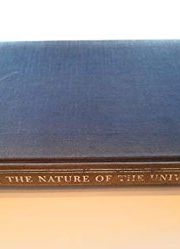
The Nature of the Universe
by Fred Hoyle
1950
Adapted from radio lectures, Fred Hoyle introduces astronomy and the nature of the universe to a general audience. The book preserves his mid-century account of cosmic questions and includes an early use of the term big bang.
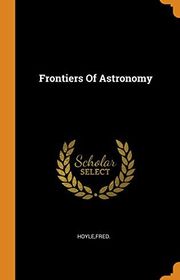
Frontiers of Astronomy
by Fred Hoyle
1955
Hoyle introduces the physical discoveries reshaping astronomy, moving from Earth and the solar system to stars and distant galaxies. His account connects atomic processes with cosmic questions, including the steady-state interpretation of the universe’s history.
The Black Cloud
by Fred Hoyle
1959
Astronomers discover an enormous black cloud moving toward the solar system, threatening to block the sunlight Earth needs to survive. A team of scientists searches for a response as the cloud’s nature challenges their understanding of life.
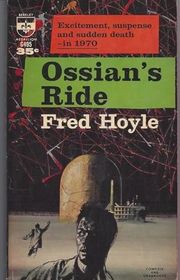
Ossian's Ride
by Fred Hoyle
1961
A secretive corporation in southern Ireland astonishes the world with its industrial achievements and ruthlessness. Thomas Sherwood is sent to investigate, but penetrating its defenses means risking his life to uncover the truth behind its seemingly impossible success.
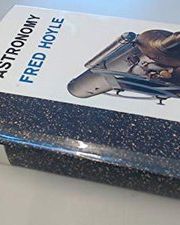
Astronomy
by Fred Hoyle
1962
An illustrated introduction follows astronomy from early observations of time and the seasons to modern investigations of stars and galaxies. Hoyle explains the physical principles and observational methods through which people have built their changing picture of the universe.
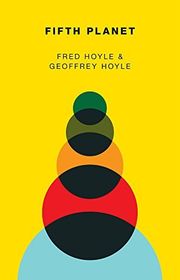
Fifth Planet
by Fred Hoyle
1963
As a wandering planetary system approaches Earth, rival American and Soviet expeditions race to explore Achilles, a world that may support life. Their discoveries become increasingly troubling, raising questions about what the crews might bring home with them.
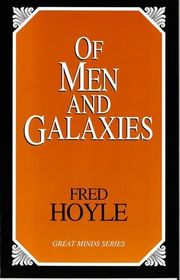
Of Men and Galaxies
by Fred Hoyle
1964
In lectures delivered in 1964, Fred Hoyle considers science, life on Earth, and humanity's future from an astronomical perspective. His speculations range from intelligent extraterrestrial civilizations and interstellar communication to the challenges of nuclear danger and population growth.
October the First Is Too Late
by Fred Hoyle
1966
After scientist John Sinclair vanishes during a trip, his friend Richard notices an unexplained physical change. Stranger disruptions follow as different parts of Earth begin existing in different historical periods, forcing the two men to investigate time itself.
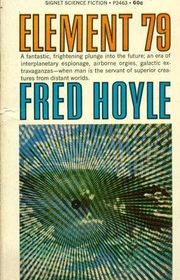
Element 79
by Fred Hoyle
1967
Fred Hoyle's speculative stories imagine a future in which humanity faces manipulation, domination, and possible extinction. Encounters with Martians and other nonhuman forces turn questions about human survival and independence into unsettling scenarios beyond familiar earthly experience.
Rockets in Ursa Major
by Fred Hoyle
1969
A spacecraft thought lost returns to Earth after thirty years, carrying no crew and a warning of terrible danger. As scientists investigate its journey, humanity finds itself drawn into a conflict with an overwhelmingly powerful alien force.
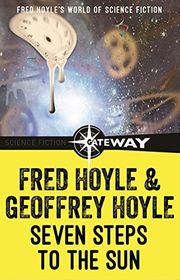
Seven Steps to the Sun
by Fred Hoyle
1970
Television writer Mike Jerome hears a physicist’s idea for sending people into the future, then survives an accident to find ten years have passed. Further jumps carry him through unfamiliar societies as he searches for a familiar friend.
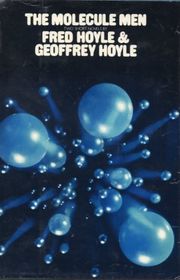
The Molecule Men
by Fred Hoyle
1971
Two science fiction novellas follow investigations into transformations and strange physical phenomena. A Cambridge investigator confronts an impossible courtroom escape, while another scientist explores the unexplained warming of Loch Ness and the mystery beneath its waters.
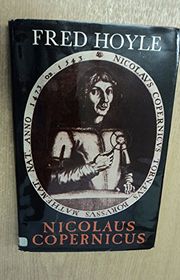
Nicolaus Copernicus
by Fred Hoyle
1973
Hoyle examines Copernicus’s life and the astronomical problems surrounding his model of the solar system. Placing the heliocentric theory in its historical setting, he considers the reasoning behind it and its implications for later scientific understanding.
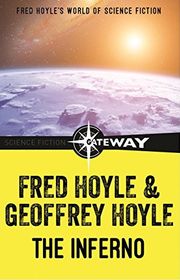
The Inferno
by Fred Hoyle
1973
A Scottish physicist spots a disturbing new object in the sky and recognizes an approaching catastrophe. Returning home, Cameron must help survivors face extreme heat, darkness and relentless rain as the familiar structures of society begin to collapse.
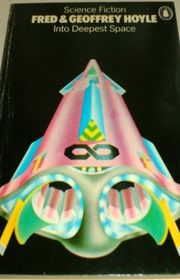
Into Deepest Space
by Fred Hoyle
1974
Three years after humanity repelled an alien attack, a vast hydrogen cloud approaches Earth and revives the threat. Dick Warboys and his extraterrestrial allies embark on a dangerous journey to discover whether the planet can still be saved.
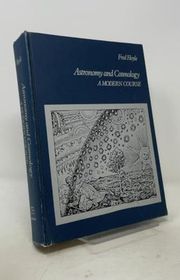
Astronomy and Cosmology
by Fred Hoyle
1975
Hoyle connects astronomical observation with the physical principles used to interpret the universe. His illustrated account ranges from stars and galaxies to the history of matter, planetary formation and the questions surrounding the origin of life.
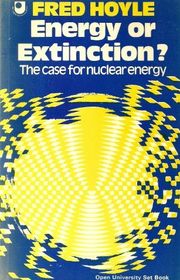
Energy or Extinction?
by Fred Hoyle
1977
Hoyle argues that modern society needs energy supplies on a scale that he believes only nuclear fission can provide. He explains the scientific background to his case and challenges the alternatives proposed in the energy debate of his time.
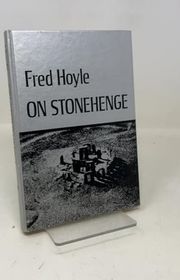
On Stonehenge
by Fred Hoyle
1977
Hoyle explores the construction and astronomical significance of Stonehenge, developing an argument that its arrangement could help predict eclipses. The investigation connects the monument’s stones with practical methods of observing and calculating the movements of celestial bodies.
Ten Faces of the Universe
by Fred Hoyle
1977
Ten perspectives on the universe bring astronomical questions into contact with broader ideas about human understanding. Beginning with religious belief and the concept of God, Hoyle considers different ways of interpreting the cosmos and our place within it.
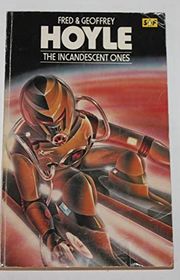
The Incandescent Ones
by Fred Hoyle
1977
A cryptic message leads Moscow art student Peter to buy two books, but a mysterious third volume arrives with them. Its contents draw him into a search involving a hidden power shaping Earth’s future and his father’s disappearance.
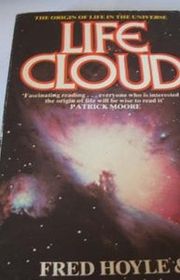
Lifecloud
by Fred Hoyle
1978
Hoyle and Chandra Wickramasinghe propose that life’s origins extend beyond Earth, linking interstellar dust, organic molecules and comets. Their argument explores how material moving through space might seed living worlds and reshape the search for extraterrestrial life.
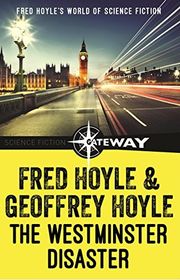
The Westminster Disaster
by Fred Hoyle
1978
A shortage of high-grade uranium intensifies international tensions as the Soviet Union threatens London with nuclear blackmail. A British diplomatic confrontation over sanctions against South Africa turns that threat into a crisis with devastating consequences.
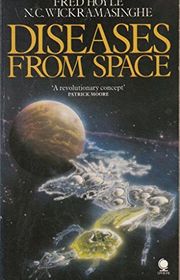
Diseases From Space
by Fred Hoyle
1979
Hoyle and Chandra Wickramasinghe propose an extraterrestrial explanation for some infectious diseases. Examining epidemics through their wider theory of life in space, they argue that microorganisms arriving from beyond Earth could influence the spread of illness.
Commonsense in Nuclear Energy
by Fred Hoyle
1980
Written amid an energy crisis, this book argues for nuclear fission as an alternative to existing primary fuels. The authors distinguish power generation from nuclear weapons and address objections concerning safety, environmental effects and the storage of radioactive waste.
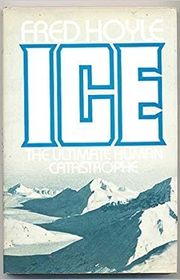
Ice
by Fred Hoyle
1981
Hoyle examines the causes and consequences of ice ages, presenting his own explanation for severe global cooling. His argument considers how another glaciation might develop, the threat it would pose to humanity and whether intervention could prevent it.
Evolution from Space and Other Papers on the Origin of Life
by Fred Hoyle
1982
The Omni lecture and two related papers present Hoyle’s arguments about the origin of life and its relationship to astronomy. One contribution, written with Chandra Wickramasinghe, develops their shared exploration of biological questions in a cosmic setting.
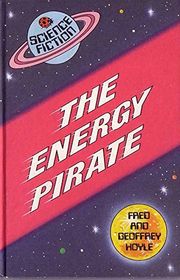
The Energy Pirate
by Fred Hoyle
1982
When Earth’s sugar vanishes to fuel distant planets, Professor Gamma follows the theft into space. Traveling along the universe’s energy pathways, he must recover the stolen supplies and stop an interplanetary scheme that threatens his home world.
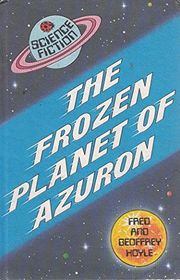
The Frozen Planet Of Azuron
by Fred Hoyle
1982
An increasingly severe winter convinces Professor Gamma that Earth’s falling temperatures are no natural accident. His search for the person responsible takes him to a distant frozen planet, where uncovering the cause means facing a powerful opponent.
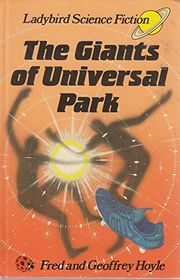
The Giants of Universal Park
by Fred Hoyle
1982
The theft of Earth’s sun draws Professor Gamma into crimes driven by business interests among the stars. Recovering it leads to an extraordinary football match, where a familiar game becomes part of a much larger cosmic struggle.
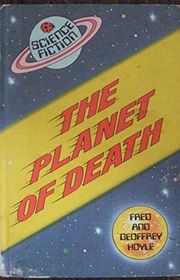
The Planet Of Death
by Fred Hoyle
1982
A deadly infection spreads across Earth, sending Professor Gamma, his daughter Kiryl, and their friend William in search of a cure. Their journey to the Planet of Death brings them face to face with the dangers behind the epidemic.
The Intelligent Universe
by Fred Hoyle
1983
Hoyle questions conventional accounts of evolution and the origin of life, arguing that the universe reflects an organizing intelligence. Astronomical observations and biological arguments become parts of his case for a deliberate plan behind the emergence of living things.
From Grains to Bacteria
by Fred Hoyle
1984
Hoyle and Chandra Wickramasinghe trace their investigation of interstellar grains toward a proposed connection with microorganisms. Their account brings together scientific papers and discussion of competing dust models to explain why they came to favour a biological interpretation.
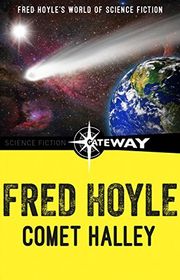
Comet Halley
by Fred Hoyle
1985
At Cambridge, Professor Isaac Newton investigates strange signals that a research student believes come from a comet. The student’s death and intense interest from rival governments deepen the mystery as Comet Halley approaches with intentions of its own.
Viruses from Space and Related Matters
by Fred Hoyle
1986
Hoyle and Chandra Wickramasinghe develop their theory that microorganisms from space can influence disease on Earth. New and previously published essays connect astronomical questions with proposed explanations for epidemics affecting plants, animals and human populations.
The Origin of the Universe and the Origin of Religion
by Fred Hoyle
1993
Hoyle connects questions about the universe’s beginnings with the development of religious belief. His argument explores whether cometary events could have influenced historical upheavals and the stories preserved in biblical, Greek and Roman traditions.
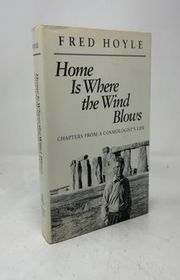
Home is Where the Wind Blows
by Fred Hoyle
1994
Hoyle recounts his life and work as a mathematician, physicist, astronomer and cosmologist. His autobiography presents the experiences and independent thinking behind a scientific career marked by major contributions and a willingness to challenge accepted explanations of the universe.
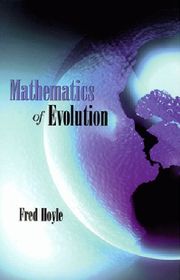
Mathematics of Evolution
by Fred Hoyle
1999
Hoyle applies mathematical reasoning to the processes invoked in evolutionary theory, questioning conventional explanations of biological change. His analysis examines whether mutation and natural selection can account for the development of living organisms as generally understood.
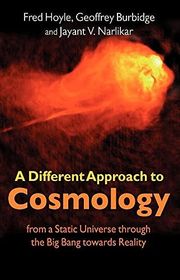
A Different Approach to Cosmology
by Fred Hoyle
2000
Hoyle, Geoffrey Burbidge and Jayant Narlikar review modern cosmology and the observations used to support it. Challenging standard interpretations of the Big Bang, they develop an alternative account rooted in steady-state and quasi-steady-state models of the universe.
Galaxies, Nuclei, and Quasars
by Fred Hoyle
Hoyle examines galaxies, their active nuclei and quasars as clues to the nature of cosmic matter. Radio sources, high-energy radiation and galaxy formation become central to his discussion of competing explanations for the universe’s structure and history.
Standalone Fred Hoyle books




A Different Approach to Cosmology
by Fred Hoyle
2000From a Static Universe through the Big Bang towards Reality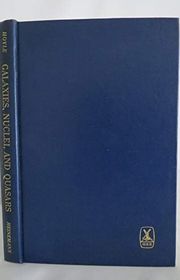










Edited by
Software engineer whose passion for tracking book recommendations from podcasts inspired the creation of MRB.
Lead investor at 3one4 Capital whose startup expertise and love for books helped shape MRB and its growth.
Comments
Spotted a missing book, a wrong order or a mistake? Tell us and we'll fix this page.
We're a reading guide, not the author or publisher, so we can't send books or pass on messages.