
Life of Fred Books in Order
Explore Stanley F. Schmidt's Life of Fred books in order, with summaries and a starting guide to Fred's story-based elementary and intermediate math.
Last updated:
As an Amazon Associate, we earn from qualifying purchases (at no extra cost to you).
Life of Fred books in publication order
13 books

Apples
by Stanley F. Schmidt
2011
Fred Gauss's daily adventures introduce the earliest elementary mathematics in this first volume. Short chapters connect counting, simple addition, clocks, basic shapes, and sets with a continuing story, followed by questions for readers to solve.

Butterflies
by Stanley F. Schmidt
2011
The second elementary volume follows Fred Gauss through further everyday mathematical problems. Lessons introduce counting by twos, addition facts, clocks, feet and yards, whole numbers, and perpendicular lines, with brief exercises attached to the story.

Cats
by Stanley F. Schmidt
2011
In the third elementary volume, Fred's adventures connect arithmetic with subjects ranging from astronomy to music. Counting patterns, money, right angles, and vertical addition appear in short story chapters followed by questions for independent practice.

Dogs
by Stanley F. Schmidt
2011
Fred's continuing adventures provide a setting for multi-digit addition and carrying in the fourth elementary volume. Readers also encounter functions, numerical patterns, bar graphs, doubles, and even numbers through narrative lessons and short written exercises.

Edgewood
by Stanley F. Schmidt
2012
Fred travels toward Edgewood, Kentucky, in the fifth elementary volume. His experiences introduce parallel and concurrent lines, quadrilaterals, median averages, functions, bar graphs, and addition with carrying, alongside short exercises tied to the unfolding story.

Farming
by Stanley F. Schmidt
2012
The sixth elementary volume continues Fred's mathematical adventures with addition, subtraction involving borrowing, percentages, and money. Sets, median averages, and the domains and codomains of functions also appear through story chapters and accompanying practice questions.

Goldfish
by Stanley F. Schmidt
2012
Fred's seventh elementary adventure introduces scale drawings, the area of rectangles, and the volume of a tank. Decimal points, estimated sums, metric measurements, and multiplying by powers of ten develop through narrative lessons and exercises.

Honey
by Stanley F. Schmidt
2012
The eighth elementary volume connects Fred's daily experiences with multiplication facts, division, and remainders. Lessons also explore fractions, exponents, distance and speed, and geometric shapes, while homemade Honey Cards provide practice with basic arithmetic facts.

Ice Cream
by Stanley F. Schmidt
2012
In the ninth elementary volume, Fred's adventures introduce multiplication with two-digit numbers and coordinate graphs. Ordered pairs, slopes, area, perimeter, telling time, and counting change appear in narrative lessons followed by short questions for practice.

Jelly Beans
by Stanley F. Schmidt
2012
The tenth elementary volume follows Fred through lessons involving fractions, decimal addition, and probability. Readers also encounter Fibonacci numbers, primes, set intersections, averages, volume, and pie charts, with exercises that apply ideas arising in the story.

Kidneys
by Stanley F. Schmidt
2013
Beginning the intermediate sequence, Fred's adventures turn mathematical ideas into word problems involving measurements and quantities. Grams, ounces, milliliters, volume, perimeter, functions, and sequences appear alongside brief introductions to concepts developed in later mathematics courses.
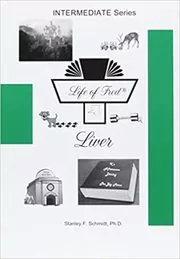
Liver
by Stanley F. Schmidt
2013
The second intermediate volume uses Fred's story to develop fractions, percentages, and short division. Worked examples accompany topics including averages, simple algebraic equations, triangle angles, the Pythagorean theorem, and time, with questions for readers to solve.
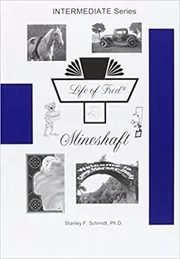
Mineshaft
by Stanley F. Schmidt
2013
The third intermediate volume continues Fred's mathematical adventures with rounding, fractions of quantities, and percentage discounts. Exponents, inverse operations, measurement units, temperature conversions, and geometry appear in story chapters with exercises linking concepts to practical situations.











Edited by
Software engineer whose passion for tracking book recommendations from podcasts inspired the creation of MRB.
Lead investor at 3one4 Capital whose startup expertise and love for books helped shape MRB and its growth.
Comments
Spotted a missing book, a wrong order or a mistake? Tell us and we'll fix this page.
We're a reading guide, not the author or publisher, so we can't send books or pass on messages.