
Erik Larson Books in Order
See Erik Larson books in order, with short summaries, standout nonfiction picks, and a clear guide to where to start with his gripping history writing today.
Last updated:
As an Amazon Associate, we earn from qualifying purchases (at no extra cost to you).
Erik Larson books in publication order
12 books
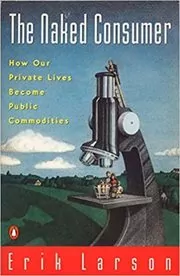
The Naked Consumer
by Erik Larson
1992
Larson investigates how businesses gather, trade, and exploit personal information, from mailing lists to hidden market research. Written before online tracking became everyday news, it still feels sharp, unsettling, and timely.
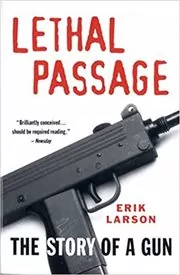
Lethal Passage
by Erik Larson
1994
By tracing one handgun from manufacturer to crime scene, Larson examines how guns move through American life. The book mixes reporting and narrative to show the human cost behind policy arguments and statistics.
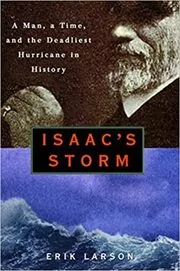
Isaac's Storm
by Erik Larson
1999
Centered on meteorologist Isaac Cline, this book rebuilds the 1900 Galveston hurricane and the failures that made it worse. Larson captures both the science and the terrifying speed of the storm's destruction.
The Devil in the White City
by Erik Larson
2003
Daniel Burnham races to build the 1893 Chicago World's Fair while H. H. Holmes hunts victims nearby. Larson braids civic ambition and serial murder into a fast-moving account of spectacle, progress, and violence.
Recommended by
1 person Edgar Wright recommended this book
Edgar Wright
Edgar Wright recommended this book on Twitter.
Edgar Wright's recommendation of this book
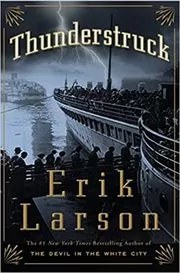
Thunderstruck
by Erik Larson
2006
Larson pairs Guglielmo Marconi's wireless breakthrough with the murder case of Hawley Harvey Crippen. The two stories converge in a transatlantic manhunt that shows how new technology changed crime and communication.
Myokardium
by Erik Larson
2009
A poetry collection that draws on life at the edge, prison, religion, and mortuary science. The pieces circle mortality, faith, survival, and memory in a direct, personal, plainspoken voice.
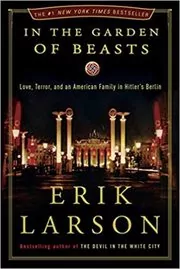
In the Garden of Beasts
by Erik Larson
2011
In 1933 Berlin, Ambassador William E. Dodd and his daughter Martha watch Nazi power harden from spectacle into terror. Larson tells the story through dinners, affairs, warnings, and the slow recognition of danger.
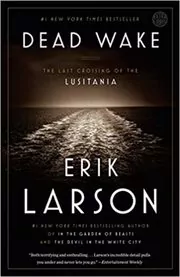
Dead Wake
by Erik Larson
2015
On the Lusitania's final voyage in 1915, passengers head toward Liverpool as a German U-boat closes in. Larson turns the sinking into a tense account of war, secrecy, and fatal misjudgment.
Recommended by
3 people Chris Dixon recommended this book
Chris Dixon
"Reads kind of like an action movie switching between the characters on the ship to the submarine crew who sinks them." - Chris Dixon
Chris Dixon's recommendation of this book  Lloyd Blankfein recommended this book
Lloyd Blankfein
"[The author] makes these narrow events -- gives a lot of texture to them and makes them feel very vivid." - Lloyd Blankfein
Lloyd Blankfein's recommendation of this book  George R. R. Martin recommended this book
George R. R. Martin
"[This author] is a journalist who writes non-fiction books that read like novels, real page-turners. This one is no exception." - George R. R. Martin
George R. R. Martin's recommendation of this book
The Splendid and the Vile
by Erik Larson
2020
Larson follows Winston Churchill's first year as prime minister as Britain endures the Blitz. Using diaries, letters, and private papers, he shows the war at cabinet level and inside Churchill's family circle.
Recommended by
3 people Keith Rabois recommended this book
Keith Rabois
"Books on Churchill in 1940-1941 take on wholly different meanings during a crisis vs studying during times of peace & prosperity." - Keith Rabois
Keith Rabois's recommendation of this book  Bill Gates recommended this book
Bill Gates
"A great addition to the literature focused on that [World War II] tragic period." - Bill Gates
Bill Gates's recommendation of this book  Arnold Schwarzenegger recommended this book
Arnold Schwarzenegger
Arnold Schwarzenegger recommended this book in his newsletter.
Arnold Schwarzenegger's recommendation of this book
No One Goes Alone
by Erik Larson
2021
In 1905, William James leads a small group to a remote North Atlantic island after a family vanishes there. What begins as an inquiry turns into an eerie ghost story about doubt, fear, and the unknown.
The Demon of Unrest
by Erik Larson
2024
Larson chronicles the fraught months between Abraham Lincoln's election and the attack on Fort Sumter. Through politicians, soldiers, and diarists, he shows how ego, slavery, and miscalculation pushed the country into war.
Project Management
by Erik Larson
Where to start with Erik Larson
If you want the classic entry point: The Devil in the White City → Thunderstruck
If you like disaster history: Isaac's Storm → Dead Wake
If you want politics under pressure: In the Garden of Beasts → The Splendid and the Vile → The Demon of Unrest
If you want his early reporting-driven work: The Naked Consumer → Lethal Passage
If you want something eerie and different: No One Goes Alone
Erik Larson collections, short stories, and related book types
Non-Fiction
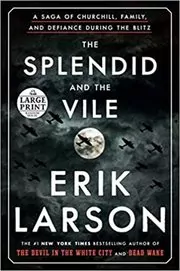
by Erik Larson
2020A Saga of Churchill, Family, and Defiance During the Blitz
Standalone Erik Larson books
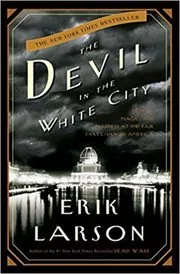
by Erik Larson
2003Murder, Magic, and Madness at the Fair That Changed America

Author bio
Erik Larson was born in Brooklyn on January 3, 1954, and mostly grew up in Freeport on Long Island, with brief stops elsewhere on the island. He has written about climbing trees, biking for miles, and body-surfing at Jones Beach, small details that fit the kind of observer he became. Even before journalism, he was drawn to stories, cartoons, and the odd corners of everyday life.
At the University of Pennsylvania he studied Russian history, language, and culture, graduating summa cum laude in 1976. After a year away from school, he earned a master's degree from Columbia's Graduate School of Journalism in 1978. He has said that seeing All the President's Men helped push him toward reporting, which makes sense once you see how much shoe-leather journalism sits underneath his books.
He started out on the crime beat.
Larson's first newspaper job was at the Bucks County Courier Times in Levittown, Pennsylvania. From there he moved to The Wall Street Journal as a staff writer and later contributed to Time, while also publishing magazine work in The New Yorker, The Atlantic, Harper's, and elsewhere. He learned how to turn piles of reporting and archival detail into scenes readers actually want to follow. He also taught nonfiction writing at San Francisco State, Johns Hopkins, and the University of Oregon.
His first books were grounded in present-day reporting. The Naked Consumer looked at how companies collect and trade personal data, long before that subject became part of everyday conversation, and Lethal Passage followed a handgun through America's gun culture. Those early works show the pattern that still defines him, patient reporting, clear scene-setting, and a knack for finding the human story inside a bigger system.
Then he found the historical lane that really fit him.
With Isaac's Storm, Larson turned the 1900 Galveston hurricane into a tense, intimate story about weather, hubris, and loss. The Devil in the White City paired architect Daniel Burnham and serial killer H. H. Holmes against the backdrop of the 1893 Chicago World's Fair, and it became the book many readers still start with. It was also a National Book Award finalist and won an Edgar Award for fact-crime writing. Later books kept returning to moments when people did not yet understand how close they were to disaster, from In the Garden of Beasts, set in Hitler's Berlin, to Dead Wake, about the sinking of the Lusitania, and The Splendid and the Vile, which follows Churchill, his family, and London through the Blitz.
That pattern carries into The Demon of Unrest, his account of the months between Abraham Lincoln's election and the attack on Fort Sumter. Larson is drawn to pressure points in history, the days before the storm, the meeting where no one quite grasps what is coming, the private worries hidden inside public events. Even when the ending is known, he writes toward suspense. That sense of approaching catastrophe is one of his trademarks.
He has also stepped outside nonfiction once in a while. No One Goes Alone, released as an audio original, is a ghost story with real historical figures in the mix, including William James. It feels like a side trip, but also very much like Larson, curious, atmospheric, and built from research.
These days he lives in Manhattan with his wife, Dr. Christine Gleason, and they have three daughters. He has been open about loving to cook and play tennis, and his author bio has the dry wit you might expect from someone who spends years buried in archives. That may be why his books feel researched without feeling stiff. He takes history seriously, but he never forgets that readers want a story.











Edited by
Software engineer whose passion for tracking book recommendations from podcasts inspired the creation of MRB.
Lead investor at 3one4 Capital whose startup expertise and love for books helped shape MRB and its growth.
Comments
Did we miss something? Have feedback?
Help us improve this page by sharing your thoughts